From automotive volumes to e-buses and e-trucks: Finnish IONCOR expands heavy-duty battery platform
Sponsored by IONCOR Finnish battery specialist IONCOR is expanding its focus on heavy-duty applications, positioning its modular battery platforms for electric bus OEMs across Europe. The European battery systems specialist, formerly the battery division of Valmet Automotive, has transitioned into an independent entity and is scaling its activities in buses, trucks and off-highway vehicles under […]
Sponsored by IONCOR
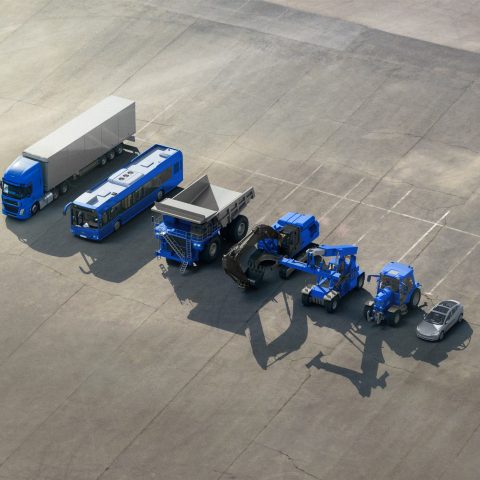
Finnish battery specialist IONCOR is expanding its focus on heavy-duty applications, positioning its modular battery platforms for electric bus OEMs across Europe.
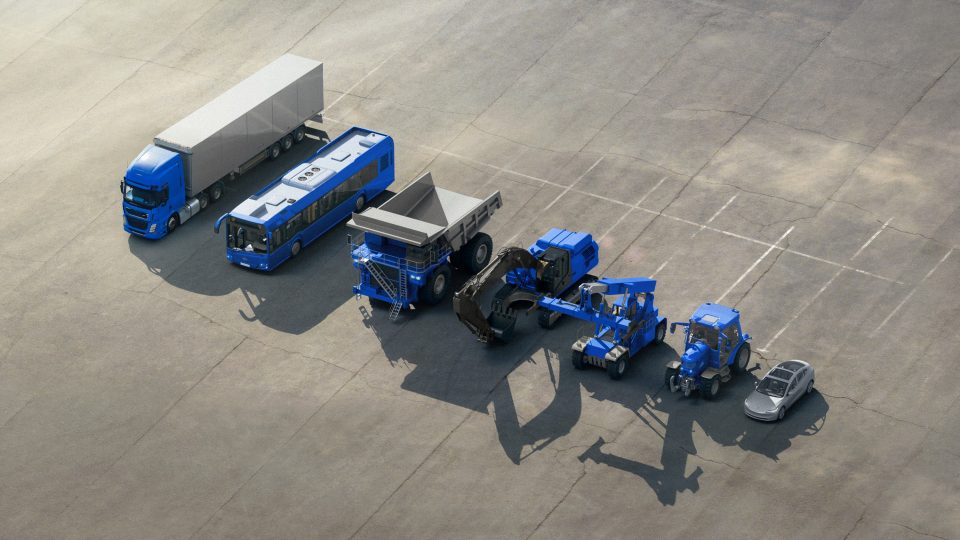
The European battery systems specialist, formerly the battery division of Valmet Automotive, has transitioned into an independent entity and is scaling its activities in buses, trucks and off-highway vehicles under its own product portfolio. The move places the e-bus segment at the center of the company’s industrial roadmap, leveraging automotive-scale production capabilities and transferring them to heavy-duty transport.
IONCOR, that claims being one of Europe’s leading independent battery providers, entered heavy-duty electrification in May 2024 with the Energy Pack for trucks and buses, later adding Energy Pack Long in October 2025 as a dedicated configuration for bus applications.
We are not just a battery supplier, but a partner that supports the customer throughout the entire electrification lifecycle from design and simulations to prototype series and serial production. We are a ‘lifetime partner for electrification.’ The lifecycle of work machines is long, and our own manufacturing ensures that compatible battery packs will also be available in the future
Sami Nikkinen, Senior Sales Manager, IONCOR.
IONCOR becomes independent battery manufacturer
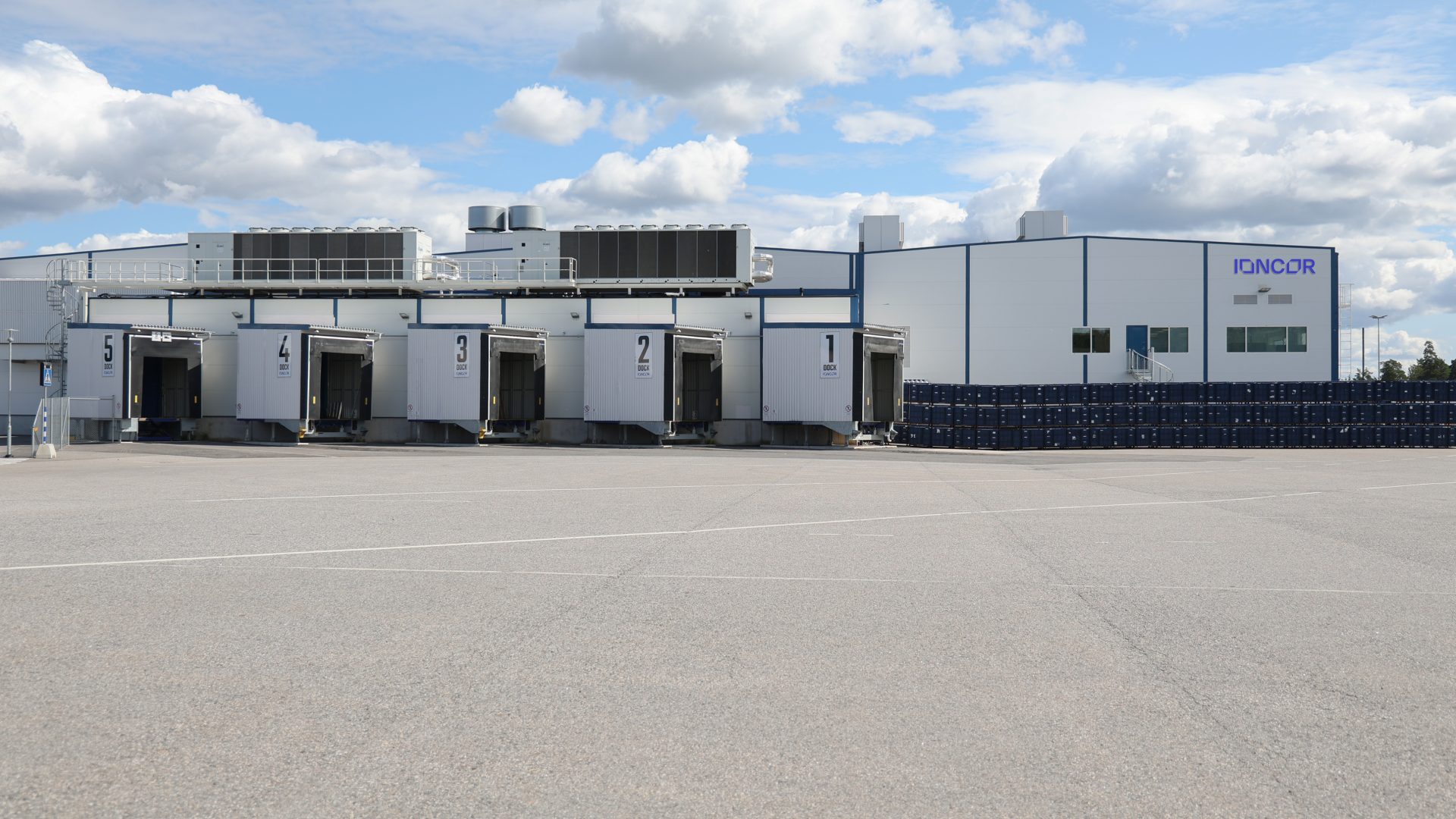
IONCOR became an independent company in September 2024, separating from Valmet Automotive’s battery systems business line. The company operates engineering, validation and production facilities across seven locations in Finland and Germany, covering development, testing and serial manufacturing.
In September 2025, IONCOR secured a new ownership structure involving Finnish Minerals Group (as a majority shareholder holding 70% of the company), Varma Mutual Pension Insurance Company and Pontos Group. The transaction provides financial backing and positions the company within the European battery value chain.
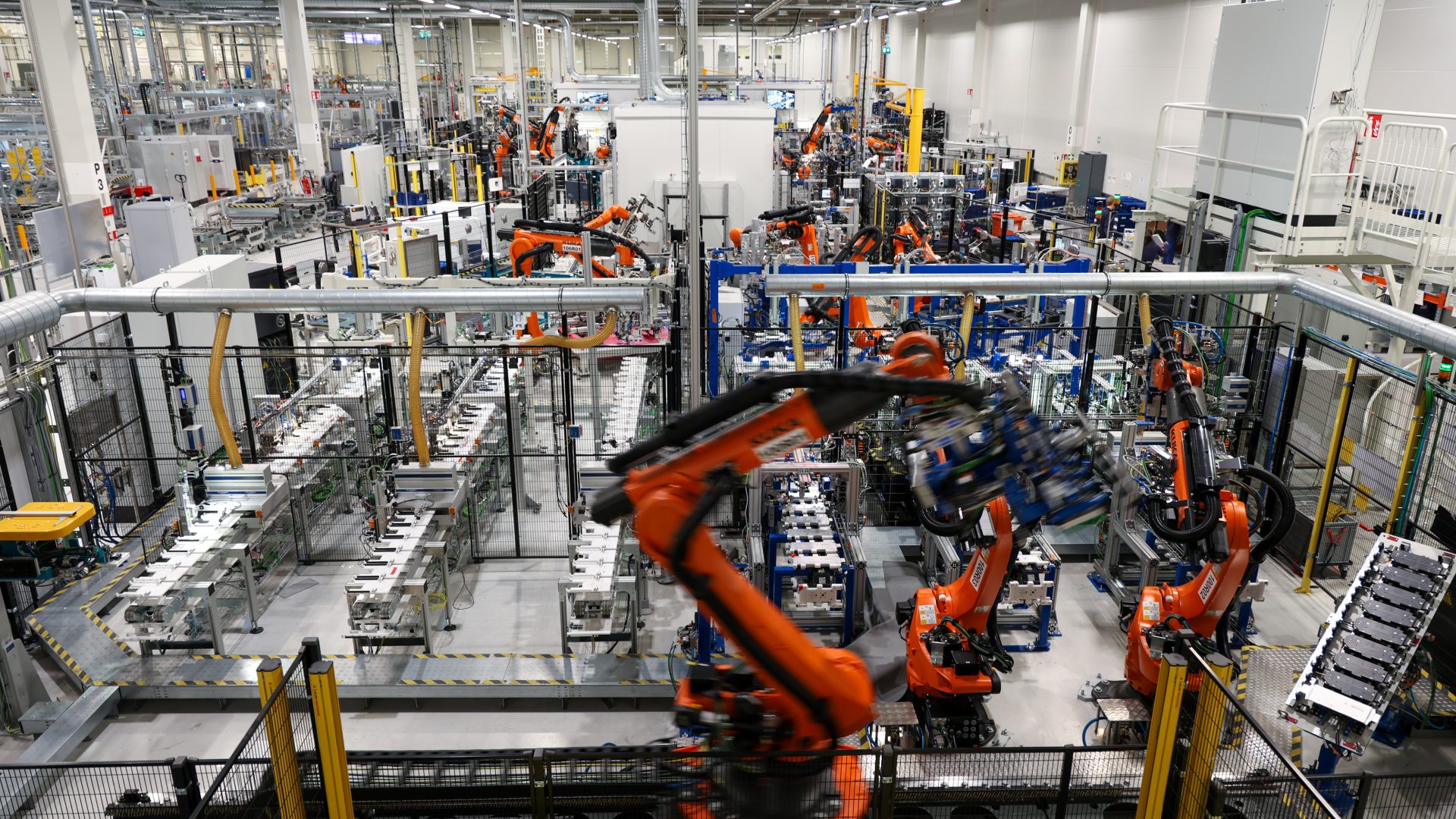
Since 2018, IONCOR has delivered more than three million battery systems to automotive and off-highway OEM customers. In 2024 alone, production reached approximately 800,000 battery systems, with gross sales of nearly €1.5 billion. The company employs around 1,000 people across its sites in Salo, Uusikaupunki and Kirchardt in Germany.
The company’s background, as mentioned, is rooted in high-volume automotive manufacturing, including standardized quality processes and validation protocols developed for passenger car programs. This industrial base now supports its expansion into proprietary battery system products for heavy-duty OEMs, including bus manufacturers.
IONCOR Energy Pack platform targets buses and trucks
As mentioned above, IONCOR’s shift toward heavy-duty electrification was marked by the introduction of its Energy Pack battery system concept in May 2024. The system is designed for truck, bus and off-highway applications and is based on a cell-to-pack architecture with an energy density of 300 Wh/l.
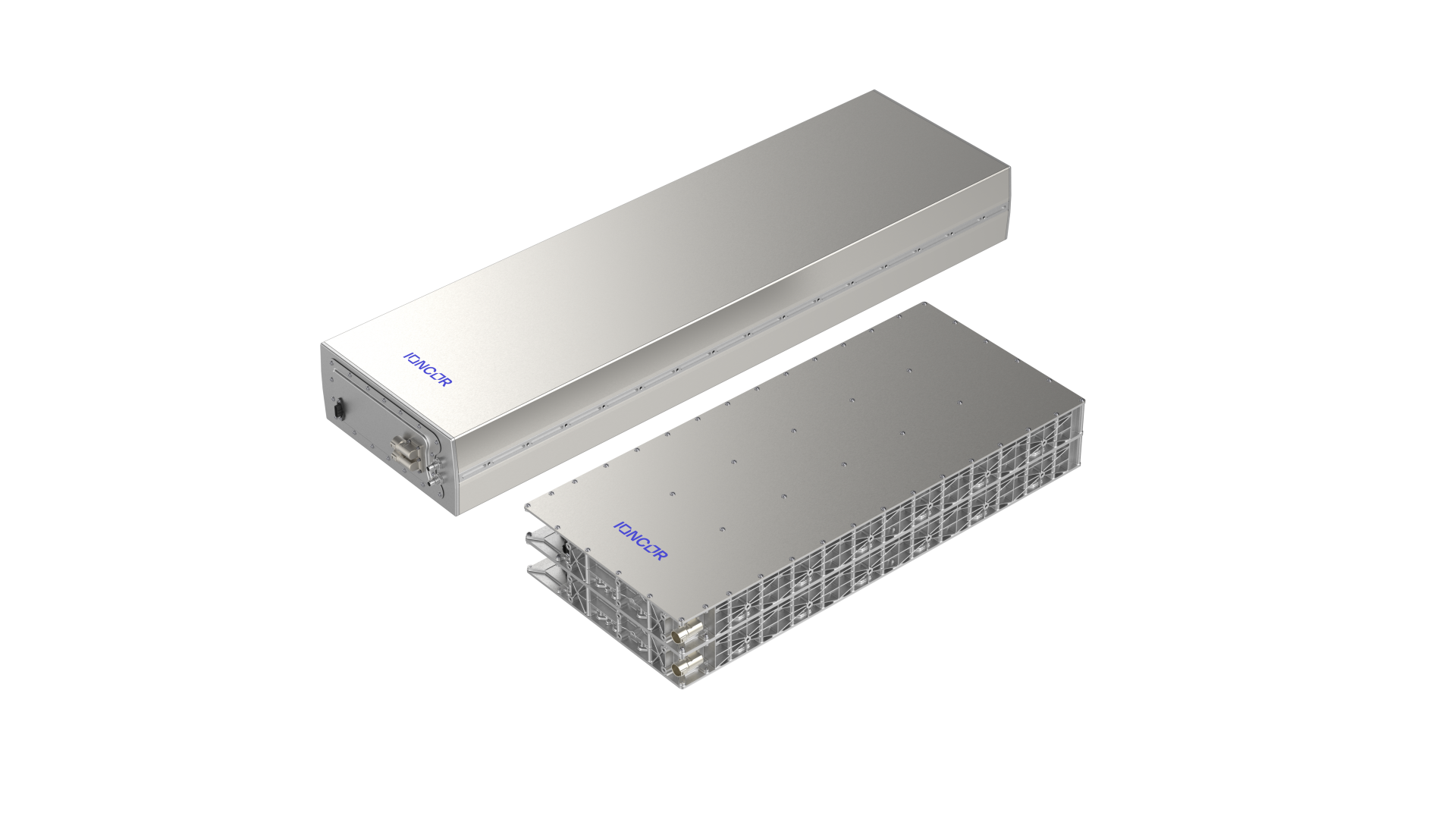
By eliminating intermediate modules, the cell-to-pack design increases volumetric efficiency and reduces pack weight. The Energy Pack is part of a broader Modular Battery Platform that also includes the Power Pack solution, optimized for high peak power and demanding duty cycles. The platform offers scalable capacities ranging from 50 to 1,000 kWh in 50 kWh increments .
In October 2025, IONCOR presented Energy Pack Long, a configuration developed specifically for bus applications. The system delivers 79 kWh per unit at 666 volts and can be configured up to 1,000 kWh depending on vehicle requirements. It is engineered to support both depot and opportunity charging strategies and to meet long service life requirements typical of urban and regional bus operations.
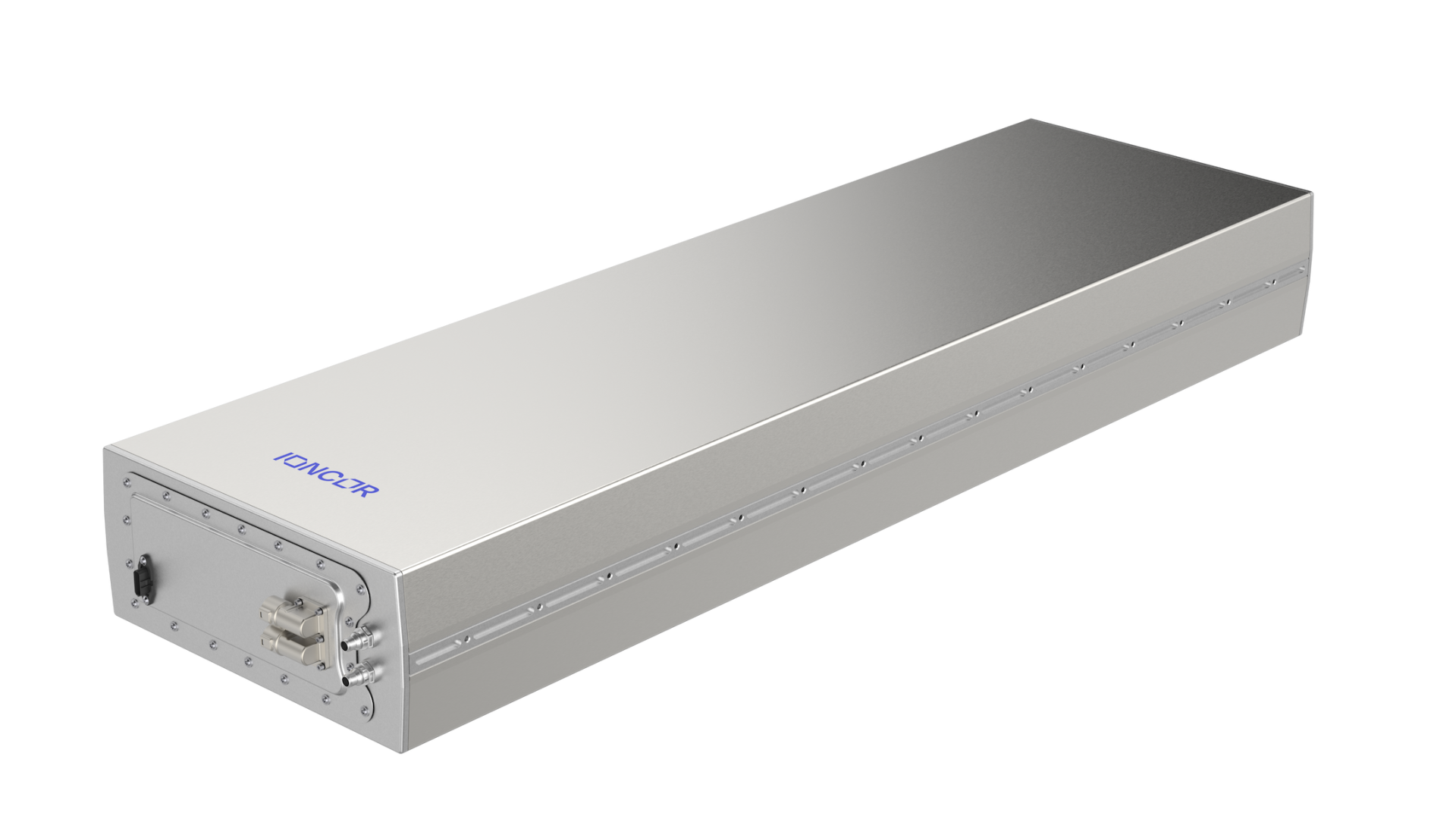
“Operators need solutions that perform reliably across different climates, routes, and charging approaches while remaining cost-effective. Energy Pack Long has been designed specifically to meet these operational and economic requirements, helping fleets transition smoothly to zero-emission operations”, stated Roberts Abele, CEO, IONCOR.
IONCOR’s approach: one battery doesn’t fit all
The architecture is designed to optimize energy density while reducing installation space and overall system weight. The use of high-volume battery cells and simplified pack architecture is intended to support cost efficiency in serial production.
IONCOR states that its modular platform enables multiple packs to be connected in parallel, allowing tailored scaling of both energy and power output. The company is not tied to a single cell supplier and supports different chemistries, including LTO, NMC and LFP, depending on application requirements.
In fact, IONCOR emphasizes battery sizing based on actual duty cycles rather than maximum theoretical capacity. In heavy-duty vehicles and work machines, operation is typically intermittent, with defined work periods and charging intervals. According to the company, system configuration is determined by peak and continuous power demand, charging availability and required uptime. For applications such as city buses operating fixed routes with planned charging schedules, energy consumption and power requirements can be calculated in advance, enabling precise dimensioning of capacity and discharge performance. “One battery does not fit all. Each chemistry has its own use case, and the battery must always be sized according to the machine’s actual work,” said Sami Nikkinen, Senior Sales Manager at IONCOR.
“We are not just a battery supplier, but a partner that supports the customer throughout the entire electrification lifecycle from design and simulations to prototype series and serial production. We are a ‘lifetime partner for electrification.’ The lifecycle of work machines is long, and our own manufacturing ensures that compatible battery packs will also be available in the future”, adds Nikkinen.