Gillig electric bus scores 89.5/100 at Altoona tests
Gillig claims that they “received the highest-ever score for a battery electric bus tested at Altoona, with a total score of 89.5”. The Federal Transit Administration’s (FTA) Bus Test Program, conducted by the Larson Transportation Institute’s Bus Research and Testing Center in Altoona, Pennsylvania, evaluates how well vehicles perform under conditions that simulate the rigorous […]
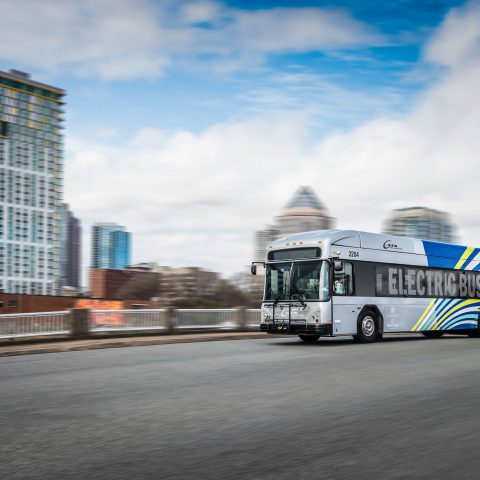
Gillig claims that they “received the highest-ever score for a battery electric bus tested at Altoona, with a total score of 89.5”.
The Federal Transit Administration’s (FTA) Bus Test Program, conducted by the Larson Transportation Institute’s Bus Research and Testing Center in Altoona, Pennsylvania, evaluates how well vehicles perform under conditions that simulate the rigorous duty cycles required of transit buses.
In November 2022, Gillig announced that 45 transit agencies have decided to utilize their FTA grants to buy the manufacturer’s low and zero emission buses. Nearly half of Gillig’s partnerships are utilizing Low-No funding to purchase Gillig’s zero-emissions Battery Electric Bus (specifically, the Gen 3 launched in early 2022). It features Akasol AKASystem 9 AKM 150 CYC battery system for the following available capacity configurations: 490 kWh, 588 kWh and 686 kWh,
Gillig electric bus at Altoona test
To be eligible for purchase with federal grant funding, such as the recently awarded $1.66 billion in FTA grants, all buses must demonstrate that they meet or exceed performance minimums. The comprehensive testing assesses key performance areas, such as maintainability, reliability, safety, structural integrity, noise, fuel economy, and emissions.
The FTA introduced a 100-point scoring system in 2016 to better inform buyers by offering an unbiased, standardized assessment of vehicle durability, safety, and performance. With an overall score of 89.5 out of 100, Gillig’s Battery Electric Bus far exceeds the Altoona minimum standards and passed all pass/fail performance tests, qualifying for purchase with federal funding (as all Gillig buses are).
The manufacturer highlights that “During more than 15,000 miles of testing, the GILLIG Battery Electric Bus required only 15.2 repair hours of unscheduled maintenance. Comparatively, other battery electric buses tested at Altoona over the last seven years have each needed, on average, 72.3 hours of repair time to complete their testing. In addition to proving Gillig’s commitment to quality, the results also clearly demonstrate Gillig’s dedication to safety. The Gillig Battery Electric Bus received the highest score ever in the critical braking test, stopping, on average, over 30 feet – or over two car lengths – earlier than other manufacturers’ comparable electric buses”.
“We talk a lot about ‘quality without compromise’ here at Gillig,” said Ben Grunat, VP of Product Planning and Strategy, GILLIG. “These scores demonstrate exactly what that means; our product being the safest and most reliable Zero Emission Bus on the market is not our goal. Rather, it’s Gillig’s standard.”