Guangzhou adds 288 Zhongtong N7 electric buses as core routes advance full-fleet electrification
Chinese city of Guangzhou has put 288 newly delivered Zhongtong N7 electric buses into operation across central-city routes, marking another step in the city’s full-electric public transport transition. The deployment is reported by Chinese trade media Chinabuses. As the economic center of the Guangdong-Hong Kong-Macao Greater Bay Area, Guangzhou has accelerated the electrification of its […]
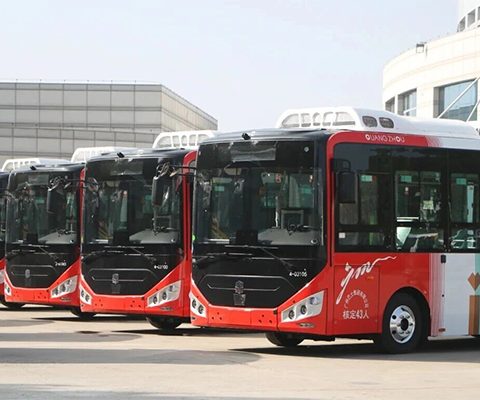
Chinese city of Guangzhou has put 288 newly delivered Zhongtong N7 electric buses into operation across central-city routes, marking another step in the city’s full-electric public transport transition.
The deployment is reported by Chinese trade media Chinabuses. As the economic center of the Guangdong-Hong Kong-Macao Greater Bay Area, Guangzhou has accelerated the electrification of its public transport system in recent years.
Zhongtong N7 electric buses for Guangzhou
The Zhongtong N7 units introduced this month operate on routes 180, 188, 192 and Tourist Line 2—high-visibility corridors often used by both local commuters and visitors.
Public information on the Guangzhou deployment does not specify which length variant of the Zhongtong N7 was supplied, and neither the operator nor the manufacturer has released model-code details for the 288 units. The N-series city-bus platform spans several size classes, from 8.7-metre versions up to 10.5- and 12-metre configurations, with corresponding variations in axle spacing, door layout and passenger capacity. Across the range, Zhongtong equips the vehicles with permanent-magnet synchronous motors—available from suppliers such as JJE or Dana—designed for higher efficiency and lower standby consumption than asynchronous units. Battery systems vary widely by model, with capacities broadly in the 210–420 kWh range.
The N7 model is engineered around a “zero rear overhang” layout, expanding interior standing room and improving throughput during peak periods. Accessibility features, including wheelchair ramps and priority spaces, follow national universal-design guidelines and respond to rising requirements for inclusive mobility in large Chinese cities.
Performance parameters—traction power, endurance capability and thermal-management efficiency—are designed to support high-frequency, high-load operations typical of Guangzhou’s core network. An air-suspension system calibrated for urban road conditions improves ride quality while minimizing vibration transmission to passengers.
The vehicles integrate multiple sensor suites, including camera and radar arrays, enabling L2-level assisted-driving functions such as real-time environmental monitoring, gentle-braking intervention in the event of driver incapacitation, and automated parking assistance. Blind-spot detection and anti-pinch door systems address incident-reduction priorities that many Chinese operators are now incorporating into procurement criteria.
Cabin-side equipment includes a digital cluster, electric driver window, and electronic parking brake, tied to an integrated vehicle controller and cloud-connected dispatching platform, Chinabuses reports.