Electric buses hit 1,230 units in Italy in 2025 as zero-emission reaches 30% of the market and 65% of urban registrations
The Italian bus market closed 2025 with 4,112 registrations over 8 tonnes, including 1,230 zero-emission buses — equal to 30% of the total and up 20% year-on-year. Zero emission buses make over 65% of the city bus registrations. After the exceptional peak reached in 2024, the Italian bus market returned in 2025 to more structurally […]
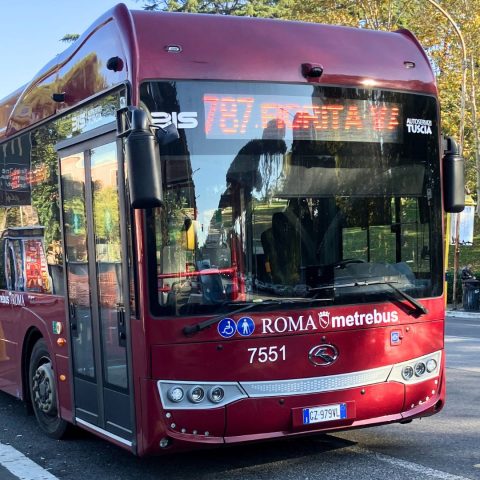
The Italian bus market closed 2025 with 4,112 registrations over 8 tonnes, including 1,230 zero-emission buses — equal to 30% of the total and up 20% year-on-year. Zero emission buses make over 65% of the city bus registrations.
After the exceptional peak reached in 2024, the Italian bus market returned in 2025 to more structurally aligned volumes, while still confirming a historically solid level of demand. According to data processed by Italian trade media (and our sister platform) Autobusweb on the basis of Anfia registrations, the year ended with 4,112 new buses over 8 tonnes, down 15.8% compared with the previous year but well above long-term averages. Excluding the extraordinary results of 2024 (around 4,900 units) and 2023 (4,105), a comparable overall volume has not been recorded since 2004, when registrations reached 4,016 units.
Zero emission buses are gaining ground +20%
At the same time, the penetration of zero-emission technologies continued to increase. Battery-electric buses alone accounted for nearly one third of registrations, consolidating a trend that has reshaped the structure of the Italian market over the past three years.
Breaking down registrations by mission profile, Class I vehicles remain the backbone of the market. Urban buses accounted for 1,841 units, corresponding to 44.8% of total registrations.
Class II vehicles followed with 1,211 units and a 29.4% share. The most dynamic segment in relative terms was Class III, which grew by 61.7% year-on-year, rising from 648 units in 2024 to 1,048 in 2025. Coaches now represent 25.5% of the total market, a historically significant weight.
School buses above 8 tonnes remained marginal, with just 12 units registered (0.3%). However, when lighter vehicles are included, the total number of school buses registered in 2025 rises to 577 units, highlighting the importance of the sub-8-tonne segment for this application.
Powertrain mix: electric at 30%
From a technological perspective, 2025 marked a further step forward for electrification. Battery-electric buses reached 1,230 registrations, accounting for exactly 30% of the total market and growing by 20% compared with 2024.
Within the urban segment, electrification is even more pronounced: 1,201 electric buses were registered out of 1,842 Class I vehicles, corresponding to a penetration rate of 65.2%.
Diesel remains the single largest powertrain by volume but continues its gradual decline. In 2025, 1,573 diesel buses were registered, down 9% from 1,729 units in 2024, for a market share of 38.2%.
Gas-powered buses accounted for nearly a quarter of registrations. A total of 956 vehicles running on natural gas were registered, including 921 CNG and 35 LNG units, corresponding to a 23.2% share. Hybrid buses saw a sharp contraction, with 319 registrations across all hybrid configurations, equal to 7.8% of the market. Hydrogen fuel-cell buses remained a niche but visible presence, with 34 units registered, representing 0.8% of the total.
The manufacturers’ shortlist
Among manufacturers, market leadership remains unchanged. Iveco Bus closed 2025 with 1,459 registrations and a 35.5% share.
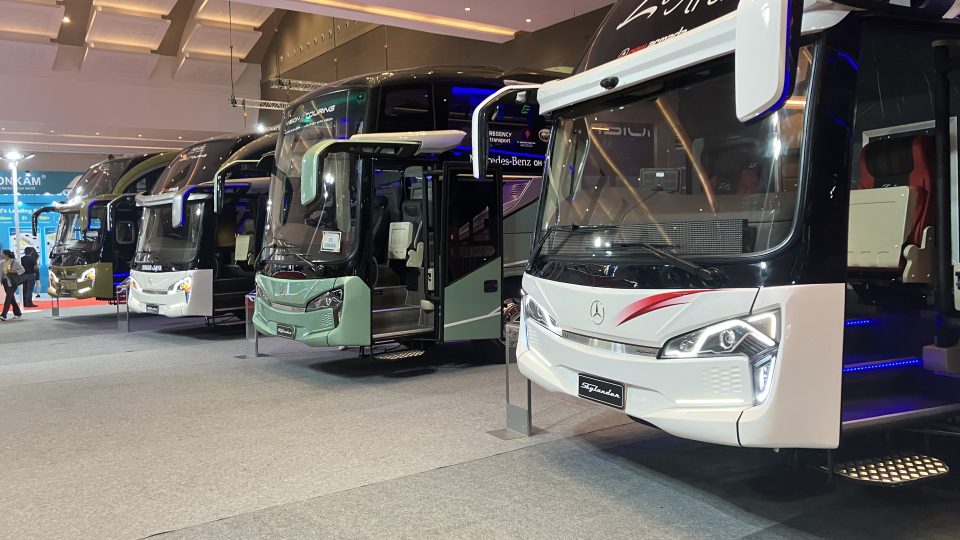
Daimler Buses consolidated its second position, supported by 614 Mercedes-Benz and 133 Setra registrations, for a combined total of 747 units and an 18.1% share. Solaris ranked third with 348 registrations (8.5%), followed by MAN with 257 units, including 71 Class III vehicles branded Neoplan, corresponding to a 6.2% share.
Scania closely followed with 246 registrations (6%), a figure that also includes Irizar-bodied vehicles on Scania chassis. Irizar e-mobility itself ranked eleventh with 79 registrations (1.9%).
Among other notable performances, Karsan registered 158 buses, all electric, achieving a 3.8% share. King Long followed with 154 units (3.7%), closely matched by Menarinibus at 152 registrations (3.7%). Otokar exceeded the 100-unit threshold with 104 registrations (2.5%), while Yutong reached 95 units (2.3%), all battery-electric.
In the Italian BEV bus market, 2025 confirmed a clear reshuffling of competitive positions compared with 2024, alongside strong overall growth. Iveco remained market leader with 388 electric buses registered, slightly increasing volumes year-on-year (from 377) but losing market share, down from 36.7% to 31.5%, reflecting faster expansion by competitors. Karsan strengthened its role as a key pure-electric player, rising from 98 to 158 units and lifting its share from 9.6% to 12.8%.
King Long recorded the most striking jump, moving from just 2 registrations in 2024 to 152 in 2025, reaching a 12.4% share. By contrast, Solaris saw volumes fall from 165 to 133 units, with market share declining from 16.1% to 10.8%.
Yutong also posted strong growth, increasing from 59 to 95 registrations and raising its share to 7.7%. Several European manufacturers, including Mercedes-Benz, MAN and Rampini, recorded year-on-year e-bus declines, while Menarinibus and Otokar posted sharp percentage increases from relatively low 2024 bases.