TPER prepares to deploy 127 hydrogen buses in Bologna, operations to begin by May
TPER is preparing to finally introduce 127 hydrogen buses in Bologna, with the first vehicles expected to enter service by the end of May. TPER presented its upcoming hydrogen bus deployment during a press event held on 11 March at the Battindarno depot in Bologna, where the hydrogen refuelling infrastructure is already operational, as reported […]
TPER is preparing to finally introduce 127 hydrogen buses in Bologna, with the first vehicles expected to enter service by the end of May.
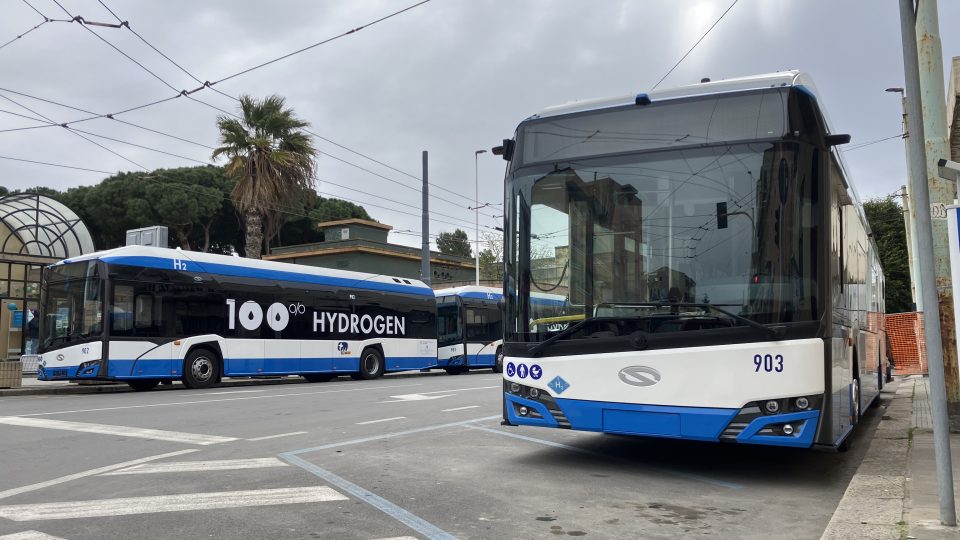
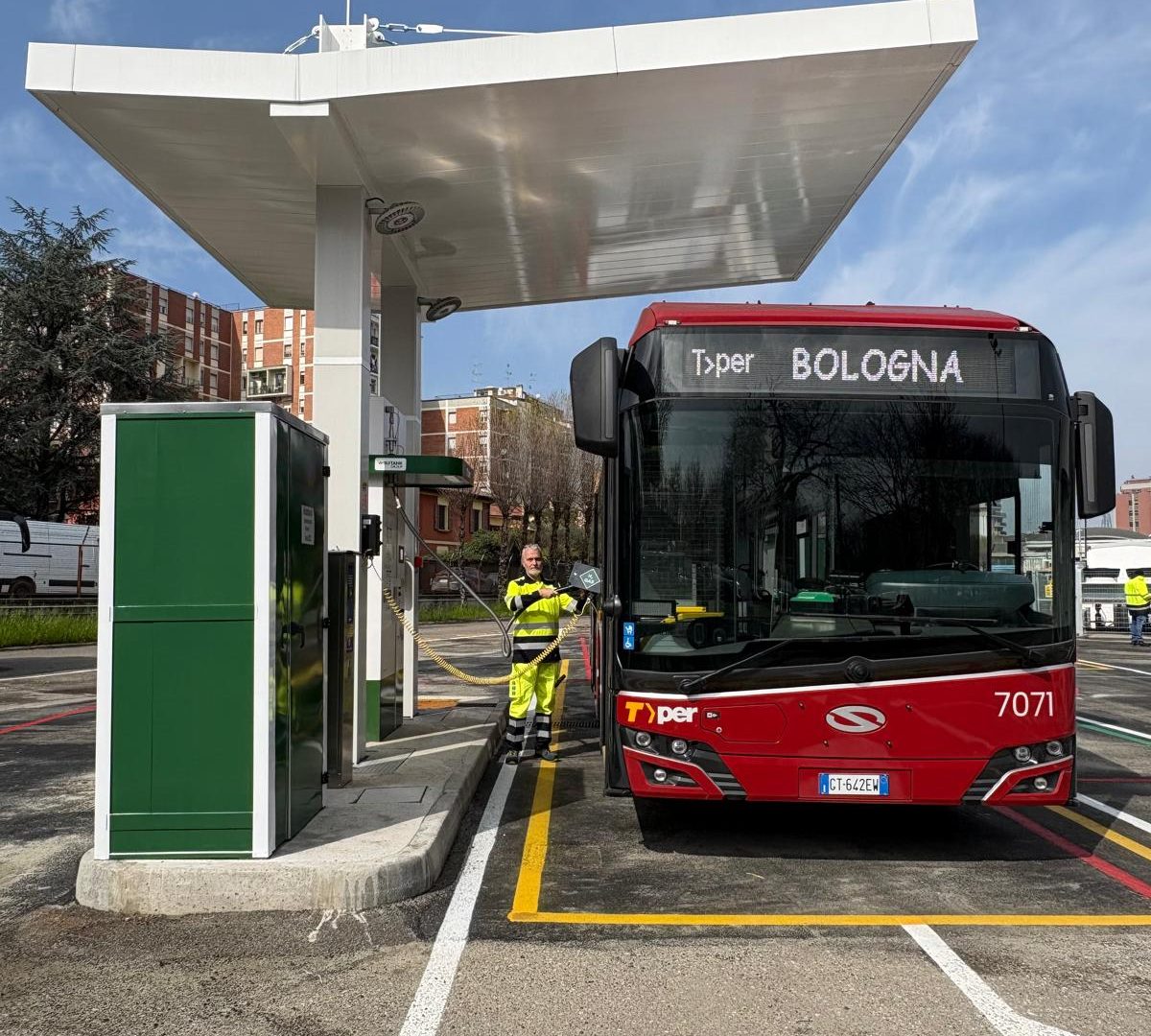
TPER presented its upcoming hydrogen bus deployment during a press event held on 11 March at the Battindarno depot in Bologna, where the hydrogen refuelling infrastructure is already operational, as reported on our sister media Autobusweb. Once the rollout is completed, 127 fuel cell buses supplied by Solaris will represent around 12 percent of the operator’s fleet in the city.
127 Solaris hydrogen buses planned for Bologna fleet
At the completion of deliveries, the fleet will consist of 60 three-door buses for urban routes, designed for services requiring standard 12-metre vehicles, and 67 two-door units intended for suburban connections linking Bologna with the surrounding metropolitan area.
TPER has already gained operational experience with the same fuel-cell bus model in the city of Ferrara. There, 10 hydrogen buses are currently operating in regular service, following the commissioning of the city’s first hydrogen refuelling facility.
The Ferrara station was built during 2025 and became operational in September at the local depot. The first three hydrogen buses entered service in mid-September, followed by an additional seven vehicles in December. Over five months of operation the buses accumulated more than 62,000 kilometres in passenger service, recording an average consumption of between 14 and 15 kilometres per kilogram of hydrogen.
Hydrogen refuelling infrastructure built by Wolftank
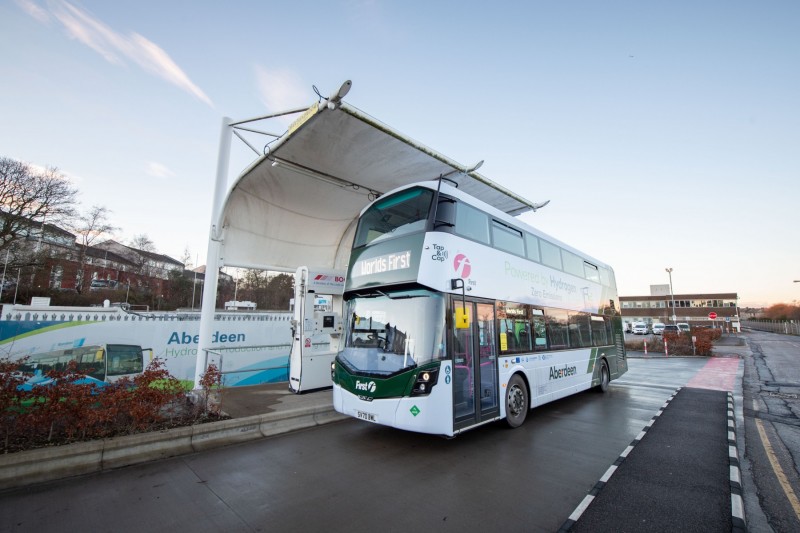
The hydrogen refuelling station installed at the Bologna depot was developed by Wolftank. Hydrogen is delivered to the facility by tube trailers and compressed through two compressors operating in parallel before being stored in a system known as the Logistic Container.
The storage solution consists of multiple independent storage banks designed to optimise refuelling times. According to the technical configuration of the station, buses can be refuelled in approximately ten minutes, with onboard tanks filled to a maximum operating pressure of 350 bar.
The facility is equipped with integrated safety systems and a control platform that monitors operational parameters across the entire installation. During the refuelling process, each dispenser communicates with the vehicle’s onboard systems through an infrared interface, enabling real-time data exchange regarding tank temperature, pressure and vehicle identification parameters.
The hydrogen currently supplied to the Bologna infrastructure is “blue” hydrogen provided by Sapio.
The total investment for the refuelling infrastructure amounts to around €6 million. Of this amount, €2.5 million was financed directly by TPER, while the remaining resources were provided through the PSNMS programme for cities with more than 100,000 inhabitants, funding from the Emilia-Romagna Region, and resources from the Italian PNRR programme.