Phoenix Contact introduces CCS charging inlet with integrated controller for heavy-duty vehicles
Phoenix Contact has developed a CCS vehicle charging inlet that integrates the charging controller directly into the inlet assembly for commercial electric vehicles. It’s named CHARX connect advanced, and it aims at consolidating charging communication and control functions within the vehicle-side inlet, a configuration aimed at reducing the number of separate charging-related devices installed on […]
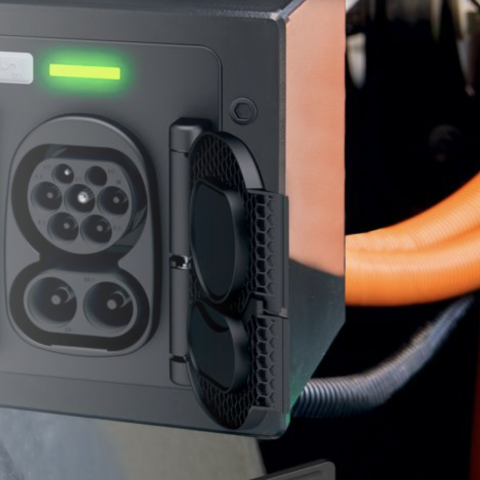
Phoenix Contact has developed a CCS vehicle charging inlet that integrates the charging controller directly into the inlet assembly for commercial electric vehicles. It’s named CHARX connect advanced, and it aims at consolidating charging communication and control functions within the vehicle-side inlet, a configuration aimed at reducing the number of separate charging-related devices installed on board.
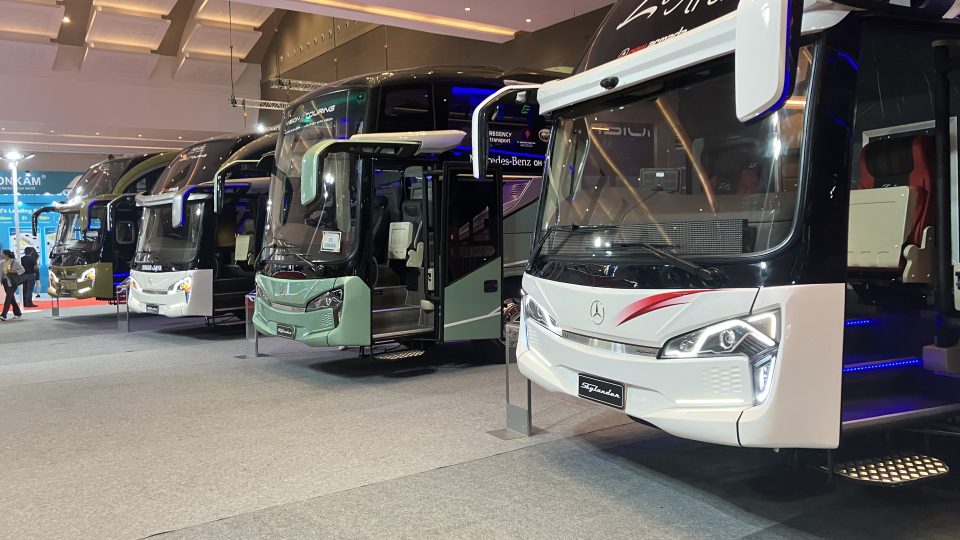
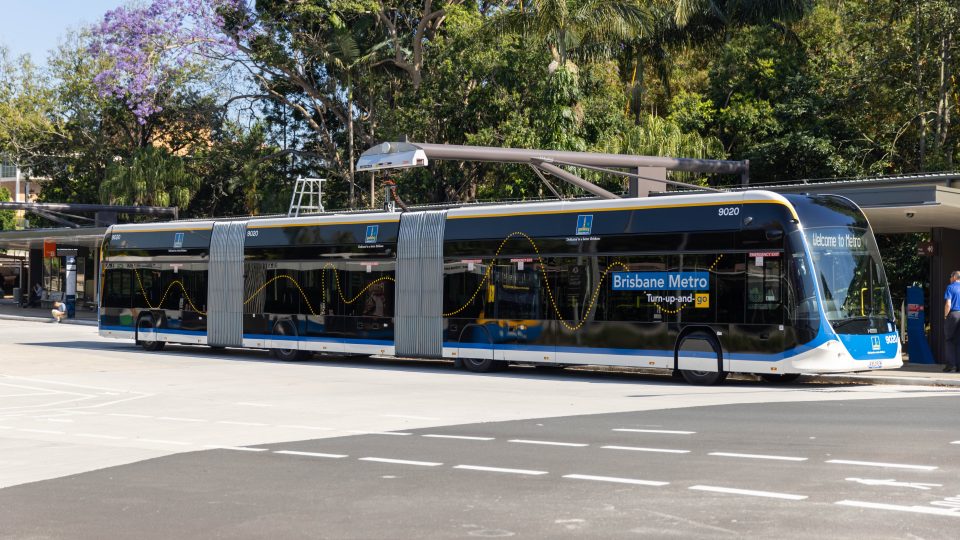
According to Phoenix Contact, the solution is intended for battery-electric buses, trucks, heavy commercial vehicles, and off-road applications, with series production scheduled to begin in the third quarter of 2026, while sample units are already available. The news is reported on the supplier’s website and has been covered by trade agency electrive.
Phoenix Contact: Integrated charging control at the inlet level
Phoenix Contact is a German supplier specializing in electrical engineering, electronics, and automation technology, supplying components and systems for industrial, energy, and mobility applications.
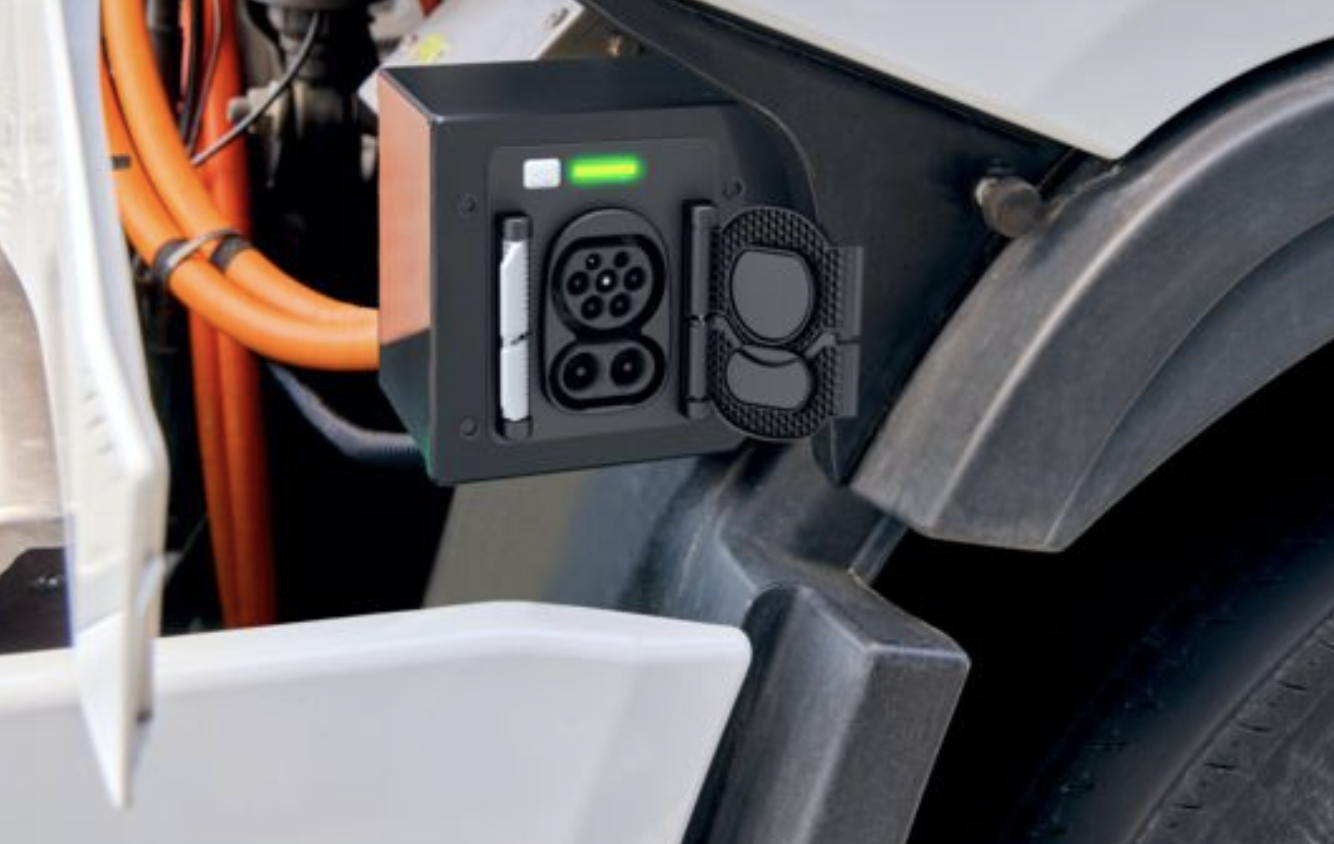
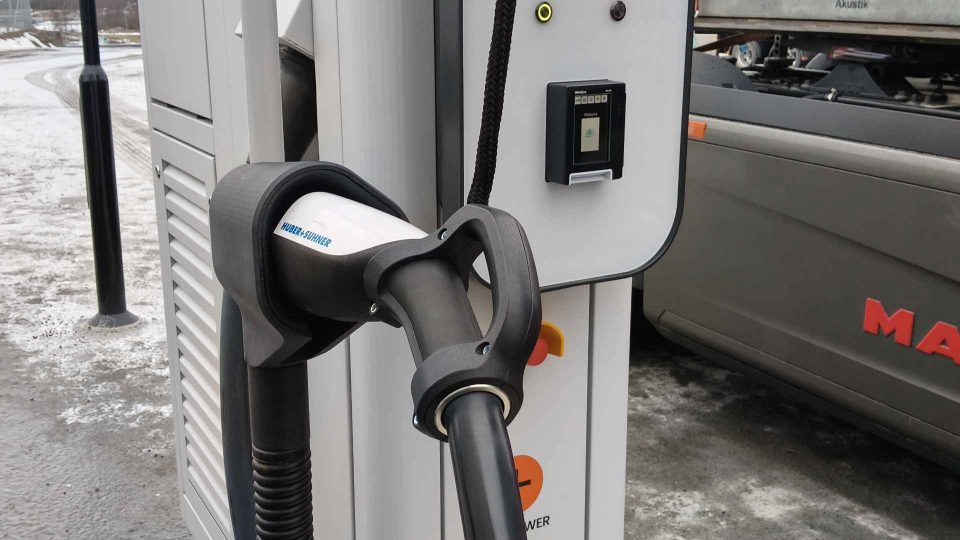
CHARX connect advanced combines the CCS charging interface and the DC charging controller in a single mechanical unit. Phoenix Contact specifies that the controller is mounted directly on the inlet and connected both mechanically and electrically, removing the need for an external charging control unit. All charging communication is handled via PLC at the inlet, with data exchange to the vehicle performed over CAN in compliance with DIN 70121 and ISO 15118.
The manufacturer reports that the integrated configuration reduces installation depth to 128.5 mm and centralizes control of key charging functions, including CP, PP and PE signaling, locking actuators, temperature monitoring, LED status indication, charge termination, and contact-area illumination. The system is approved for road vehicles under E1 certification and supports bus preconditioning in accordance with VDV 261.
What about specifications and modular layout?
The charging inlet is offered in CCS Type 1 and CCS Type 2 variants and supports both AC and DC charging. Phoenix Contact lists a rated DC voltage of up to 1,000 V, with continuous DC charging currents of 200 A, 250 A, or 400 A, depending on conductor cross-section, and peak charging currents of up to 800 A in boost mode. DC cable cross-sections range from 70 mm² to 120 mm².
According to Phoenix Contact, the inlet is fully sealed to IP67, while the contact area meets IP6K6K and IP6K9K protection levels.
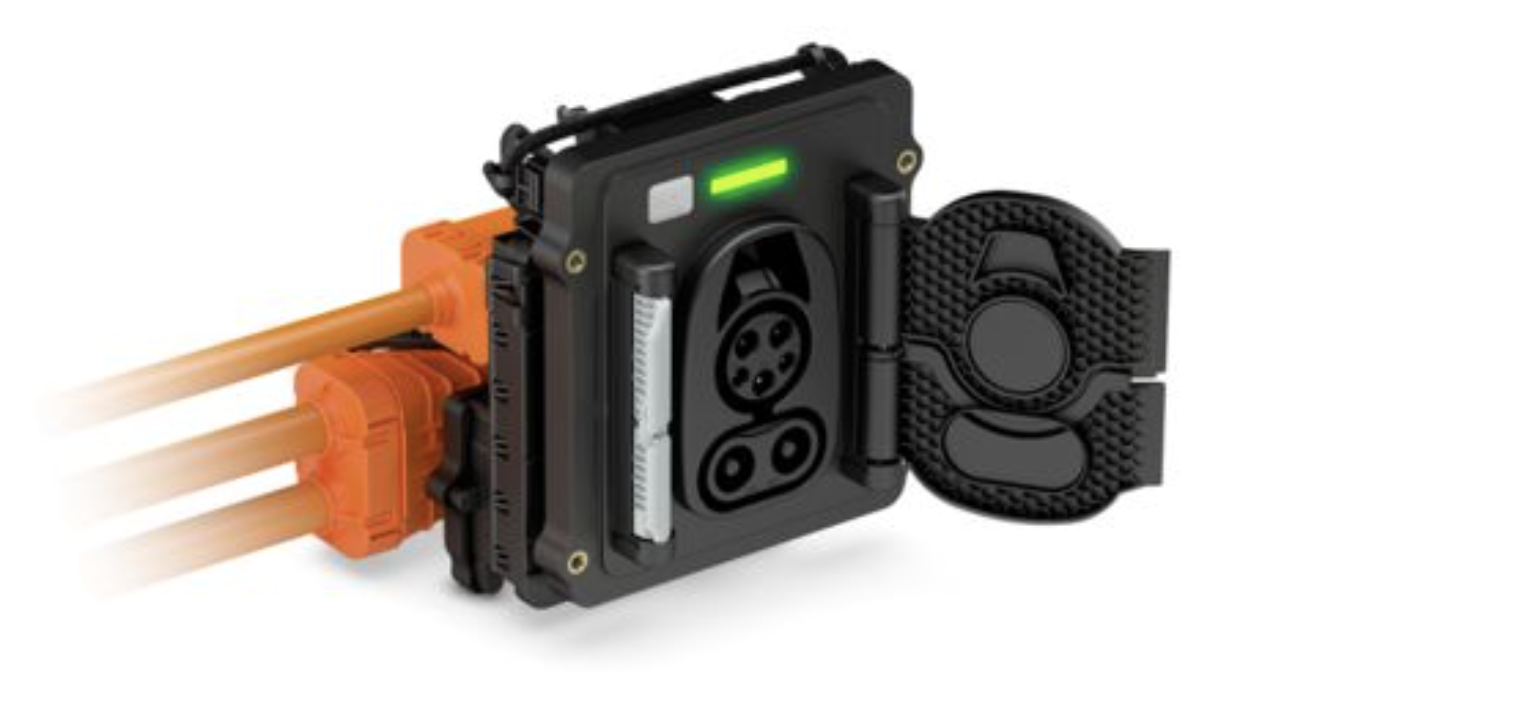
Phoenix Contact states that the charging inlet uses pluggable cable connections that can be disconnected directly at the inlet. This configuration allows the charging inlet to be removed and replaced during servicing without the use of additional tools. The same approach applies to the replacement of high-voltage charging cables, supporting maintenance operations without intervention on surrounding vehicle systems.
Phoenix Contact indicates that the product is prepared for cybersecurity requirements under UNECE R155 and R156 and supports functional safety up to ISO 26262 ASIL B. As mentioned above, availability is planned from Q3 2026, with samples currently offered to vehicle manufacturers and system integrators.