VHH Mobility within rising cost pressure, tender reform push and evolving fleet strategy: our interview with Managing Director Britta Oehlrich
At a time when German public transport operators face rising ridership alongside increasing financial pressure, the balance between service expansion, cost control and long-term investment in innovation is becoming more complex. The sector is navigating higher personnel and energy costs, growing reliance on public funding, and the simultaneous need to electrify fleets, digitalise operations and […]
At a time when German public transport operators face rising ridership alongside increasing financial pressure, the balance between service expansion, cost control and long-term investment in innovation is becoming more complex.
The sector is navigating higher personnel and energy costs, growing reliance on public funding, and the simultaneous need to electrify fleets, digitalise operations and maintain service reliability. Contract structures, competitive frameworks and the scaling of new mobility services such as on-demand and autonomous transport are further shaping the operational environment.
In this context, we spoke with Britta Oehlrich, Managing Director of VHH Mobility, to discuss how these dynamics are reflected in the company’s financials, the challenges of electrification, the role of public funding and contracts, and the evolving positioning of operators as integrated mobility providers.
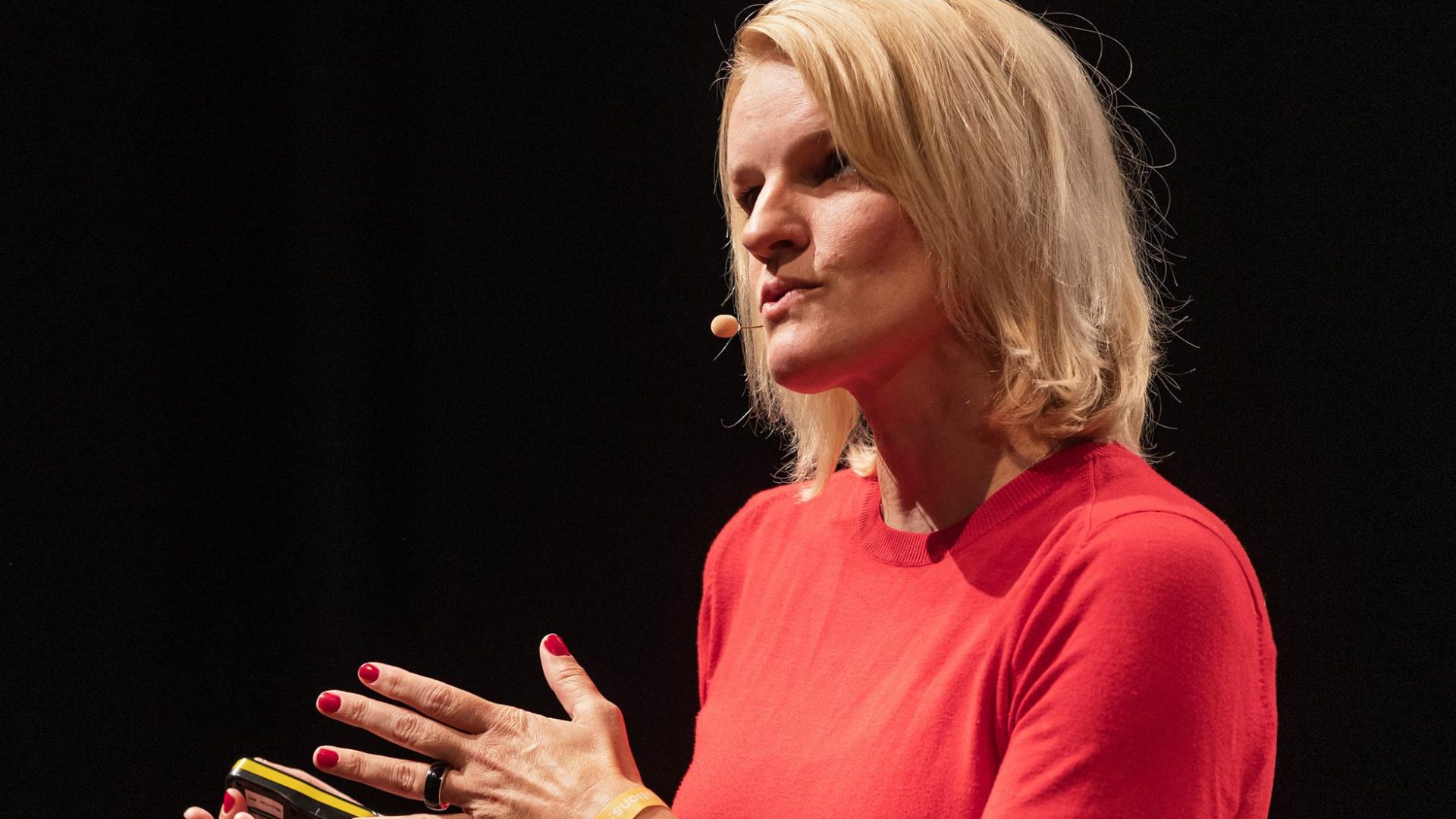
Britta Oehlrich, VHH Hamburg: cost pressure is an issue
The VDV’s 2025 industry report highlights that ridership is growing, but so are operational deficits due to surging personnel and energy costs. How does the balance sheet of VHH reflect these German-wide trends?
We are seeing the same development at vhh.mobility. Demand for public transport continues to recover and in some areas has already returned to – or even exceeded – pre-pandemic levels. At the same time, like many transport operators in Germany, we are facing significant cost pressure. Personnel costs in particular, but also energy prices and general operating costs, have risen considerably.
As a municipally owned transport company, we operate within the framework of public service contracts. This means we must ensure reliable mobility for the region, even if individual services are not economically self-sustaining. As a result, the need for compensation payments is currently increasing.
Can you be more specific on this?
Well, we had a deficit of about 20 million, four or five years ago. And now we got 120 million from the Hamburg authority: the taxpayer supports us a lot to increase our performance, to buy electric buses and to develop projects.
At the same time, we are working intensively to make our processes more efficient and to deploy new technologies in order to stabilize costs in the long term. Productivity is a key concept in this context.
It’s important to mention that we are also in a competitive area: we have direct contracts from Hamburg, but also we operate in the surrounding Schleswig-Holstein area. We are the only company in Germany operating across both areas.
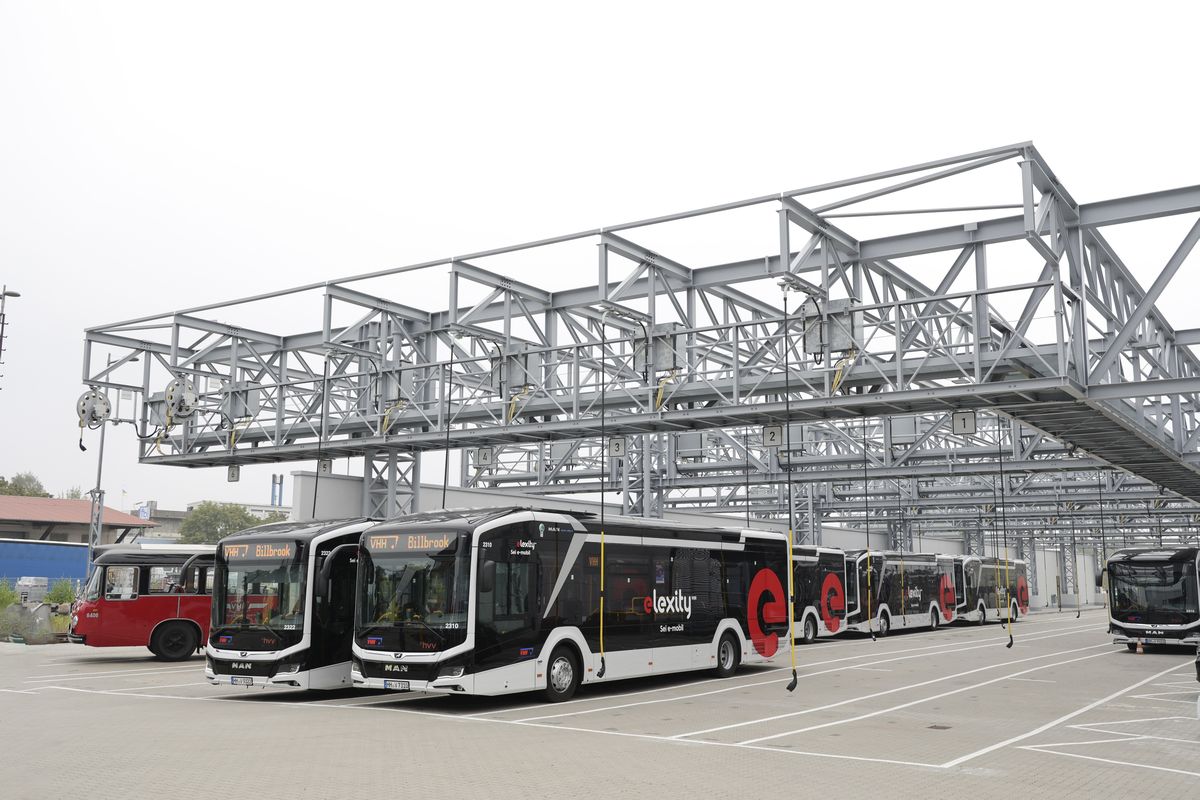
vhh.mobility put its first electric bus into operation ten years ago, becoming the first transport company in the Hamburg metropolitan region to do so. Today, our electric fleet consists of around 300 vehicles, which corresponds to roughly one third of the total fleet.
Britta Oehlrich, Managing Director, VHH Mobility
At the same time, our depots are being progressively electrified and equipped with charging infrastructure. However, this transformation requires very substantial investment – both in the vehicles themselves and in grid connections, charging infrastructure and depot conversions.
Reliable public funding therefore remains a key factor in enabling this transition.
However, now we are facing new questions. What happens in extreme situations, like war or disruptions where e-buses cannot operate? If we cannot recharge them, what happens?
Being on the edge between direct contracts and competition
Across Europe, the progressive opening of public transport markets is often presented as a way to increase efficiency and stimulate innovation. What impact could greater competition have on the ability of operators to innovate and invest in long-term projects?
Competition can generally help increase efficiency and stimulate innovation. At the same time, public transport requires long-term investments – for example in vehicles, infrastructure and workforce development.
For municipally owned operators, it is therefore crucial that regulatory frameworks provide planning security. Innovation often emerges where companies are able to think and invest in the long term.
The fact that we have to invest in e-mobility is in fact quite new. In former times we only had diesel buses and it was quite easy to calculate: you knew how personnel costs would increase, or diesel costs, or how much a new depot would cost. So it was more stable than now. That is actually the issue.
From our perspective, close cooperation between public transport authorities and operators remains a key success factor in developing sustainable mobility systems.
You mentioned electrification. And indeed across Germany (and Europe…), operators are expected to simultaneously electrify fleets, digitalise operations and improve service quality. In such a context, how does vhh.mobility prioritise innovation projects while maintaining financial discipline and operational reliability?
For us, innovation is not an end in itself. We prioritise projects based on the concrete contribution they can make to improving our services, increasing operational efficiency, or supporting climate objectives – either today or in the future.
A key principle is that innovation must not jeopardise operational stability. That is why we rely heavily on pilot projects and gradual scaling. New technologies – for example in electromobility, digitalisation or on-demand services – are first tested on a smaller scale before being transferred into regular operations.
At the same time, we work closely with the City of Hamburg, the hvv and other partners to ensure that investments are deployed strategically across the Hamburg metropolitan region.
Over the past years, vhh.mobility has increasingly described itself as a mobility provider rather than just a bus operator, with projects ranging from on-demand services to autonomous mobility pilots. What does this transformation mean in practical terms for the company’s identity and its skills?
The term “mobility provider” mainly reflects a broader perspective. Our core business remains bus operations – and this will continue to be the case in the future. At the same time, we increasingly view mobility as an integrated system of different services.
For vhh.mobility, this means that alongside traditional scheduled services we are also testing and integrating new mobility solutions, such as on-demand services or digital platforms. This requires new competencies within the company – for example in data analysis, IT, platform integration and project development.
The transformation therefore affects not only technologies, but also organisational structures, skills and ways of working.
We wish the tenders’ structure might change. The current structure is still mode-specific: rail, bus, or other. What we aim for is a shift toward transport performance: for instance, ensuring the movement of one million passengers per hour between two points, regardless of the mode used.
Britta Oehlrich, Managing Director, VHH Mobility
Contracts, investments, innovation…
How is this focus on innovative projects fitting with contracts’ clauses?
It depends on how the tender is designed. For innovation, we now explicitly request additional funding: whatever the customer wants, we calculate it and include it in the contract.
Pricing in advance is not possible without clear requirements, but we can now reliably assess the cost of e-mobility.
We cannot calculate it in advance because we don’t know what they want. But right now we can calculate what e-mobility costs.
Yes?
Now we are renewing contracts in Schleswig-Holstein. We propose different steps: 65%, 90%, 100% electrification, each one with its cost. It becomes a discussion about what the customer wants.
Times are getting worse compared to two years ago. Back then, they wanted 100% from the beginning. Requirements are now more cautious and phased.
Hamburg has been pioneering e-mobility
Hamburg, on the contrary, was among the pioneers in committing to exclusively zero-emission bus purchases from 2020 onward. What is the current state of electrification of the vhh.mobility fleet (and depots) today and your roadmap?
Hamburg made an early decision to switch entirely to zero-emission buses. For vhh.mobility, this means a fundamental transformation of our fleet and infrastructure.
vhh.mobility put its first electric bus into operation ten years ago, becoming the first transport company in the Hamburg metropolitan region to do so. Today, our electric fleet consists of around 300 vehicles, which corresponds to roughly one third of the total fleet.
At the same time, our depots are being progressively electrified and equipped with charging infrastructure. However, this transformation requires very substantial investment – both in the vehicles themselves and in grid connections, charging infrastructure and depot conversions.
Reliable public funding therefore remains a key factor in enabling this transition.
However, now we are facing new questions. What happens in extreme situations, like war or disruptions where e-buses cannot operate? If we cannot recharge them, what happens?
And what is the possible answer?
There is no answer yet. It’s just a concern. But maybe we need to keep 10% diesel buses. Then we would have to maintain the infrastructure and even buy new diesel buses before production stops at the end of the decade.
After several years of operational experience with BEV buses, how do you assess the economic equation today? How do you compare operating costs between e-buses and diesel buses?
From a technological perspective, electromobility in bus operations has developed significantly. The vehicles are reliable in daily operation and meet the requirements of urban transport. However, we noticed that some older buses show battery degradation faster than expected. And extraordinary weather conditions are also a topic: last winter, which was particularly cold, buses had to return to depots because they ran out of energy. We are learning every day!
Economically, however, the situation is more complex. E-buses are not yet competitive. While we expect costs to decrease in the long term, the purchase price of electric buses is still significantly higher than that of diesel buses, and the infrastructure requirements are substantial. Public funding will therefore remain an important component of financing for the foreseeable future.
At the same time, we see electromobility as a necessary step for climate protection and for the long-term transformation of transport.
You still have about 500 buses to electrify. What is your roadmap?
All services in Hamburg will be fully electric by 2030. In surrounding areas it depends on contracts. As mentioned above, we expect there will be a mixed fleet until around 2035.
On-demand transit and autonomous driving
On-demand transit is notoriously expensive and can end up creating financial pressure for operators. Based on the projects you developed so far, which specific operational ‘tipping points’—such as pooling rates, the removal of underperforming fixed lines, or autonomous transition—are required to make DRT a self-sustaining part of the network rather than a subsidized feeder?
On-demand transport is a very interesting tool to close gaps in the network or to serve areas with lower demand more effectively – particularly on the so-called last mile. At the same time, it is often relatively costly to operate.
Our experience shows that several factors are crucial: sufficient demand, strong pooling rates, meaningful integration into the existing network, and a clearly defined role within the overall system. From our perspective, on-demand services work best as a complement to buses and rail – for example as feeder services or during off-peak hours.
In the long term, technological developments such as autonomous driving could significantly improve the economics. Until then, on-demand transport will in many cases remain part of a deliberately subsidised mobility offering.
How can operators ensure autonomous mobility supports public transport rather than competing with it?
Through regulatory frameworks. It was unexpected, for example, to see social media restrictions introduced for users under 16. A similar approach should be applied here to protect this space. And we wish the tenders’ structure might change. The current structure is still mode-specific: rail, bus, or other. What we aim for is a shift toward transport performance: for instance, ensuring the movement of one million passengers per hour between two points, regardless of the mode used.
Do you see this mindset emerging?
There has been a shift in Germany. More collaboration, more data sharing than 10 years ago. Given financial pressure, climate change and geopolitical challenges, we must work together.
Increasing the modal share is the real objective
The Hamburg-Takt strategy ultimately aims to increase public transport’s modal share from about 22% to 30%, implying a significant change in travel behaviour. What do you see as the key levers to drive this shift?
The most important lever is an attractive, reliable and easy-to-use service. That is exactly the goal of the Hamburg-Takt: short waiting times, good connections and broad network coverage.
Other factors such as fare structures, digitalisation and comfort also play an important role. If public mobility is convenient, reliable and easily accessible, more people will choose it.
Finally, the design of public space also matters. A successful transport transition requires strengthening public transport, cycling and walking together.
Competition can generally help increase efficiency and stimulate innovation. At the same time, public transport requires long-term investments – for example in vehicles, infrastructure and workforce development.
Britta Oehlrich, Managing Director, VHH Mobility
For municipally owned operators, it is therefore crucial that regulatory frameworks provide planning security. Innovation often emerges where companies are able to think and invest in the long term.
The fact that we have to invest in e-mobility is in fact quite new. In former times we only had diesel buses and it was quite easy to calculate: you knew how personnel costs would increase, or diesel costs, or how much a new depot would cost. So it was more stable than now. That is actually the issue.
A recent McKinsey study states that ‘the economics of urban transport in Europe will not improve without a fundamental shift, and autonomy is the lever that can reshape capacity provision.’ How do you envision autonomous transit being integrated into your core network to reach this break-even point? Specifically, how do expect it will reshape your route planning and the way public transport offer will be built? Future mobility scenarios are frequently illustrated with fleets of small autonomous shuttles…
Autonomous driving has the potential to change public transport in the long term. The technology is particularly interesting for smaller vehicles or flexible services, such as in the on-demand sector.
In the short term, we mainly see autonomous systems in pilot projects and clearly defined use cases. In the medium term, they could help operate new services more economically or provide capacity more flexibly.
However, one point is important: autonomous vehicles will not replace traditional public transport in the foreseeable future. Rather, they could complement and expand it in a meaningful way.
From your perspective, what are the main bottlenecks in order to be able to scale with autonomous driving projects?
Technology. Transferring human driving capability to machines is not an easy task.
Are funding and regulation sufficient?
Funding exists, but it is fragmented. We have around ten projects in Germany. Why not combine them into one large project and share knowledge?