BEV buses to dominate, delivery capability to decide market shares. Martin Schmitz outlines VDV’s view
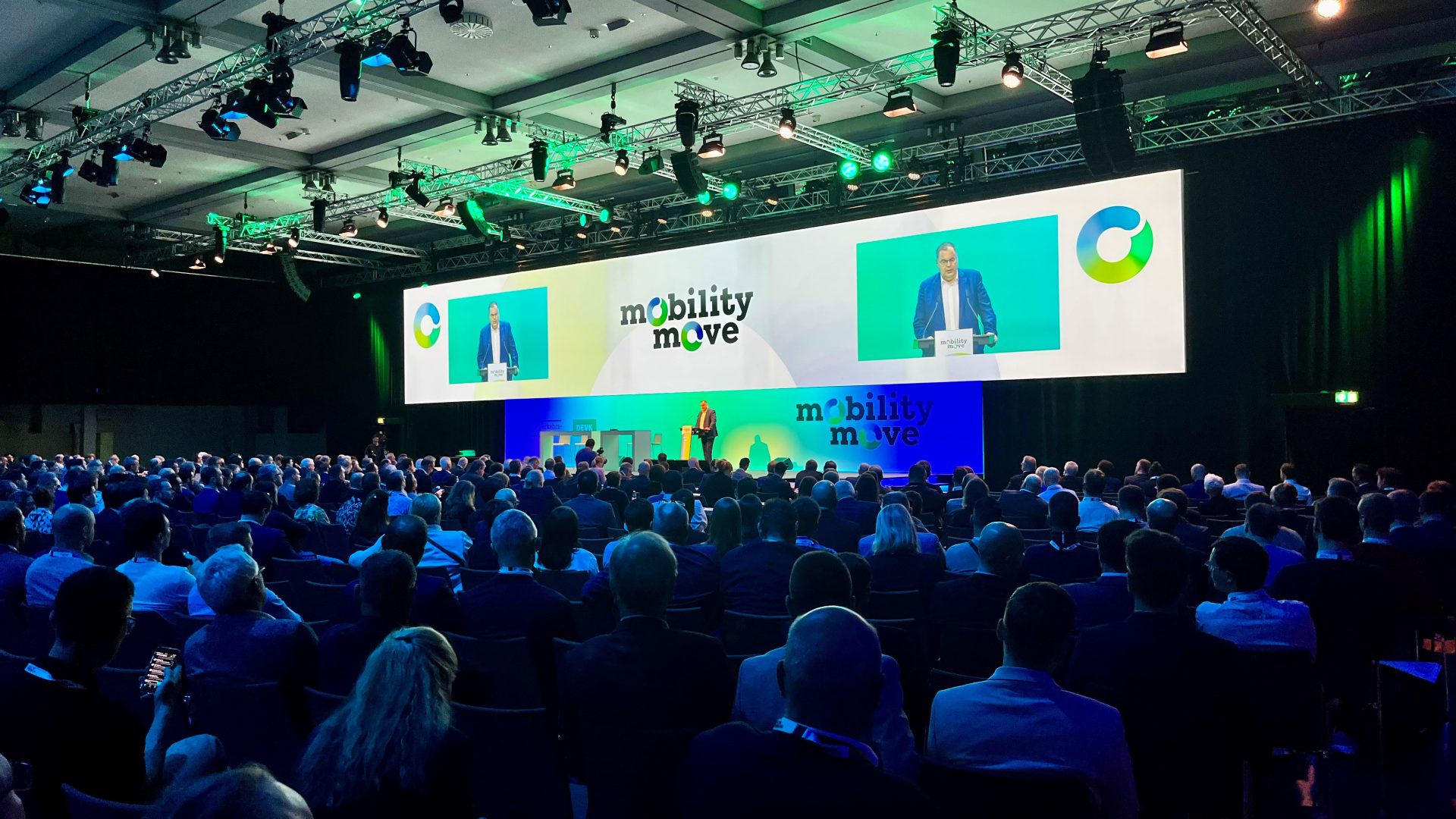
At Mobility Move 2026 in Berlin, the decarbonisation of public transport fleets and the future integration of autonomous technologies were central themes. Germany has already reached over 40% zero-emission buses in the city bus market, but scaling further remains challenging. Key issues include infrastructure financing, long-term contract structures, and the role of public transport operators […]
At Mobility Move 2026 in Berlin, the decarbonisation of public transport fleets and the future integration of autonomous technologies were central themes. Germany has already reached over 40% zero-emission buses in the city bus market, but scaling further remains challenging. Key issues include infrastructure financing, long-term contract structures, and the role of public transport operators in emerging autonomous ecosystems. Evolving business models, economics of on-demand services and the competitive landscape of bus manufacturing in Europe are other central topics for the industry today.
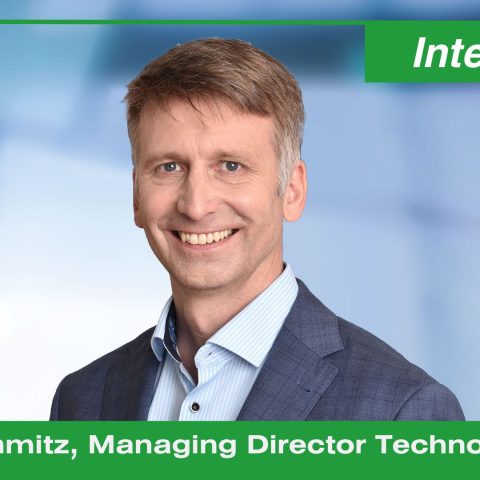
In this context, we spoke in Berlin with Martin Schmitz, Managing Director Technology at VDV, the German association of public transport companies (which is also organizer of the event), to discuss the main barriers to scaling electrification, the role of infrastructure investment and the evolution of transport services towards digitalised and potentially autonomous operations.
We don’t just buy buses based on price. Service quality is crucial: availability of spare parts, service staff, and local support. European manufacturers excel in customer service. This is very important to us. However, we are observing a shift: around 20% of the zero-emission buses in the most recent tenders are from non-European suppliers – a higher percentage than before. Last year, this figure was around 5%. (…) It’s no longer just about price, but about delivery capability. Whoever can deliver on time will gain market share.
Martin Schmitz, Managing Director Technology, VDV
Martin Schmitz, VDV: the barrier of financing charging infrastructure…
As of last year, electric buses covered over 40% of the registrations in the city bus market in Germany. Which are the main barriers for upscaling decarbonisation in Germany? Is it infrastructure, vehicle supply, grid availability: what are the main barriers?
The key issue is financing. We need more money for investments, especially in infrastructure. This means building charging stations, grid connections, and modernizing bus depots. This is our main focus. While electric buses are still more expensive than diesel buses, cheaper electricity will allow for a positive overall operating cost over 12 years. So it is possible. However, the infrastructure cannot be financed by our companies, the public transport operators.
This reminds me of ACEA’s position: they suggest shifting subsidies from vehicles to ‘enabling conditions’ like infrastructure. Would you agree on that?
Well, both. We need both. Simply shifting subsidies from vehicles to “framework conditions” like infrastructure is not enough. Financially speaking, the focus must be on infrastructure.
Do you see a future where e-buses are financially self-sustaining?
Once the depots are fully electrified and only vehicle exchanges are necessary, the market could stabilize. Until then, however, the infrastructure costs are too high to be borne by the operators alone.
Is there space in Germany for innovative business models like bus-as-a-service or pay-per-kilometre, instead of classic vehicle subsidies for upfront purchase?
In Germany, there are different business models: many of our VDV members are public transport companies that operate on behalf of cities and require financial support for investments. In the private sector, however, contracts are based on kilometer traveled. In these cases, operators can reinvest based on this model.
Which model do you see as more beneficial for the energy transition, from a financial perspective?
Well, that depends on the contract duration. Our members often have contracts with terms exceeding 20 years, which offers investment security. However, cities are not particularly interested in investing more in public transport. Therefore, we are bound by long-term contracts and require additional funding to invest in innovative technologies such as electric buses.
From a purely technical standpoint, battery-electric buses are cheaper and easier to manage. All developments – in cars, trucks, and trains – point toward batteries. Fuel cells are too complex. We don’t believe they will play a significant role in the future. Battery-electric buses are the way to go. (…) Battery development is progressing rapidly. We already have buses with ranges of 400–500 km. Hydrogen, on the other hand, would require a completely separate infrastructure, which would be too expensive. We need to focus on one technology.
Martin Schmitz, Managing Director Technology, VDV
Public transport contracts, innovation, outdated metrics…
Do these contracts typically include innovation clauses?
No, normally, no innovation clauses are included. We have initiated discussions because we need to adapt service quality to increasing digitalization, electromobility, and autonomous driving. In the past, however, the contracts were more rigid: bus or tram journeys were simply based on the kilometers traveled.
Which is quite an outdated metric.
You are right, that’s a rather outdated metric. Technological development is progressing so rapidly that we need more flexibility to integrate new technologies.
For example, on-demand services, which cannot be measured in kilometres.
Exactly. It’s not just about the mileage allowance, but about providing a 24-hour service, and that requires different metrics.
Do you see a breakeven point where on-demand transport becomes economically sustainable?
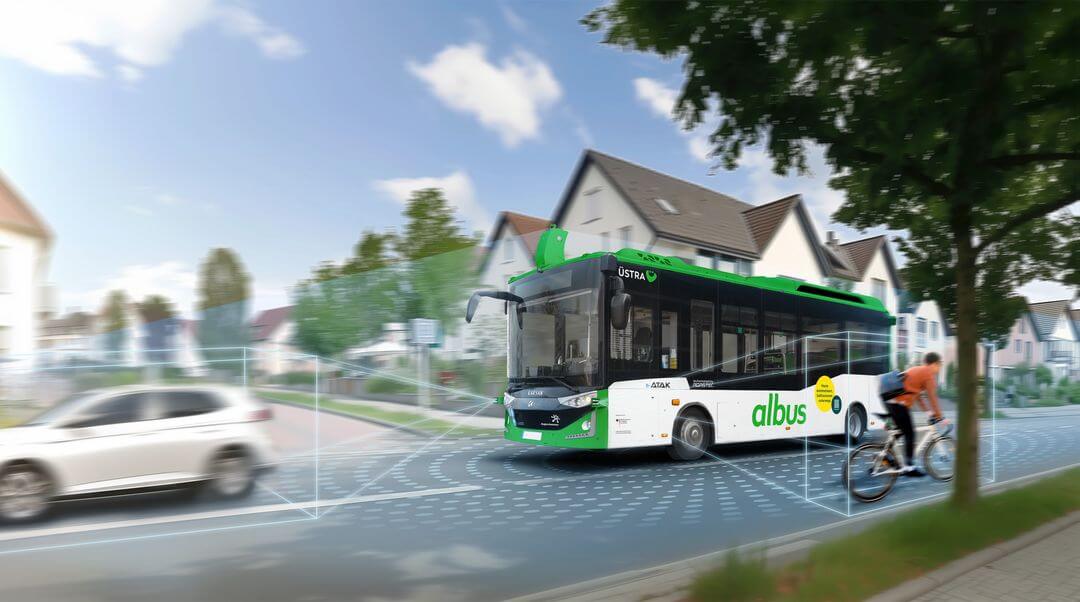
Currently, on-demand services are more expensive than standard services. However, we see them as the primary use case for autonomous driving. Driverless technologies will allow us to reduce costs. On-demand services therefore serve as a learning ground for future autonomous services.
Studies suggest up to a 50% cost reduction enabled by the use of autonomous vehicles.
Yes, indeed.
The case for autonomous fleets in Europe, according to VDV
A key question is who will operate these autonomous fleets.
That’s the crucial question. We want to be part of the solution: we want public transport operators to run these systems. We don’t want a purely private solution, possibly from non-European companies, and we also want to continue preserving high-quality jobs in Europe. Therefore, we must ensure that part of this business remains in Europe.
How can VDV ensure that autonomous mobility remains in the hands of public transport operators?
The easiest way for cities would probably be to accept all-in-one solutions: someone comes along and deploys thousands of robotaxis. But then local jobs are lost, and the city’s role is limited to cleaning the vehicles. We want control systems, operation, and maintenance to remain local. The technology can be purchased, but the operation should stay within the city.
Under which conditions can autonomous driving complement public transport instead of competing with it?
It depends on the region. In rural areas, smaller autonomous vehicles can be used instead of large buses. In cities, a combination of buses, trams, subways, and on-demand autonomous services is needed. Integration into the public transport system is crucial. Autonomous vehicles should ensure first- and last-mile connections to rail and other high-capacity modes of transport.
Speaking here at Mobility Move, Waymo stressed that one-third of its journey in San Francisco connects to public transport stations.
Yes, because robotaxis are expensive for long distances. They are better suited for short trips, for example to reach a train station without having to walk a kilometer or two.
Could partnerships with companies like Waymo or Baidu be an option?
Yes, but this creates a parallel system. These companies will concentrate on densely populated urban areas with high demand. We would prefer to deploy such services in rural areas to complement public transport. Therefore, cities and governments need to determine how these systems can be meaningfully integrated.
What about the role of the European industry? How can operators create the conditions for OEMs to invest in autonomous technologies?
As VDV, we want to send a market signal. If OEMs know we’re prepared to deploy one to two thousand vehicles, they’ll invest. We’re preparing policy documents to demonstrate the existing demand to both policymakers and the industry.
Would subsidies be needed to start these deployments?
Yes, initially. However, our research shows that costs could be lower after two to three years than they are today. Then subsidies would no longer be necessary.
Currently, on-demand services are more expensive than standard services. However, we see them as the primary use case for autonomous driving. Driverless technologies will allow us to reduce costs. On-demand services therefore serve as a learning ground for future autonomous services. (…) We would prefer to deploy such services in rural areas to complement public transport. Therefore, cities and governments need to determine how these systems can be meaningfully integrated
Martin Schmitz, Managing Director Technology, VDV
“Battery-electric buses are the way to go”
Transitioning to zero emission technologies brings into play also fuel cell technology. In Europe, for every 100 new BEV buses, we have just five fuel cell bus registrations. But Germany has a big share in this number: you make half of the (small) volumes of fuel cell buses in the continent. So how do you see hydrogen as a way to complement battery electric buses? Which is the take of your organization?
There are differing opinions. From a purely technical standpoint, however, battery-electric buses are cheaper and easier to manage. All developments – in cars, trucks, and trains – point toward batteries. Fuel cells are too complex. We don’t believe they will play a significant role in the future. Battery-electric buses are the way to go.
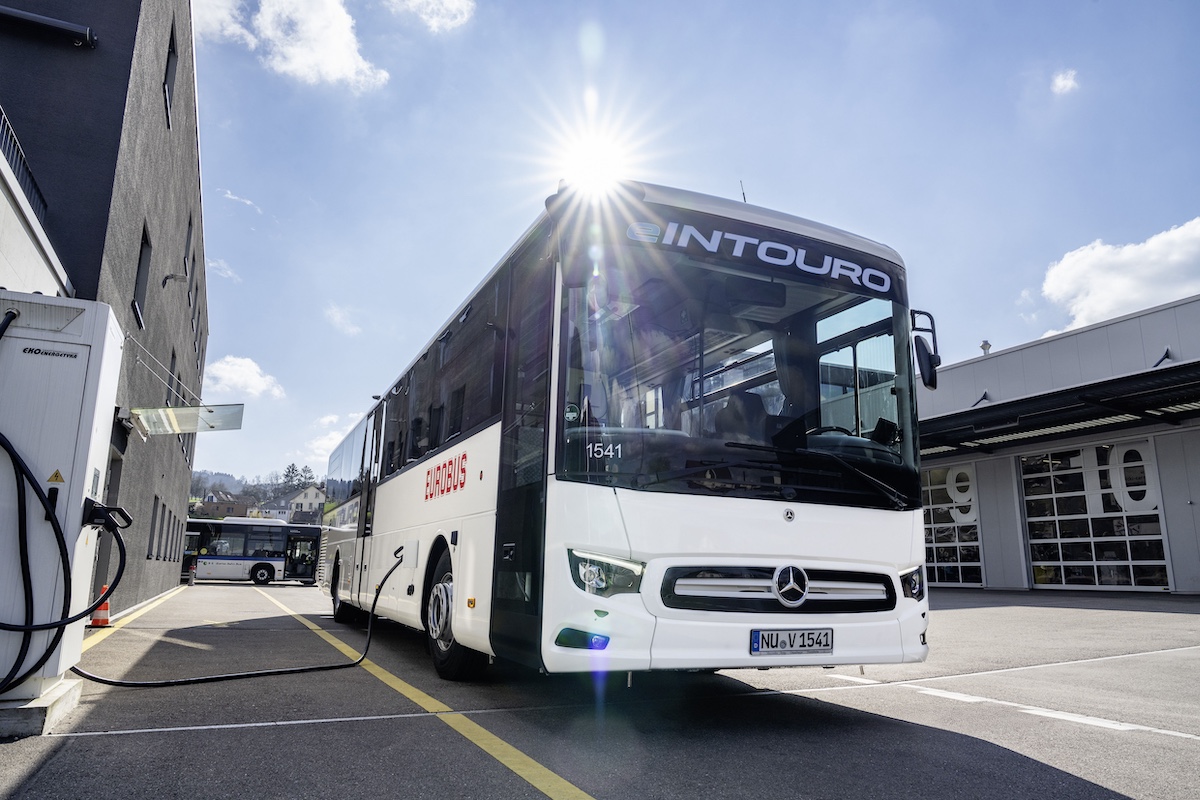
Even for longer distances, like intercity?
Battery development is progressing rapidly. We already have buses with ranges of 400–500 km. Hydrogen, on the other hand, would require a completely separate infrastructure, which would be too expensive. We need to focus on one technology.
How do you see the competitive landscape, especially with non-European bus manufacturers entering the market?
We don’t just buy buses based on price. Service quality is crucial: availability of spare parts, service staff, and local support. European manufacturers excel in customer service. This is very important to us. However, we are observing a shift: around 20% of the zero-emission buses in the most recent tenders are from non-European suppliers – a higher percentage than before. Last year, this figure was around 5%.
Delivery times also seem to be a key factor.
Yes, that’s exactly the point. It’s no longer just about price, but about delivery capability. Whoever can deliver on time will gain market share.
Finally, what is the value of events like Mobility Move in this evolving landscape?
The value lies in the exchange of knowledge and networking. Public transport companies are locally based and not in competition with each other, so they can learn from one another. Events like this help them understand the use of new technologies.