BUS2BUS 2026 prepares to gather transport leaders in Berlin with 100+ sessions and 120+ speakers
BUS2BUS 2026 is set to bring together transport, technology and industry stakeholders in Berlin on 15–16 April, with a program centred on artificial intelligence, automation and sustainable mobility. The event, held at the Berlin Exhibition Grounds, will feature more than 100 sessions across four stages and involve over 120 speakers from politics, business, research and […]
BUS2BUS 2026 is set to bring together transport, technology and industry stakeholders in Berlin on 15–16 April, with a program centred on artificial intelligence, automation and sustainable mobility.
The event, held at the Berlin Exhibition Grounds, will feature more than 100 sessions across four stages and involve over 120 speakers from politics, business, research and operations. According to a press note by Bus2Bus, the program is structured to address technological, economic and regulatory developments shaping the bus sector.
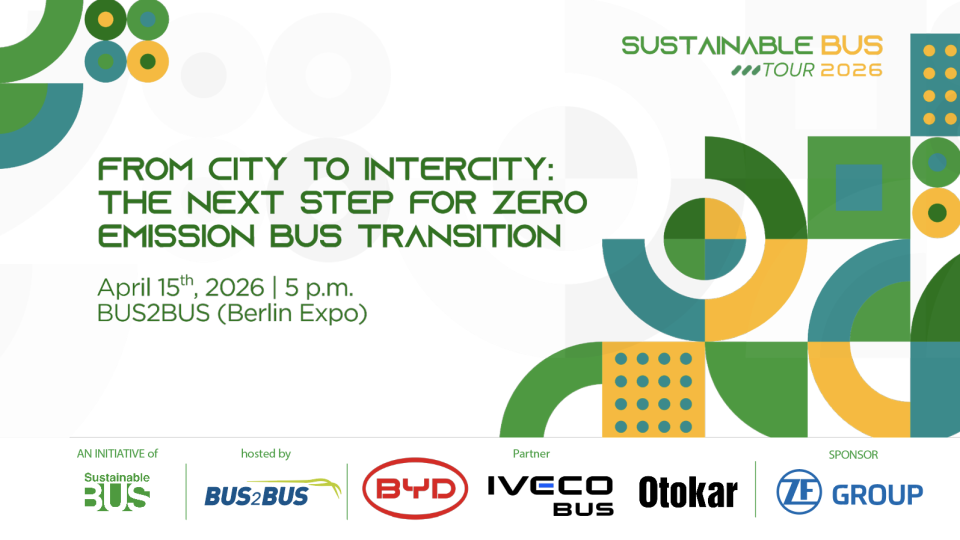
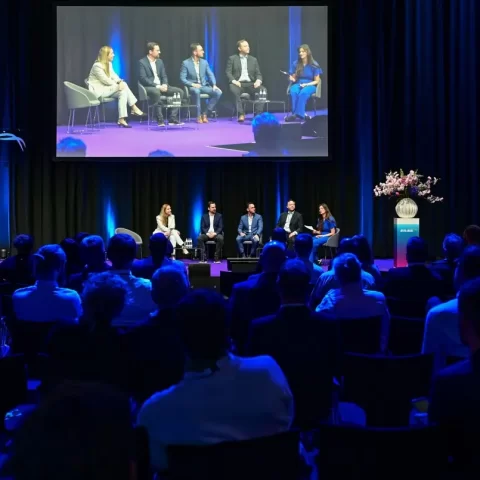
A dedicated Sustainable Bus panel, belonging to the Sustainable Bus Tour initiative, will further deepen discussion around climate-neutral transport, regulatory frameworks and implementation strategies, focusing on practical pathways toward decarbonization of intercity transportation.
AI and autonomous mobility at the core of BUS2BUS program
The stage program of BUS2BUS 2026 will open on April 15 with a keynote by Vanessa Cann, entrepreneur and Forbes 30 under 30, focused on the role of algorithms and autonomous decision-making in the mobility sector. The session titled “When Algorithms Reshape Markets: Strategies for Companies in the Age of Autonomous Decisions” will address the use of data-driven systems and their application in transport and mobility services, as stated in the press note by Bus2Bus.

Artificial intelligence and automated mobility will be central topics across multiple sessions. The Future Forum will host discussions on the deployment of autonomous buses in public transport systems and their interaction with emerging mobility services. Applications of AI in coach operations will also be addressed, including use cases in travel planning, demand forecasting and customer communication.
From applications to bus tourism and policy dialogue
The Deep Dive Stage will focus on operational implementations. DB Regio will present use cases for automated buses in public transport, including applications in rural mobility. Ximedes will showcase AI-based onboard systems designed to integrate passenger information, ticketing and operational management.
Bus tourism will represent another key area of the program, with sessions dedicated to low-emission vehicles, integrated mobility services and cooperation models with tourism stakeholders. The “Bus Tourism Think Tank” will host discussions on market development and fleet transition strategies, including zero-emission technologies such as electric buses.
The event will also include political engagement. German Federal Minister of Transport Patrick Schnieder is scheduled to visit the exhibition on April 16, including a tour of the trade show and participation in the bdo Political Talk. Further opportunities for political exchange and discussion will be provided by the tour of the exhibition by the Transport Committee of the German Bundestag on 15 April and the visit of the Parliamentary Bus Group on 16 April.
The Sustainable Bus Tour in Berlin
The first session of the Sustainable Bus Tour 2026 will be held in Berlin and is entitled “From city to intercity: the next step for zero emission bus transition”, as it will focus on the expansion of electrification beyond urban networks into the intercity segment . According to ACEA estimates, between 2025 and 2030 around 20,000 electric intercity buses and coaches are expected to enter the European market, alongside 48,000 urban buses, requiring approximately 30,000 dedicated charging points for long-distance operations .
Higher operating speeds, extended duty cycles and infrastructure constraints introduce new technical and financial parameters compared to urban deployment. The Berlin conference will address infrastructure planning, grid capacity, financing models and regulatory stability as key factors in scaling intercity zero-emission fleets. Berlin’s panel will take place on April 15, 2026, at 5:00 p.m.