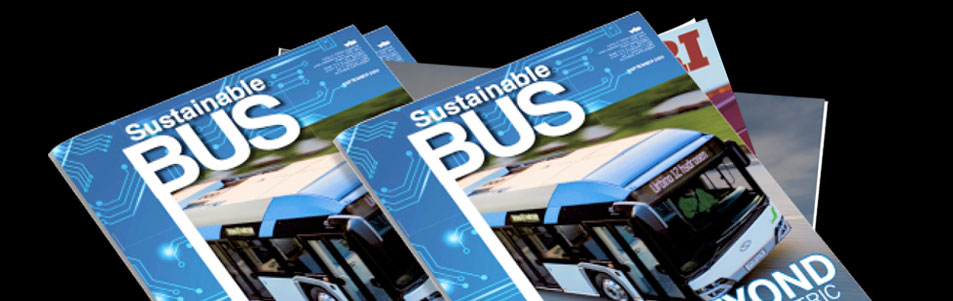
From e-coaches to UITP insights on MENA, Altas industrial strategy and Europe’s trolleybus revival (and more) in new Sustainable Bus magazine
From coach electrification and OEMs industrial strategies to charging infrastructure, battery roadmaps and the evolving role of trolleybuses, the first issue of Sustainable Bus Magazine for 2026 aims (again) to offer a detailed snapshot of a bus and coach sector in rapid transformation. As the opening issue of the year, the magazine will be distributed […]
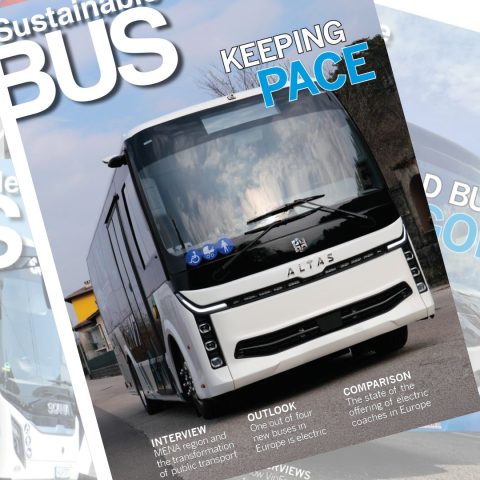
From coach electrification and OEMs industrial strategies to charging infrastructure, battery roadmaps and the evolving role of trolleybuses, the first issue of Sustainable Bus Magazine for 2026 aims (again) to offer a detailed snapshot of a bus and coach sector in rapid transformation.
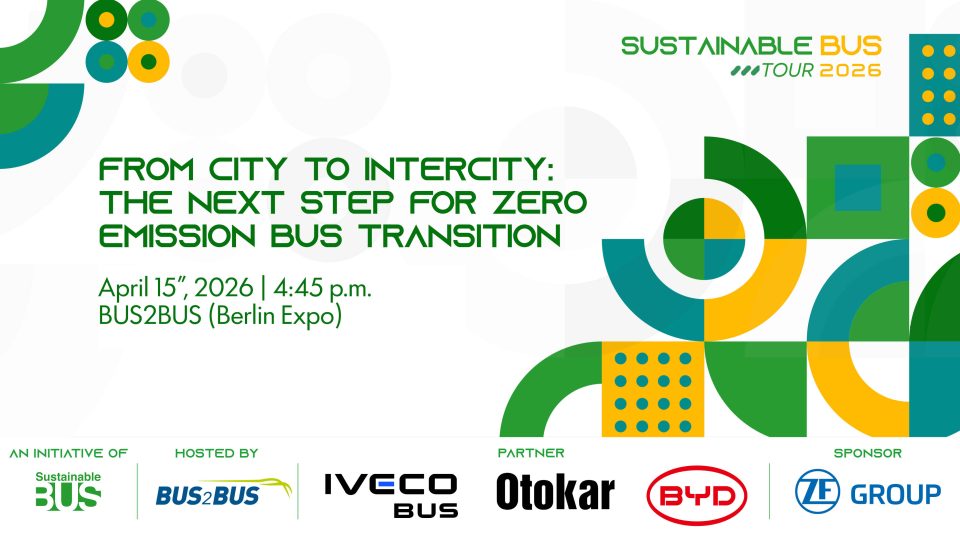
As the opening issue of the year, the magazine will be distributed internationally across Mobility Move and Bus2Bus in Berlin as well as at UITP Summit in Dubai.
Two in-depth interviews anchor the new issue, offering complementary perspectives on how the bus industry is evolving at both regional and technological level.
UITP and BorgWarner in the interview section
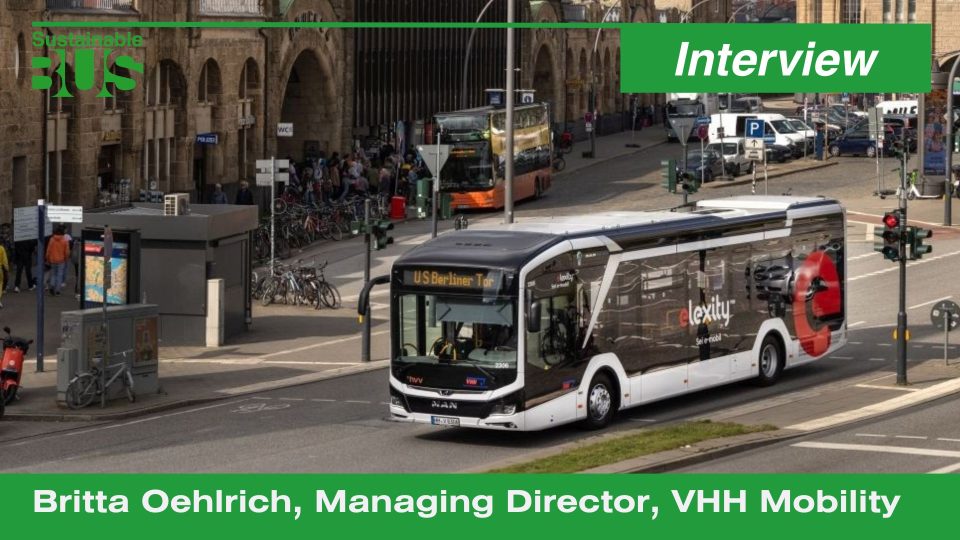
Hashem Alhendawi (UITP) provides an overview of public transport development across the Middle East and North Africa, analysing funding models, regulatory frameworks and system integration in a region undergoing rapid transformation. The focus then shifts to technology and supply chains. Martin Busche (BorgWarner) outlines the company’s roadmap and battery strategy, addressing chemistry selection, performance targets and long-term scalability.
The Outlook section turns to market figures. Europe’s e-bus sector closed 2025 with more than 9,000 registrations and growth of around 40%, marking another record year for zero-emission buses. The analysis maps national dynamics, OEM performance and the evolving balance between established manufacturers and new entrants.
What about e-coaches?
An analytical contribution inspired by McKinsey’s perspective on the EU bus industry explores intensifying competition, cost pressure and the gradual emergence of driverless technologies. These structural themes are further examined through an in-depth feature on Altas Auto, that we visited in December last year and is also the cover story for this issue, highlighting how manufacturers are redefining their industrial strategies in a more demanding market environment.
Vehicle analysis features prominently in the Comparison section, focusing on the expanding (but still marginal!) offer of 12-metre zero-emission electric coaches. Two models are examined in detail: the King Long C12E, designed primarily for intercity operations and available also as a coach, and the Yutong T12E, assessed with particular attention to driver ergonomics and luggage capacity — key parameters for long-distance services.
The issue concludes with a comprehensive overview of trolleybus developments in 2025, mapping new projects and network extensions across Europe and confirming the continued relevance of trolleybuses within the broader zero-emission ecosystem.