Gillig to partner with over 48 USA communities through FTA Low-No Vehicle grant program
Gillig announces that it will partner with more than 48 communities nationwide through the Federal Transit Administration’s (FTA) Low- and No-Emission (Low-No) Vehicle grant program. These partnerships represent 65% of all awards designated for heavy-duty transit vehicles, the OEM underlines. In 2022 45 transit agencies in the US used FTA grants to deploy Gillig low […]
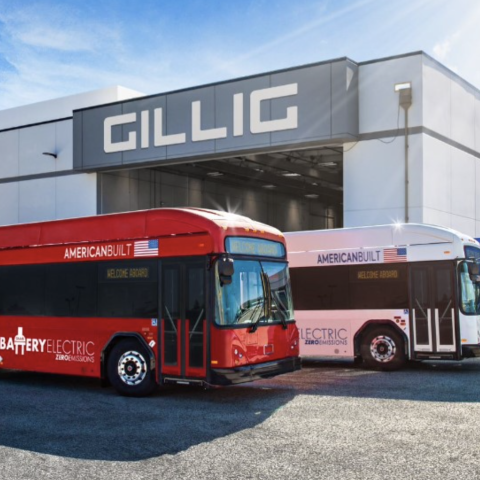
Gillig announces that it will partner with more than 48 communities nationwide through the Federal Transit Administration’s (FTA) Low- and No-Emission (Low-No) Vehicle grant program. These partnerships represent 65% of all awards designated for heavy-duty transit vehicles, the OEM underlines.
In 2022 45 transit agencies in the US used FTA grants to deploy Gillig low and zero emission buses. US bus manufacturer Gillig is set to expand its zero-emission product lineup with the addition of a hydrogen fuel cell powered bus in 2026. The OEM launched its new BEV bus platform in 2022.

Gillig selected in FTA Low-No Vehicle grant program
This year, the FTA awarded approximately $1.5 billion to support 117 projects across 47 states, with 74 projects aimed at improving the emissions of heavy-duty transit vehicles. This significant level of funding was made possible by the 2021 Bipartisan Infrastructure Law which provided nearly $5 billion of funding in the past three years, Gillig sums up. The Low-No Emissions program supports the transition towards greater sustainability by providing resources to replace, rehabilitate and purchase low and zero emission buses, as well as building the necessary infrastructure and workforce development needed to support that transition.
Gillig’s range of low and zero-emission buses (CNG, Hybrid-Electric, Battery Electric, or Hydrogen Fuel Cell) ensures that every transit agency can select the optimal solution to meet their specific needs. Built on Gillig’s proven Low-Floor platform, all models offer seamless fleet integration, ease of maintenance, and shared common parts across different propulsion types, the manufacturer says.
“We are thrilled to be the trusted partner for these communities as they make transformative investments in their transit systems,” said Bill Fay, Gillig’s Vice President of Sales. “Our commitment to quality and reliability has made Gillig a cornerstone of the public transit sector. This funding empowers our customers to drive America forward to a more sustainable and connected future alongside Gillig.”