H2 buses in Poznań have been temporarily withdrawn due to diagnostic faults. Investigations on quality of hydrogen
14 hydrogen buses operated by MPK Poznań, in Poland, have been temporarily withdrawn from service and returned to the depot. The decision was made on an emergency basis after onboard diagnostic systems detected unexpected faults in the vehicles, as reported on Polish trade media Transinfo.pl. The same operator MPK announced the decision on social media. […]
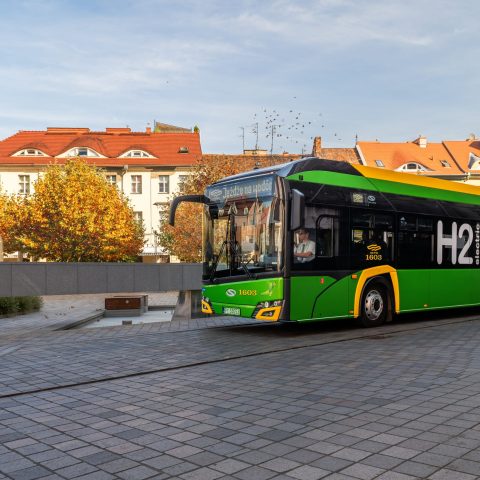
14 hydrogen buses operated by MPK Poznań, in Poland, have been temporarily withdrawn from service and returned to the depot. The decision was made on an emergency basis after onboard diagnostic systems detected unexpected faults in the vehicles, as reported on Polish trade media Transinfo.pl. The same operator MPK announced the decision on social media. Causes are under investigation, Solaris shared the more likely reason being poor fuel/hydrogen quality.
As of 4th March, in the afternoon also in the city of Walbrzych some Solaris fuel cell buses were put out of service. This move points to hydrogen supplier ORLEN, in charge of providing H2 in both cities, which could mean a wider problem with supply or refuelling infrastructure.
378 fuel cell buses were registered all around Europe in 2024, growing +82% on 2023. with Solaris achieving a 65% market share.
34 fuel cell buses will be in Poznan’s fleet
The affected fleet consists of 14 (out of 25) Solaris Urbino 12 Hydrogen buses, ordered in 2022 as part of a pilot project aimed at reducing emissions in Poznań. And a further order for another 9-units batch was formalized in February 2025. These 12-metre low-floor buses are equipped with a 70 kW hydrogen fuel cell and a 37.5 kg hydrogen storage tank, providing a maximum range of up to 350 km per refuelling. In January, MPK had also ordered 17 articulated electric buses from Solaris.
The operator wrote on social media on 3rd March: “We would like to inform you that we were forced to bring back to the depot all hydrogen-powered Solaris Urbino 12 Hydrogen buses, in which the on-board computers signalled a breakdown today in the afternoon hours. Due to the priority of line services, all the withdrawn units were immediately replaced with the remaining available rolling stock. We are currently working together with the bus manufacturer and the hydrogen fuel supplier to clarify the cause and resolve the problems, which we will keep you informed of.”
Asked about the episode, Solaris states that “the most likely cause of the malfunctions in several hydrogen buses in Poznań is poor fuel/hydrogen quality. This is currently being clarified and checked in independent laboratories examining hydrogen samples from the station that supplies the buses in Poznań”.