Holon targets 60% cost reduction with integrated autonomous shuttle platform: our interview with Head of Sales Martin Lischka
As public transport systems across Europe face increasing driver shortages and cost pressures, autonomous mobility is moving from pilot projects towards scalable deployment. Holon, a subsidiary of the BENTELER Group and backed by the Saudi-based investor Tasaru as a minority shareholder, has been launched in 2022 as the autonomous vehicles division of the group and […]
As public transport systems across Europe face increasing driver shortages and cost pressures, autonomous mobility is moving from pilot projects towards scalable deployment. Holon, a subsidiary of the BENTELER Group and backed by the Saudi-based investor Tasaru as a minority shareholder, has been launched in 2022 as the autonomous vehicles division of the group and is positioning itself in this emerging segment with a fully integrated approach combining vehicle, software and services.
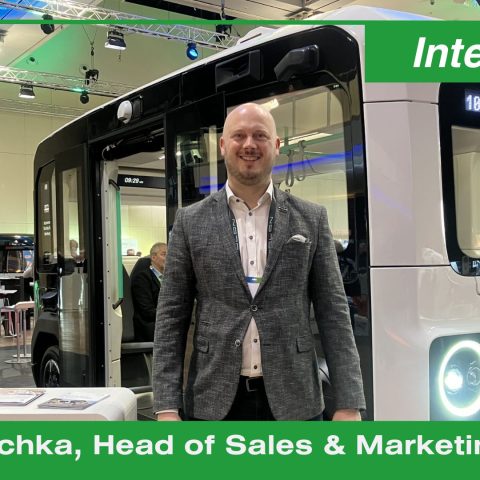
During Mobility Move 2026 in Berlin, held in mid March, we spoke with Martin Lischka, Head of Sales & Marketing at Holon since January 2026. He previously held senior roles at Audi and Automobili Pininfarina, before moving to Quantron, where he covered global product management, corporate strategy and marketing. Most recently, he served since April 2025 as Chief Executive Officer of Arthur Holding.
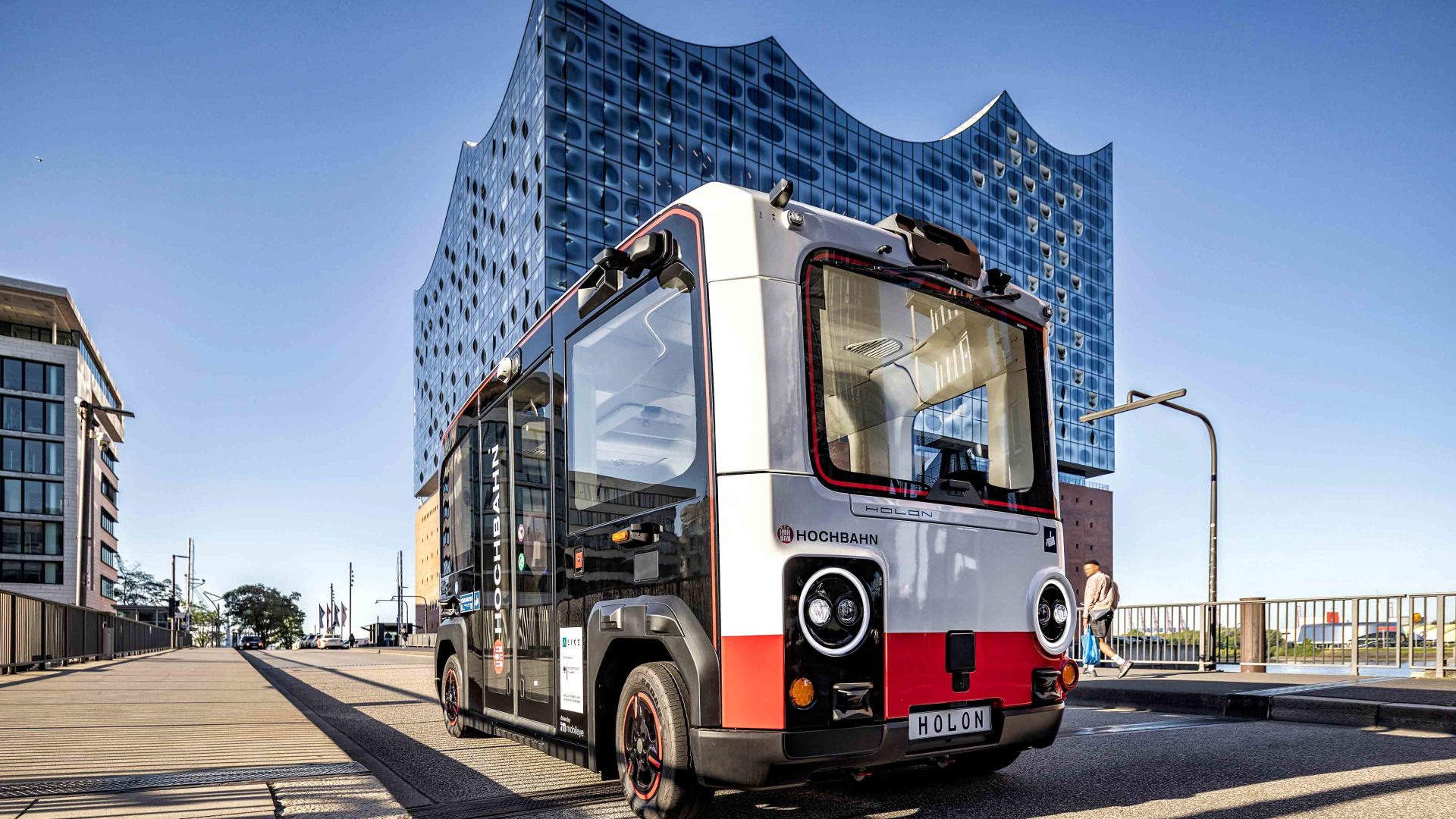
Holon was established by German group BENTELER as part of its strategic move beyond its traditional Tier 1 automotive supply business into new mobility solutions. In recent years, the company has developed its fully electric, Level 4 autonomous shuttle platform, named Urban, advancing some first pilots projects including deployments in Hamburg. The company has also expanded internationally, with plans for production in the United States and expected rollout via Lyft platform following a partnership signed in July 2025. Also CharterUP is partnering with Holon to integrate autonomous shuttles into group transportation networks in North America, as announced earlier this year.
What we are creating is no longer just an OEM. That is a traditional business model that some competitors have refined over the past hundred years. What the market now requires is a fully integrated system, which is the solution we provide. It includes software from ioki for mobility analytics, operator management and the customer interface, alongside the vehicle itself and the financing solution. These elements now come from one group: Ioki for the software, Holon for the vehicle, and BENTELER Mobility for financing, operations and infrastructure services.
Martin Lischka, Head of Sales & Marketing, Holon
The discussion touches on the business case for autonomous vehicles, total cost of ownership, and the role of integrated platforms in enabling operators to reduce upfront investment risks. The interview also explores market readiness in Europe and the US, the challenges of scaling beyond pilot projects, and the importance of combining hardware, software and financing into a single offering (building on the recent takeover of ioki from Deutsche Bahn).
Martin Lischka, autonomous driving versus drivers’ shortage
BENTELER has a long history in manufacturing. How did this lead to the development of an autonomous vehicle platform?
BENTELER Group has a strong heritage in metal processing, we’re talking about 150 years. To put it simply: You can hardly find a vehicle that doesn’t include a component like an axle or a B-pillar from BENTELER.
As a Tier 1 supplier, BENTELER has provided components for vehicles for decades. A couple of years ago, the decision was made to enter a segment that is not covered: something smaller than a bus but larger than a passenger car. This answers to other reasons…
Please.
As a Tier 1 supplier, you don’t want to compete with your customers: OEMs producing cars or buses. This new segment sits in between. It’s a new kind of vehicle that doesn’t take business away, but adds a solution, for example, to the shortage of drivers.
Driver shortages are a major issue across Europe. Around 10% of drivers are missing.
And it will get worse in the future; driver shortage will become a real issue. This creates an opportunity to offer services that were not viable before: smaller vehicles, no driver, and therefore the ability to serve routes that were previously inefficient or loss-making.
The business case of Investing in driverless technology
But this is still a major investment for BENTELER. The driverless vehicle segment is a niche where several players have struggled in recent years. What is the business logic behind it?
Holon was created with a long-term perspective. It is the entry into a future market that complements the core business because it builds on established expertise.
Holon represents diversification and acts as a lighthouse project for the group. At the same time, it is strongly focused on business growth.
You mentioned that scaling is the next phase…
We aim at scaling, that requires a global footprint. We are committed to our homebase in Paderborn and are already today in Germany active with our fleet of autonomous Level 4 vehicles driving in Hamburg. In parallel we are preparing activities in further cities in Europe but also in the USA. We leverage on a great combination: German engineering, Italian design and global expertise of our teams and ecosystems in USA, Europe and Middle East.
And then there is the software…
Exactly, the autonomous driving software comes from Mobileye, but we also rely on dispatching software from ioki, which is now part of the BENTELER Group.
What we are creating is no longer just an OEM. That is a traditional business model that some competitors have refined over the past hundred years. What the market now requires is a fully integrated system, which is the solution we provide. It includes software from ioki for mobility analytics, operator management and the customer interface, alongside the vehicle itself and the financing solution. These elements now come from one group: Ioki for the software, Holon for the vehicle, and BENTELER Mobility for financing, operations and infrastructure services.
The technology is on track: the vehicles have been built, the autonomous driving system has been implemented. Now it is in validation. But public transport requires respecting the rules of tenders, you can’t just buy vehicles like in a supermarket. Scaling depends also on being in the right tender at the right time.
Martin Lischka, Head of Sales & Marketing, Holon
So operators can avoid large upfront investments?
Customers that prefer not to carry the risk on their balance sheet or face high upfront expenditure, there is the option of a monthly fee instead of an initial capital investment. This applies not only to one vehicle, but also to fleets of five, ten or fifty units. In this way, we address one of the main constraints in the market, namely the lack of available upfront capital.
However, our offer is fully modular. If an operator only wants the vehicle, we can provide that. If they want software and a full-service solution, we can do that too. It’s like a restaurant menu: you choose what you need.
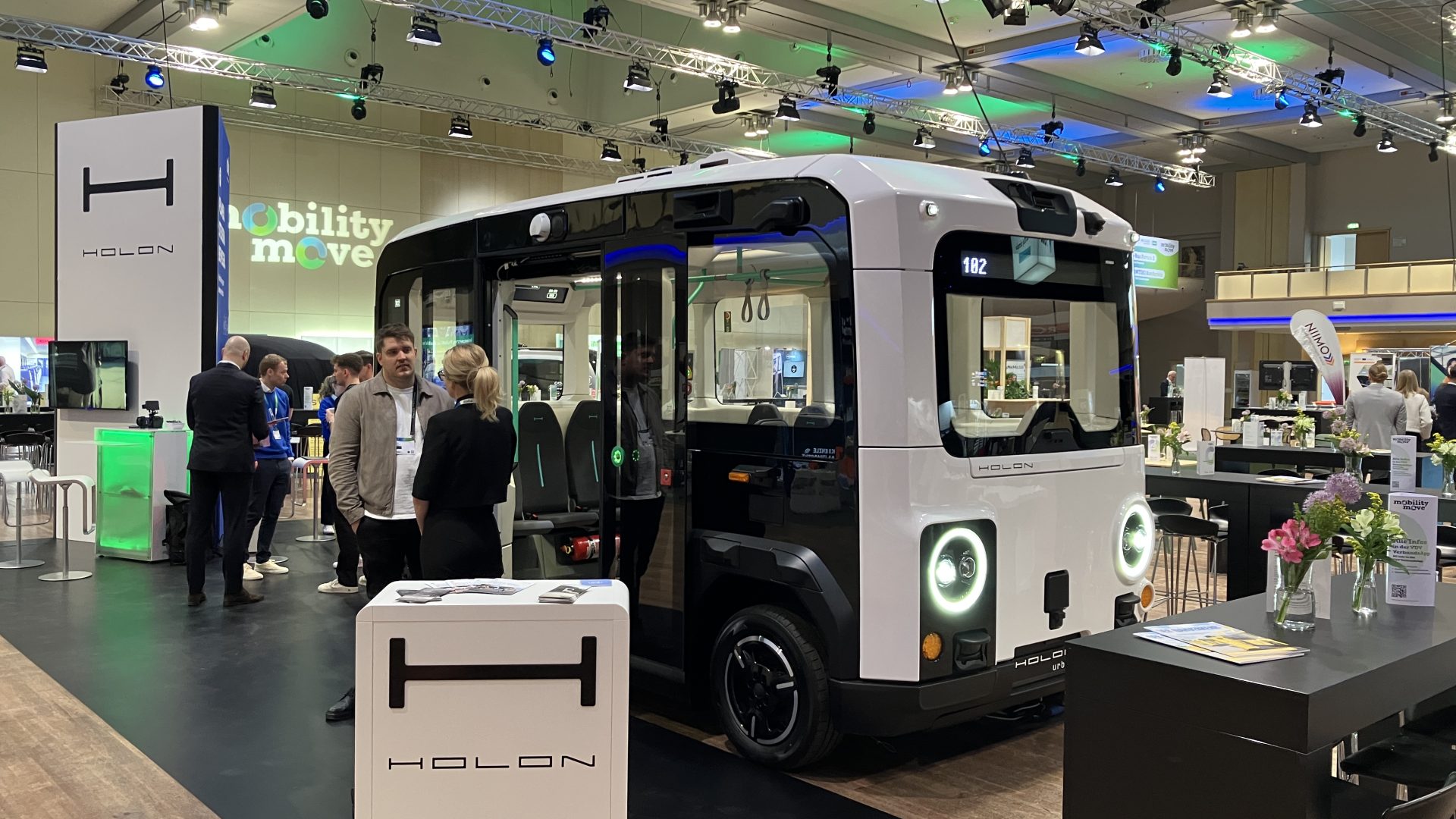
In your presentation at Mobility Move, you mentioned up to 60% TCO reduction. How is that calculated?
It depends on the current fleet. In Europe, operating a bus can cost €130 to €150 per hour. We calculate based on partially replacing or optimising that fleet. The biggest factor is removing the driver cost which does not take jobs away, but solves the problem of existing driver shortages already today.
With our 360° solutions model, over time and including vehicle and software services we can reduce those hourly costs by up to 60%.
Yes. Germany, for example, has one of the most advanced regulatory frameworks in Europe. The future is electric, connected, autonomous and shared. We are not replacing all buses, we are one additional part of a broader ecosystem. Through ioki, we can analyse entire cities and create digital twins, modelling all mobility flows. We can recommend a mix: HOLON urban vehicles, traditional buses, scooters, taxis. The key is integration. Today, these systems are often disconnected.
Martin Lischka, Head of Sales & Marketing, Holon
From autonomous driving pilots to scaling
What are the next steps for deployment of the Holon Urban vehicle?
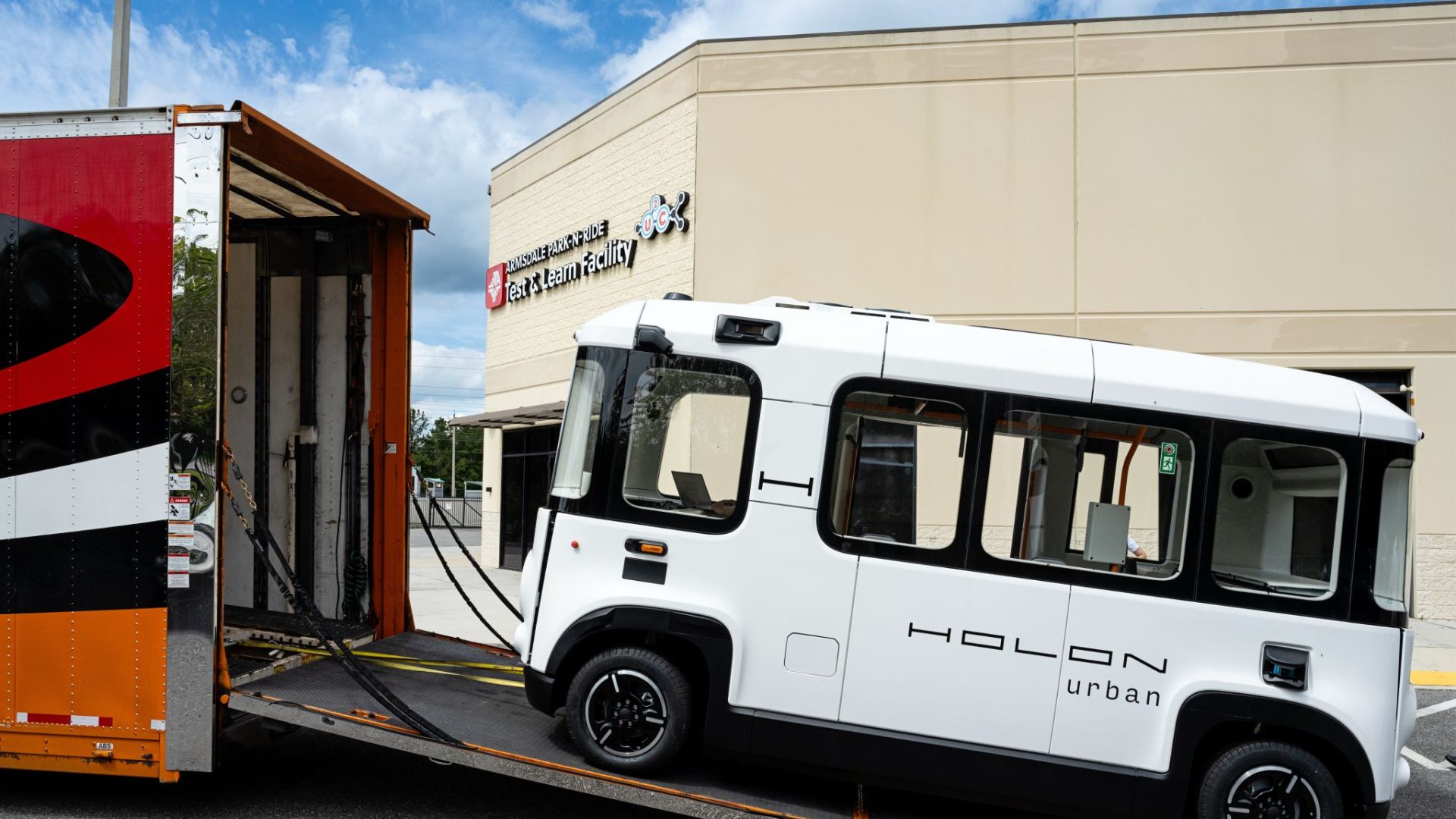
We are working closely with multiple cities and e.g. in Jacksonville, Florida who are innovators and trailblazers in the field of autonomous vehicles. There are many other requests for pilot projects with up to five vehicles. But pilots are only the first step. Europe is very strong in testing, but we need to move beyond that.
Why is scaling more advanced in the US?
It’s partly cultural. In the US, technology is allowed to evolve faster over short time. In Germany, it has to be perfect from day one. That leads to different technology deployment and acceptance timelines. German culture is driven by engineers, we want perfection. But sometimes speed is equally important.
When will we see vehicles in operation?
In Germany, the vehicles are already operating in Hamburg – at the moment we are in the phase of public road testing. In the US, we expect deployment within 12 to 24 months, not only in Florida but we are also preparing our activities in other states.
What is still missing to enable scaling?
The technology is on track: the vehicles have been built, the autonomous driving system has been implemented. Now it is in validation. But public transport requires respecting the rules of tenders, you can’t just buy vehicles like in a supermarket. Scaling depends also on being in the right tender at the right time.
On demand transportation and economies of scale
How do you see the role of on-demand services? Many operators say they are still too expensive.
That’s typical for new technologies. Initial costs are high, but economies of scale will reduce them over time. We’ve seen this with battery-electric vehicles. It’s not a question of if, but when adoption accelerates.
So regulation and economics are already in place?
Yes. Germany, for example, has one of the most advanced regulatory frameworks in Europe. The future is electric, connected, autonomous and shared. We are not replacing all buses, we are one additional part of a broader ecosystem. Through ioki, we can analyse entire cities and create digital twins, modelling all mobility flows. We can recommend a mix: HOLON urban vehicles, traditional buses, scooters, taxis. The key is integration. Today, these systems are often disconnected.
Which European markets are you targeting?
Germany is currently the top priority. At the same time, markets such as Austria, Benelux, France, Italy and Norway are also being explored.
Do you already have a structure in these countries?
BENTELER has around 90 locations worldwide, providing a strong backbone in terms of legal entities, IT and operations. At the same time, the business operates independently from that structure.
You are then relying on BENTELER structure for future market entry?
Different options are still under consideration. We could use BENTELER’s local structure, set up a dedicated national sales company, or work with third-party partners. This has not been defined yet.
How do you prioritize markets?
Germany, as mentioned, is our home market and the first priority, alongside the expansion into the US, where demand is strong and Middle East, where we see on the long term great visions. So maybe it will be a story of German engineering, Italian design and US deployment? However, we can also move forward in other markets if the right conditions are in place, including incentives, local structures and public support.
Is the whole production taking place in Germany?
For now, yes. In the future, we plan production in the US, and later potentially in the Middle East, where our investor is based. Ultimately, it depends on customer demand, government support and regional strategies.