RATP Dev targets Italy’s next public transport concessions, promoting Transport as a Service to finance zero emission buses
As Italy edges toward a cycle of tenders for public transport concessions, RATP Dev is repositioning its Italian subsidiary to move from a single large concession (the one of Autolinee Toscane in Tuscany) to a broader, market-facing role. The strategy, outlined by RATP Dev Italia’s President Federico Tonetti in an interview published on Italian trade […]
As Italy edges toward a cycle of tenders for public transport concessions, RATP Dev is repositioning its Italian subsidiary to move from a single large concession (the one of Autolinee Toscane in Tuscany) to a broader, market-facing role. The strategy, outlined by RATP Dev Italia’s President Federico Tonetti in an interview published on Italian trade media (and our sister platform) Autobusweb, combines organisational strengthening, selective geographic focus and a clear stance on contracts, tariffs and decarbonisation.
Over the past year, RATP Dev Italia has evolved into an operational holding, reinforcing legal, institutional, operational and development functions. The company is now positioning itself for growth, prioritising the Centre-North and both bus and tram concessions’ opportunities.
At the core of RATP Dev’s approach lies the relationship between contracts and investment capacity. Tonetti argues that without genuine public–private collaboration the system cannot progress: “Either the sector puts in place real forms of public–private collaboration, or as it is now it will not go far.” Central to this is revenue flexibility. “A leverage on tariffs must be granted, in exchange for investments and measurable objectives,” he says.
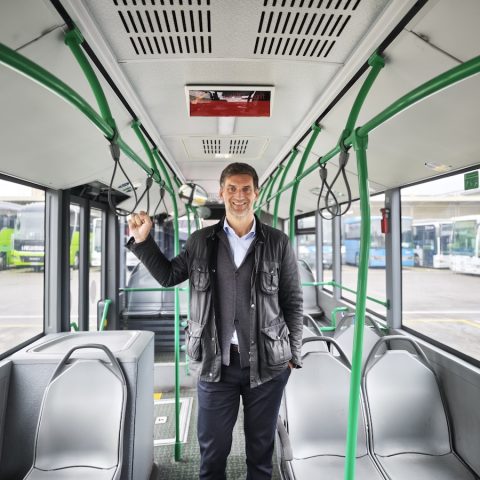
Federico Tonetti, RATP: Transport as a Service to support electrification
What is interesting, RATP Dev Italy is promoting alternative financing approaches. Project financing is seen as viable if based on solid industrial plans, while Transport as a Service (TaaS) is proposed as a complementary option. “We believe that contracts for local public transport should open spaces to new mechanisms, complementary to the existing ones,” Tonetti explains, pointing to TaaS as a way to reduce upfront investment and lower barriers to entry by shifting costs from Capex to Opex.
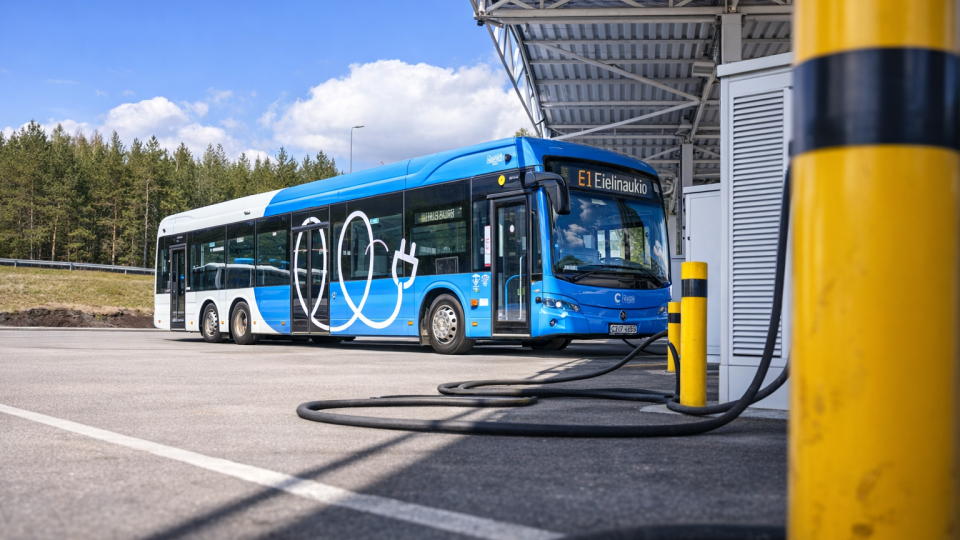
The Transport as a Service (TaaS) is a model in which the transport operator pays a per-kilometre fee to a provider that owns the electric vehicles and the depot charging infrastructure. Instead of investing directly in physical assets, the operator purchases a mobility service, sometimes including electricity supply as part of a bundled offer.
This approach lowers upfront investment, reduces barriers to entry in tenders, and is accounted for as operating expenditure (Opex) rather than capital expenditure (Capex).
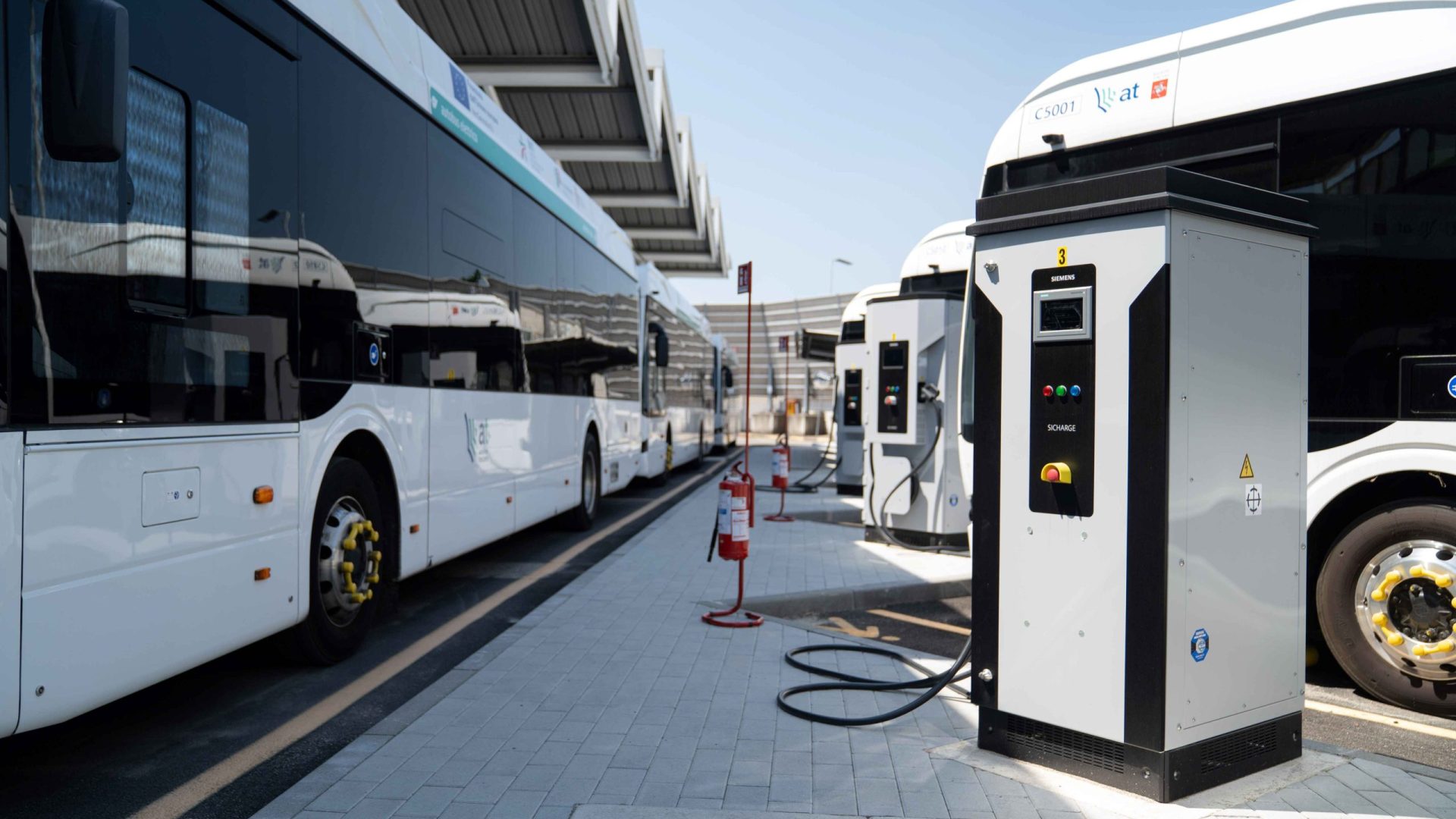
“The extra cost of Taas (Transport as a service) would be significantly lower than the purchase and operation of electric buses owned according to contractual parameters, although still slightly more expensive than diesel”, Tonetti states.
On the energy transition, the group adopts a pragmatic stance. Italy’s electric bus penetration remains limited, and costs are structurally higher than diesel. “The question is not whether it costs more or less. The question is: do we want to electrify or not?” Tonetti says. In this context, RATP Dev has launched a pilot with 30 retrofitted electric buses on intercity services in Tuscany. “The opportunity I see – he stated to Autobusweb – is to have an electric bus available with a delivery time of four to six weeks, at a cost that is one third of the best offer from any non-European electric bus manufacturer. In my opinion, it is worth trying”.