Scotland allocates £45 million for over 330 zero-emission buses and coaches
The Scottish Government has confirmed a £45 million allocation under the third round of the Scottish Zero Emission Bus Challenge Fund (ScotZEB3), supporting the introduction of 334 zero-emission vehicles alongside charging infrastructure across multiple operators. ScotZEB3 funding scope and fleet deployment The ScotZEB3 programme will deliver a total of 334 vehicles, comprising 227 buses and […]
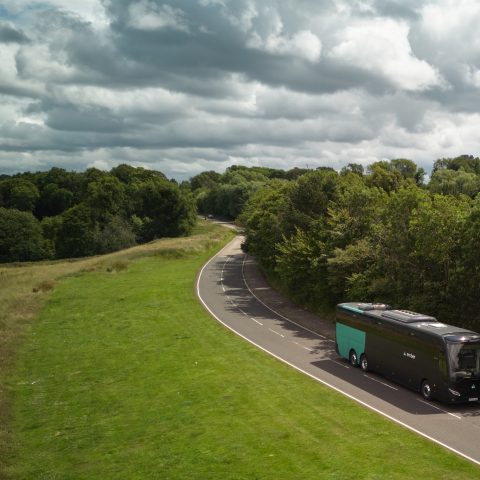
The Scottish Government has confirmed a £45 million allocation under the third round of the Scottish Zero Emission Bus Challenge Fund (ScotZEB3), supporting the introduction of 334 zero-emission vehicles alongside charging infrastructure across multiple operators.
ScotZEB3 funding scope and fleet deployment
The ScotZEB3 programme will deliver a total of 334 vehicles, comprising 227 buses and 107 coaches, to be integrated into fleets operated by companies including Stagecoach, Lothian, First Bus, Ember and Rock Road. The funding covers both vehicle procurement and associated infrastructure, including charging systems required for operations.
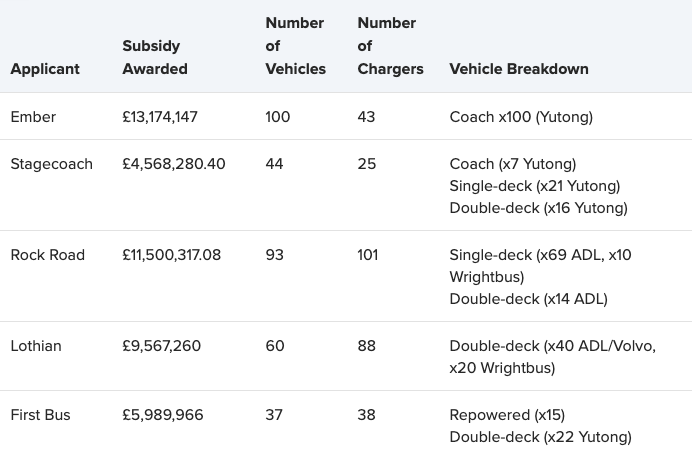
Operator-level allocations show a mix of vehicle types and suppliers. Rock Road will procure 14 Alexander Dennis double-deck buses, along with 69 single-deck units from Alexander Dennis and 10 from Wrightbus. First Bus will combine the repowering of 15 double-deck buses with the acquisition of 22 new double-deck vehicles from Yutong. Ember’s allocation covers 100 Yutong coaches, while Stagecoach will introduce a combination of 7 Yutong coaches, 21 single-deck buses and 16 double-deck buses from the same manufacturer. Lothian will add 60 double-deck buses, split between Volvo/Alexander Dennis and Wrightbus.
The total project costs across operators amount to over £163 million, with public funding complemented by private investment contributions exceeding £118 million. Individual project structures indicate public contributions ranging from approximately £4.6 million to over £13 million per operator, with the remaining share financed privately.
Public funding trajectory and policy framework
The ScotZEB3 allocation marks the final round of direct capital funding from the Scottish Government aimed at supporting large bus operators in transitioning to zero-emission fleets. Since 2020, cumulative investment through ScotZEB and the Scottish Ultra Low Emission Bus Scheme (SULEBS) has reached £154 million, enabling the deployment of around 800 buses and related infrastructure.
In parallel with funding measures, the Scottish Government is assessing regulatory options under the UK Bus Services Act 2025. The proposed framework would apply no earlier than 2030 and is intended to support the phased adoption of zero-emission buses in local services.
Project-level financial data indicate varying scales of investment among participating operators. Ember’s programme represents the largest single allocation, with a total project cost of £53.8 million, of which £13.2 million is publicly funded. Rock Road follows with a £40.1 million project supported by £11.5 million in public funding. Lothian’s £33.7 million investment includes £9.6 million from ScotZEB3, while Stagecoach and First Bus projects amount to £17.9 million and £18.1 million respectively.
Across all projects, the funding structure reflects a co-investment model in which public funding is combined with operator capital to deliver fleet and infrastructure upgrades.
Cabinet Secretary for Transport Fiona Hyslop said: “This final investment of £45 million from the Scottish Government through ScotZEB3 signals our commitment to a zero emission future for Scotland’s bus sector. Since 2020, we have invested over £154 million in zero emission buses and infrastructure. This additional £45 million will support the ambition and leadership of operators that seek to decarbonise their operations as quickly as possible. It also helps ensure that the bus sector can access the benefits of Scotland’s investment in secure, renewable sources of electricity. With every £1 of public funding leveraging over £2.50 of private investment, ScotZEB3 has demonstrated that government and industry can work together to deliver transformative climate action. The programme is not only reducing emissions – it’s supporting jobs and our economy, connecting communities across Scotland and improving the experience for passengers across the country.