Solaris reports €1.18bn revenue and 6.3% EBIT margin in 2025, intercity zero-emission bus planned for 2027
Solaris Bus & Coach delivered 1,631 buses in 2025, generating €1.18 billion in revenue and securing 2,780 new vehicle orders. According to figures presented during the company’s annual press conference, Solaris registrations reached 1,631 vehicles in 2025, marking a 7 percent increase versus 2024 results. Revenue amounted to €1.18 billion, up 28 percent compared with […]
Solaris Bus & Coach delivered 1,631 buses in 2025, generating €1.18 billion in revenue and securing 2,780 new vehicle orders.
According to figures presented during the company’s annual press conference, Solaris registrations reached 1,631 vehicles in 2025, marking a 7 percent increase versus 2024 results.
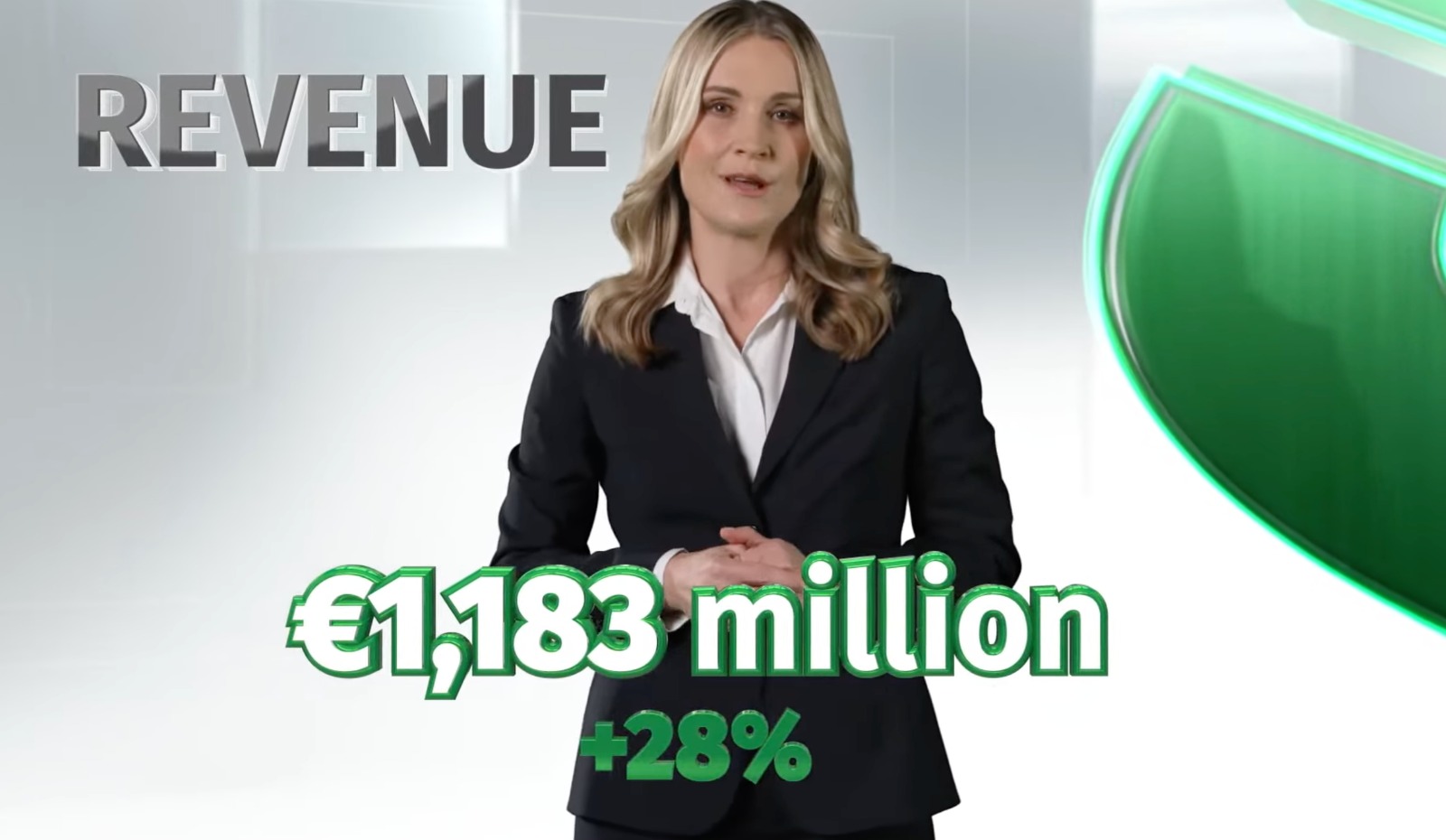
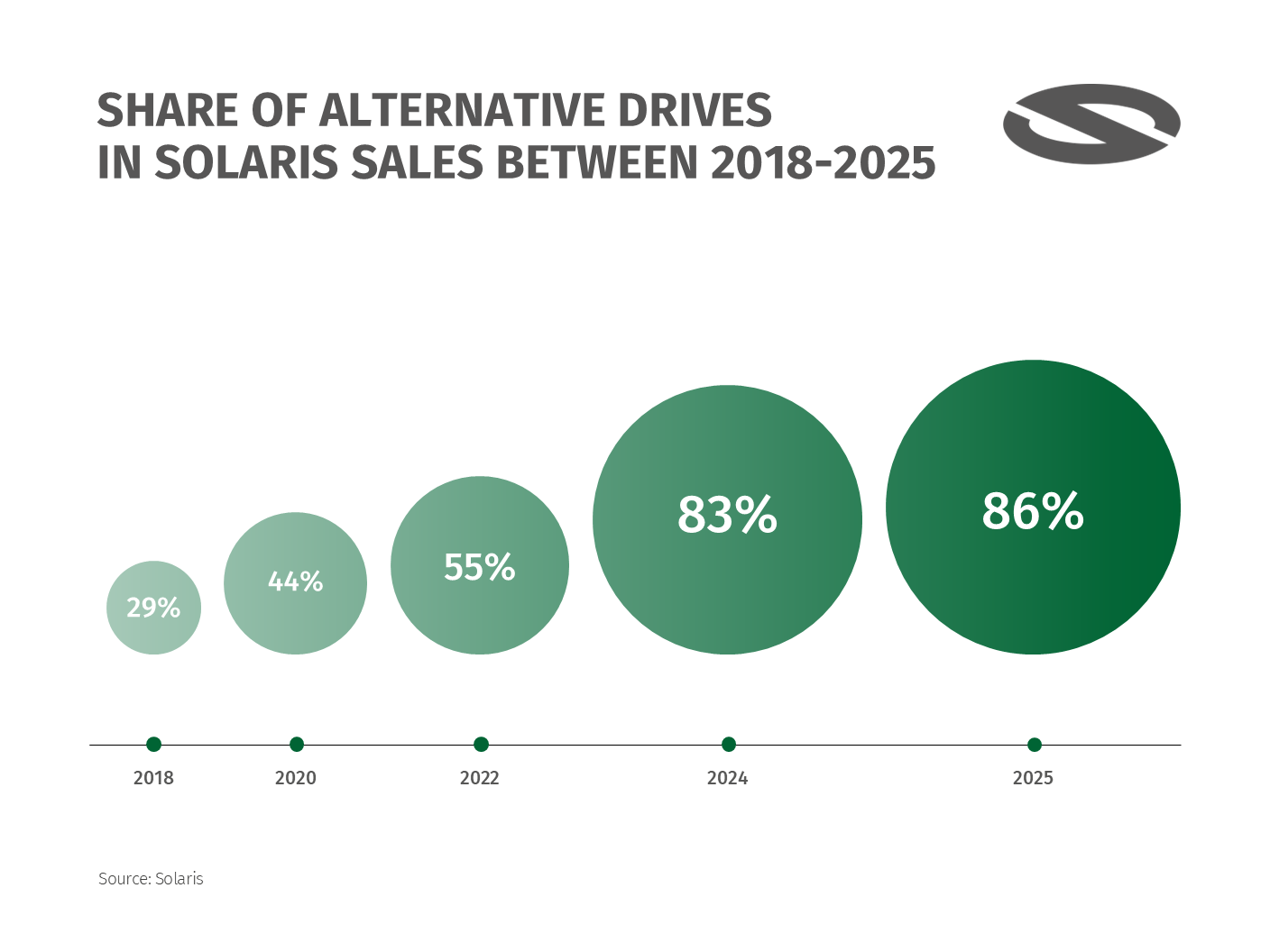
Revenue amounted to €1.18 billion, up 28 percent compared with 2024. Low- and zero-emission vehicles accounted for 86 percent of total deliveries and represented more than 93 percent of total sales value, according to Solaris.
What comes next? Solaris provided additional info on its upcoming zero-emission intercity bus family (deliveries from 2027) and the introduction of a battery-electric bus designed for the North American market, which the manufacturer plans to present publicly at the APTA Expo in Chicago in October.
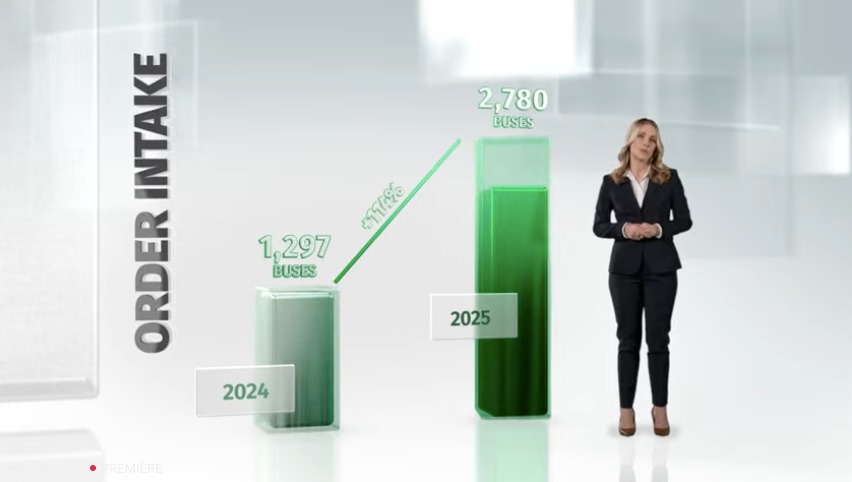
The company states that it secured contracts for 2,780 vehicles during the year, representing the highest order intake in its history. Low- and zero-emission vehicles represented 88 percent of newly contracted vehicles. The order portfolio at the end of the year reached a value of €2.4 billion.
Solaris results 2025
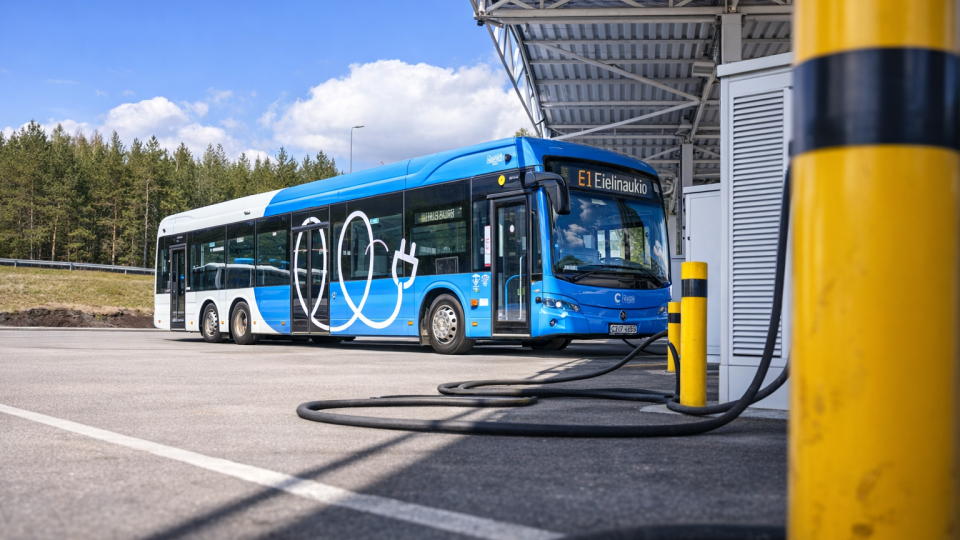
Battery-electric buses represented the largest share of deliveries. Solaris delivered 916 electric buses during the year, alongside 306 hydrogen fuel cell buses. According to the company, these volumes represent the highest annual deliveries of both electric and hydrogen buses in Solaris’ history.
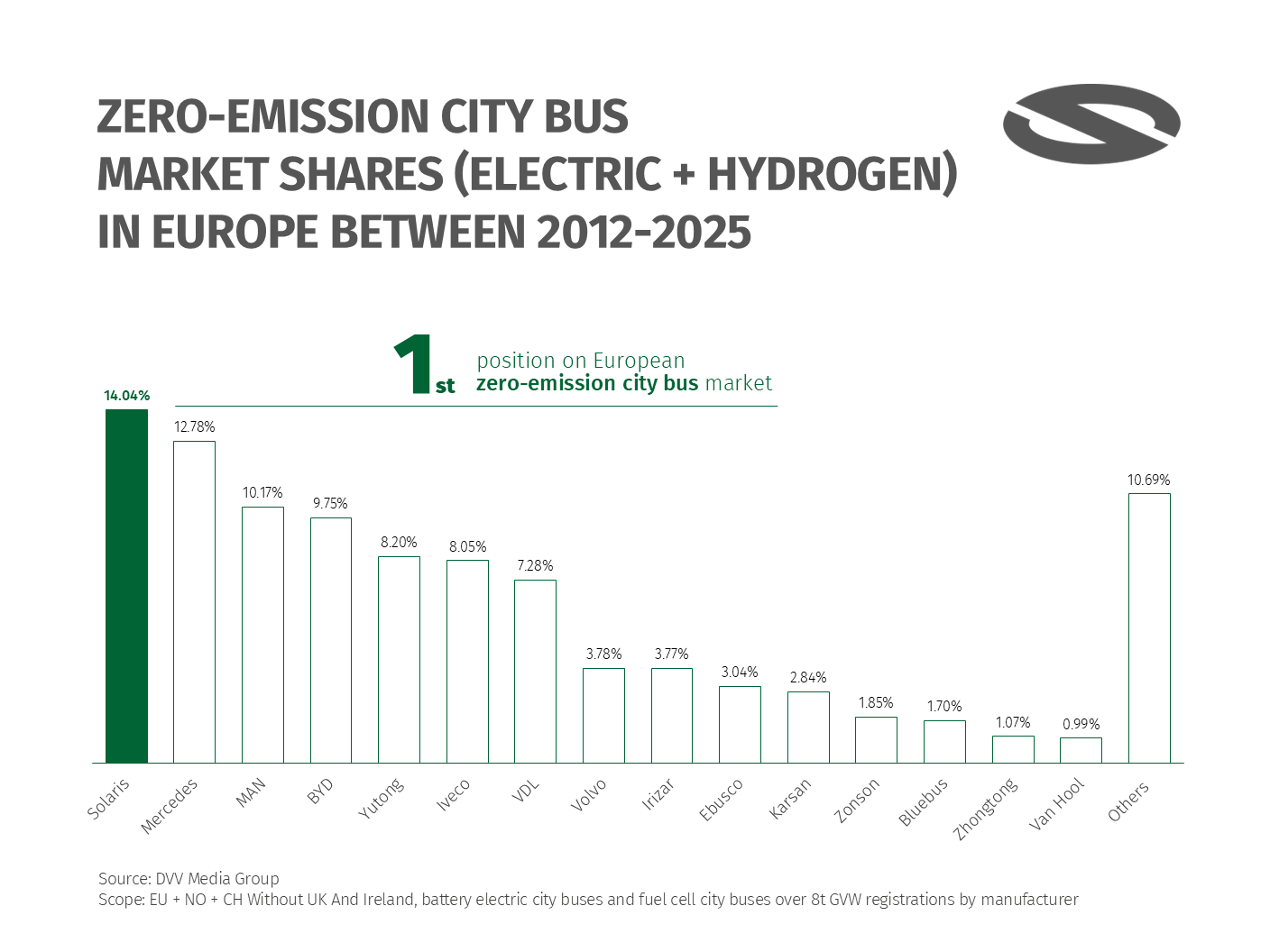
Based on these registrations, Solaris states that it achieved an 11 percent share of the European battery-electric bus market and a 58 percent share in the hydrogen bus segment in 2025. When considering both technologies together, the manufacturer reports that it ranked third in Europe in the zero-emission city bus segment with nearly 14 percent market share.
Looking at the longer time horizon between 2012 and the end of 2025, Solaris maintained the leading position in Europe in terms of cumulative deliveries of zero-emission buses, including trolleybuses.
Solaris: financial performance and order intake
Solaris reports that profitability indicators also improved during the period. The company’s EBIT margin increased from 1 percent in 2023 to 6.3 percent in 2025.
Solaris states that contracts signed in 2025 covered 2,780 vehicles, representing an increase of 114 percent compared with the previous year’s order intake.
The largest order volumes originated from Poland, accounting for 1,196 vehicles. Additional contracts were awarded by operators in Sweden, Germany, Switzerland, Italy and Canada.
Among the largest agreements announced during the year was a contract with BVG in Berlin covering up to 270 articulated battery-electric buses. Solaris also secured its first contract in Canada with TransLink in Vancouver for 107 twelve-metre trolleybuses with an option for an additional 77 articulated vehicles.
Further agreements included contracts with Swedish operators VR Sverige and Nobina, covering a total of 378 electric buses of different lengths.
Intercity Solaris e-bus coming in 2027
The company also reports that work is ongoing on the next generation of its Urbino city bus platform. According to Solaris, the fifth generation of the Urbino platform is expected to be introduced not earlier than in two to three years.
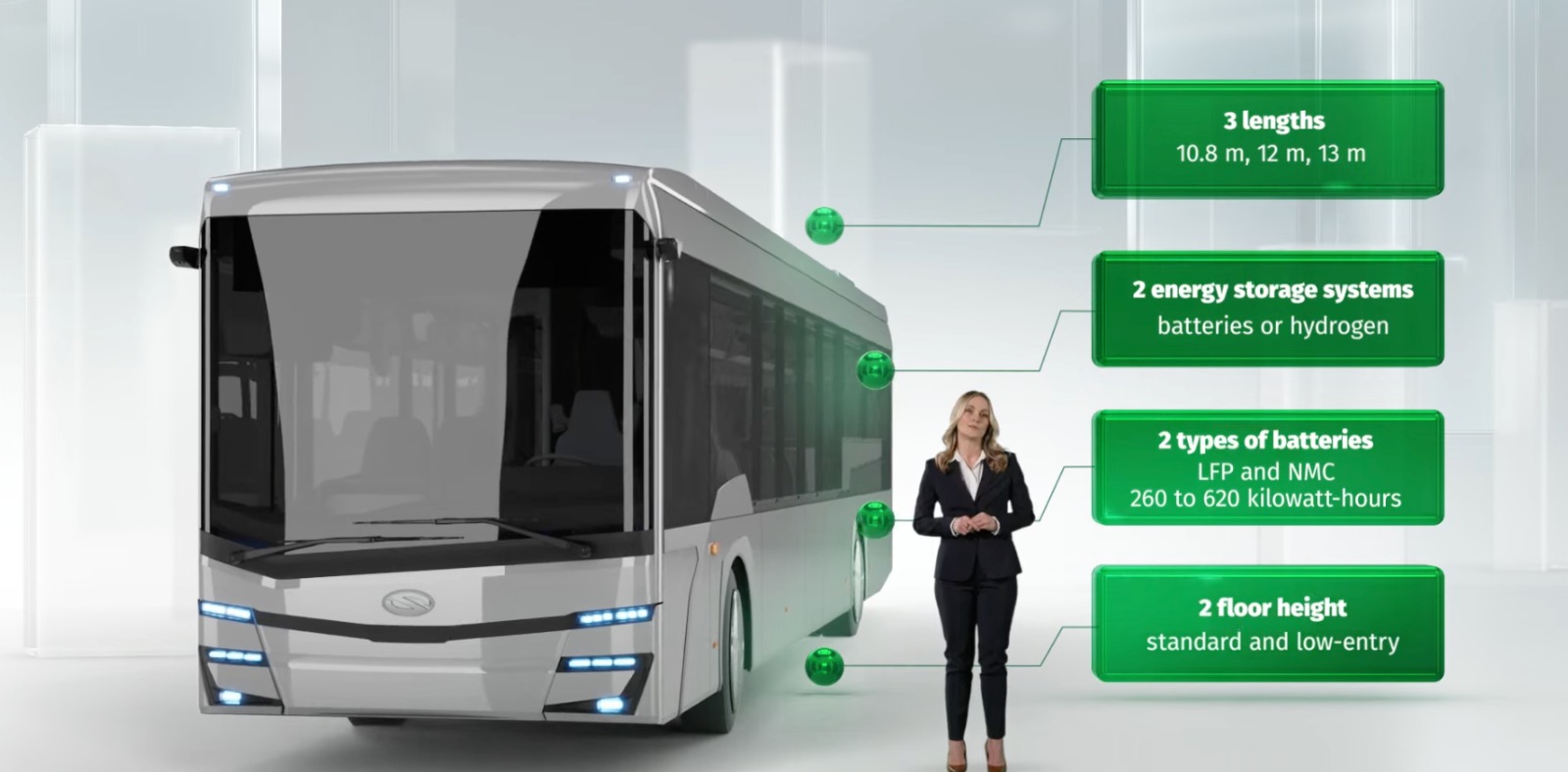
Solaris states that its future product development includes a new family of zero-emission intercity buses intended for the European market. The vehicles will be available in both low-entry and normal-floor configurations and offered with battery-electric and hydrogen fuel cell drivetrains.
The new intercity models are planned in three lengths: 10.8 metres, 12 metres and 13 metres. The first deliveries of these vehicles are scheduled for 2027.