UK Department for Transport expects over 21,000 zero-emission bus orders by 2035, double-deck buses dominate forecast
The UK Department for Transport has published a 10-year zero-emission bus order pipeline indicating up to 21,525 vehicles expected between 2026 and 2035. The dataset consolidates anticipated procurement volumes from local transport authorities and bus operators, providing an aggregated view of expected zero-emission bus (ZEB) orders across the United Kingdom as of 4 November 2025. […]
The UK Department for Transport has published a 10-year zero-emission bus order pipeline indicating up to 21,525 vehicles expected between 2026 and 2035.
The dataset consolidates anticipated procurement volumes from local transport authorities and bus operators, providing an aggregated view of expected zero-emission bus (ZEB) orders across the United Kingdom as of 4 November 2025. The Department for Transport presents the pipeline as a sector-wide reference framework for production planning, investment alignment and supply chain coordination.
The UK remains the largest electric bus market in Europe in terms of registrations, with registrations exceeding 2,500 units in 2025 (+62%).
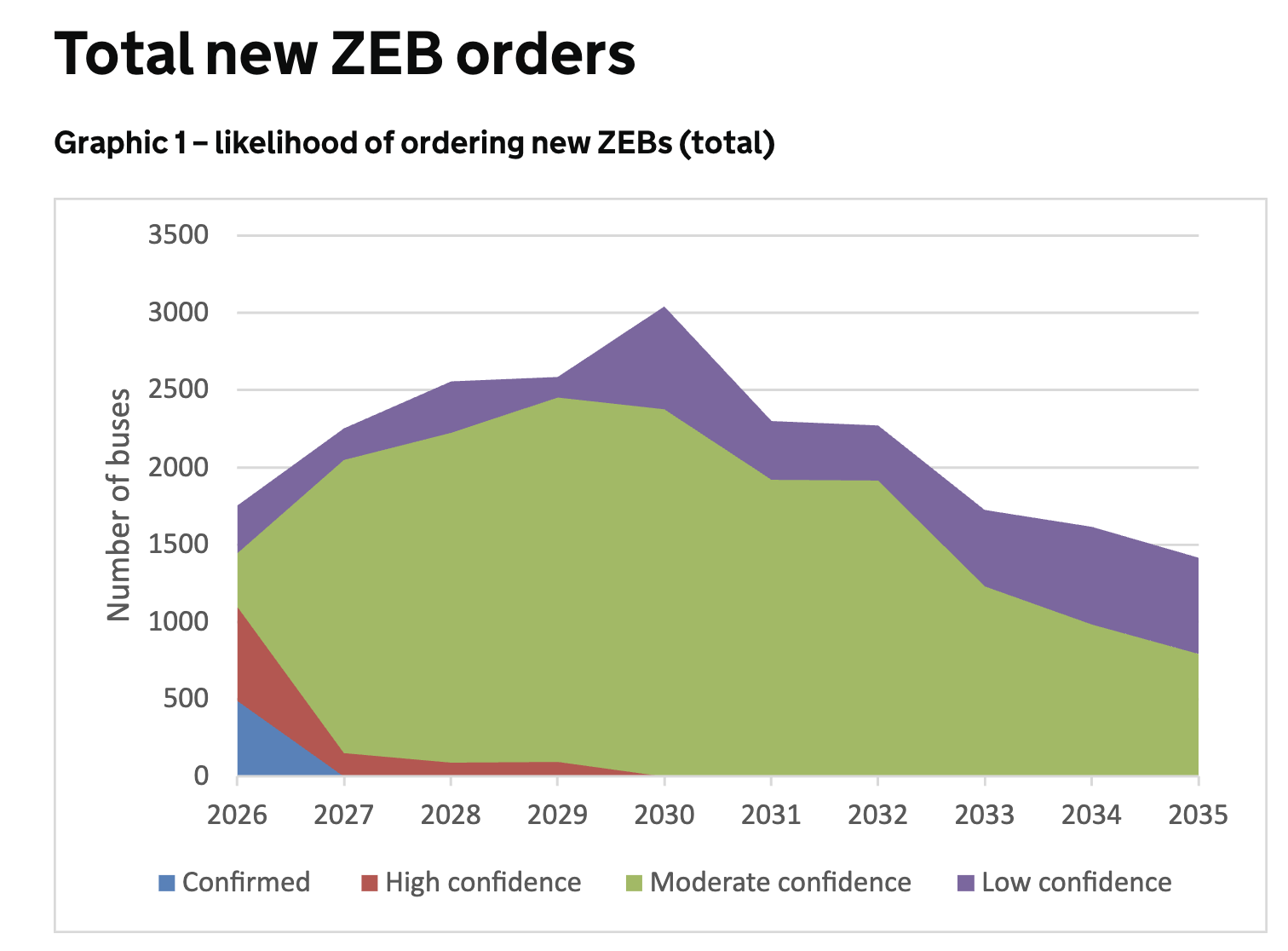
UK, at least 17,000 e-buses coming in the next decade
The pipeline sets out forecast procurement volumes within a range-based model, reflecting varying levels of confidence in order realisation. Over the 10-year period, total expected orders range between 17,400 and 21,525 units, with also a figure of 23,381 vehicles mentioned in the page.
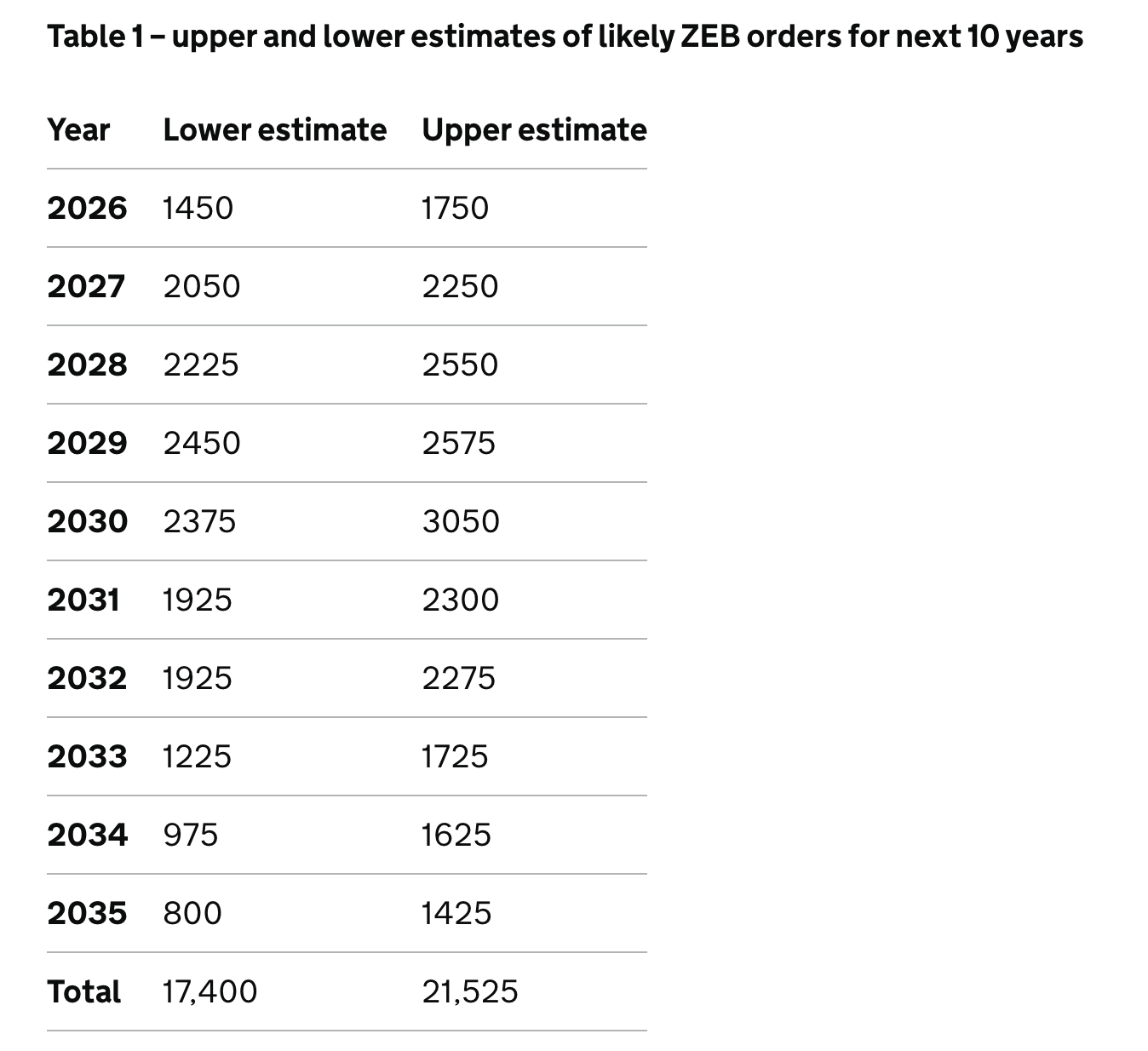
Annual volumes are projected to increase from between 1,450 and 1,750 units in 2026 to a peak range of 2,375 to 3,050 units in 2030. From 2031 onwards, annual volumes show lower ranges, with estimates between 800 and 1,425 units by 2035.
The Department for Transport states that the dataset is anonymised and aggregated, with no geographical breakdown, in order to maintain commercial confidentiality while providing sector-wide visibility.
Over 12,000 zero emission double decker buses
The pipeline identifies double-deck buses as the largest segment within projected zero-emission procurement. Total expected orders for double-deck ZEBs amount to 12,673 units over the 10-year period, representing the majority share of demand.
Single-deck buses account for a smaller portion of the pipeline, with an estimated 6,726 units. These vehicles are indicated across suburban, rural and inter-urban operations.
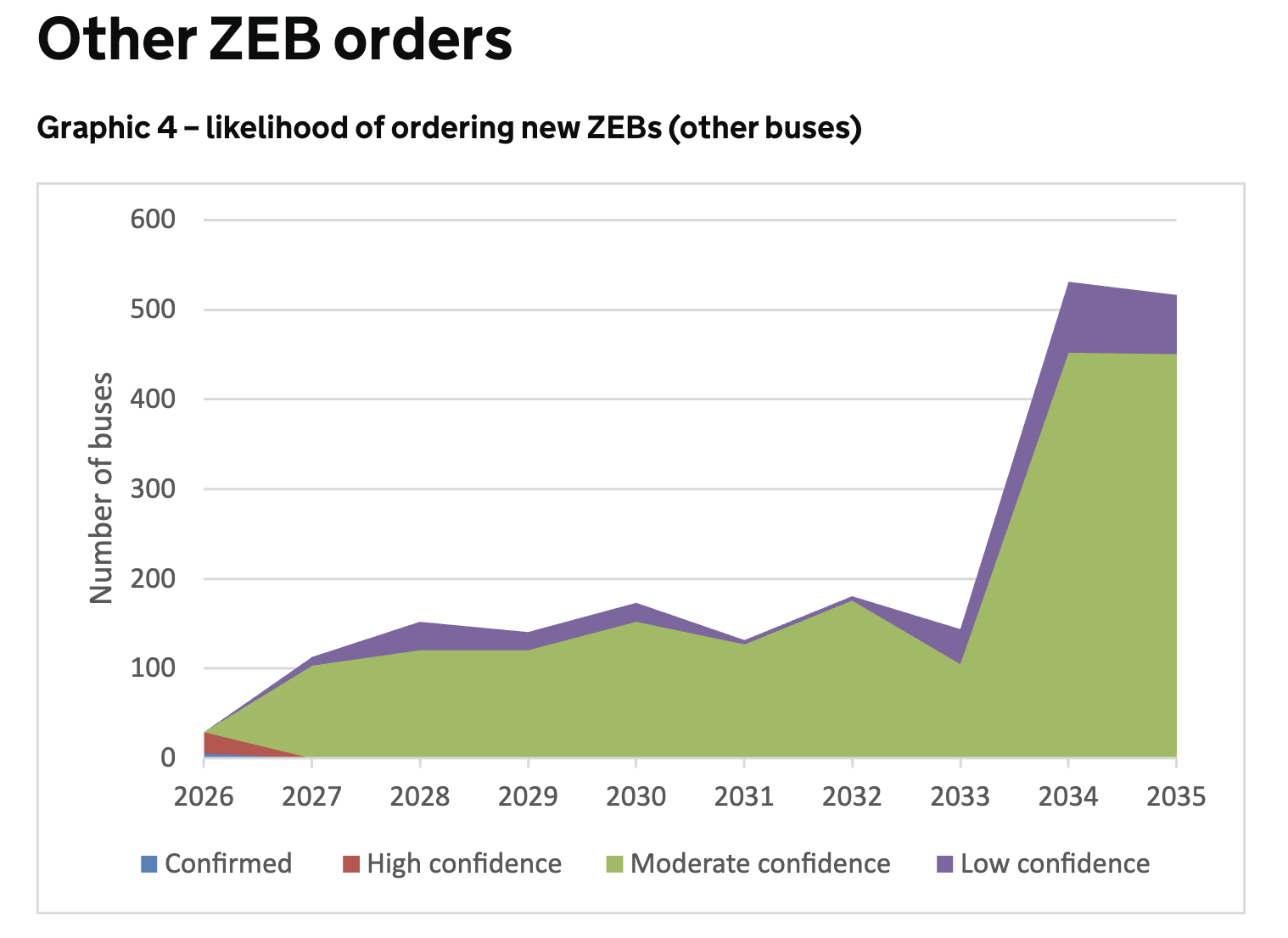
Additional vehicle categories, including minibuses, midibuses and slimline buses, represent a further 2,112 units, with an expected ramp up in the years after 2033 made clear by the graph below.
The Department for Transport positions the pipeline as a planning instrument for manufacturers, suppliers and public authorities. By consolidating forward-looking procurement data, the framework provides visibility on expected production volumes and timelines across the UK bus manufacturing sector.
The publication of the pipeline is one of the stated objectives of the UK Bus Manufacturing Expert Panel, whose first meeting was held in March 2025.
As mentioned above, the Department for Transport notes that the pipeline captures the majority of anticipated orders but does not include all procurement plans, particularly those of smaller and medium-sized operators. Data is described as indicative and subject to change based on future procurement decisions.