Volkswagen Truck & Bus delivers first e-Volksbus units as electric bus production begins in Brazil
Volkswagen Truck & Bus has begun delivering its first electric buses in Brazil, launching the e-Volksbus 22L as the company reaches a record 1.25 million vehicles produced. Volkswagen Truck & Bus (VWTB) is formally entering the electric urban bus market with the start of deliveries of the e-Volksbus 22L. The launch coincides with a symbolic […]
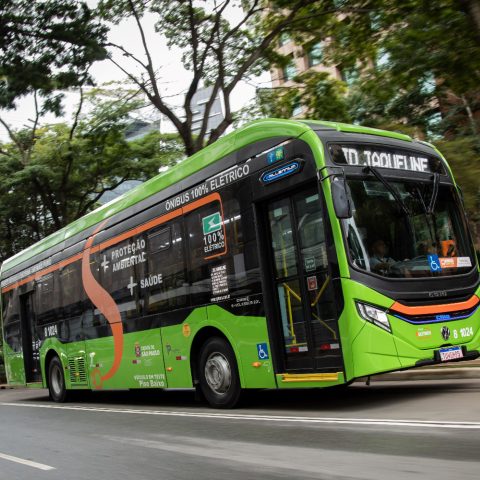
Volkswagen Truck & Bus has begun delivering its first electric buses in Brazil, launching the e-Volksbus 22L as the company reaches a record 1.25 million vehicles produced.
Volkswagen Truck & Bus (VWTB) is formally entering the electric urban bus market with the start of deliveries of the e-Volksbus 22L. The launch coincides with a symbolic industrial milestone: the 1,250,000th vehicle produced by the company was itself an e-Volksbus rolling off the assembly line.
In November, Brazil has committed, together with Mexico, to allowing only zero emission medium- and heavy-duty vehicle sales by 2040 at the latest, with an interim goal of at least 30% new sales by 2030. At the same time, an EUR 80 million Brazil E-Bus Credit Enhancement Fund has been established to accelerate the deployment of electric buses across Brazilian cities.
Volkswagen e-Volksbus delivered in Brazil
The e-Volksbus 22L is designed for urban applications, with capacity for up to 82 passengers and compatibility with bus bodies up to 13.2 metres in length. The model offers a claimed driving range of up to 250 km, powered by a system of 12 battery packs, a configuration already used in Volkswagen’s e-Delivery electric trucks.
The inaugural production batch of the e-Volksbus 22L comprises 100 units. Initial deliveries have already begun, with transport operator Transpass acquiring 50 vehicles for deployment in São Paulo. The same city reached 1,000 electric buses thanks to a 60-units Eletra delivery.
The remaining units are scheduled to be allocated to other public transport operators starting in January 2026.
Beyond the São Paulo metropolitan area, the e-Volksbus will be progressively introduced in additional Brazilian cities, including Resende, home to Volkswagen Truck & Bus’ manufacturing plant. The first unit destined for the southern region of Rio de Janeiro state is set to enter service in Resende, where it will be operated by Viação Princesinha do Vale.
The initial order volume follows an extended testing phase conducted under real operating conditions. Since May, the e-Volksbus 22L has been evaluated in daily service in São Paulo, providing operational data to validate vehicle performance, efficiency, and reliability. According to the manufacturer, the results of these trials directly supported the transition from pilot use to commercial deployment.
Alongside vehicle deliveries, VWTB has rolled out a dedicated technical support and after-sales program tailored to electric bus operations. The company has provided direct operational guidance to customers, covering charging strategies, vehicle use, and maintenance activities that can be carried out at operator depots.
The dealership network has been prepared to service electric buses, with spare-parts availability positioned as a key element of the support offering. Service packages are being customised to individual operating profiles, with the stated aim of maximising vehicle availability and operational continuity. Telemetry data and charging-plan optimisation form part of the ongoing customer support framework.
Roberto Cortes, VWTB’s President and CEO, states: “Since the testing period we have played a very active role and maintained close relationships with customers. In addition to training, VWTB’s team provides telemetry data and closely monitors the structuring of bus recharge plans to optimize the use of vehicles. We are establishing a new industry reference for services on the market”.