Zero-emission buses move beyond cities: intercity transition in Sustainable Bus’ session at BUS2BUS
The transition to zero-emission mobility in Europe is entering a new phase as electrification expands beyond city buses into intercity and coach segments, bringing new operational and infrastructural requirements into focus. This shift will be addressed during the event “From city to intercity: the next step for zero emission bus transition”, taking place on April […]
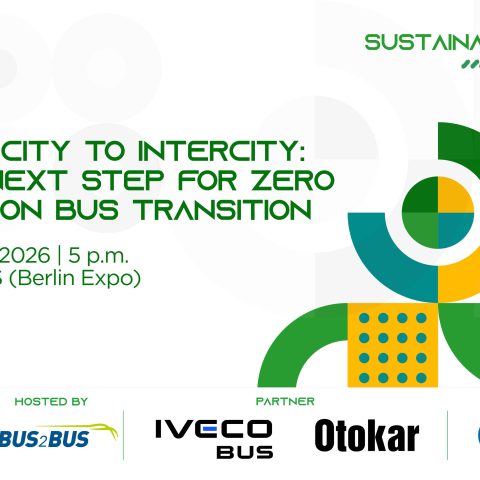
The transition to zero-emission mobility in Europe is entering a new phase as electrification expands beyond city buses into intercity and coach segments, bringing new operational and infrastructural requirements into focus. This shift will be addressed during the event “From city to intercity: the next step for zero emission bus transition”, taking place on April 15th 2026 at 17:00 CET within the Bus2Bus 2026 exhibition in Berlin.
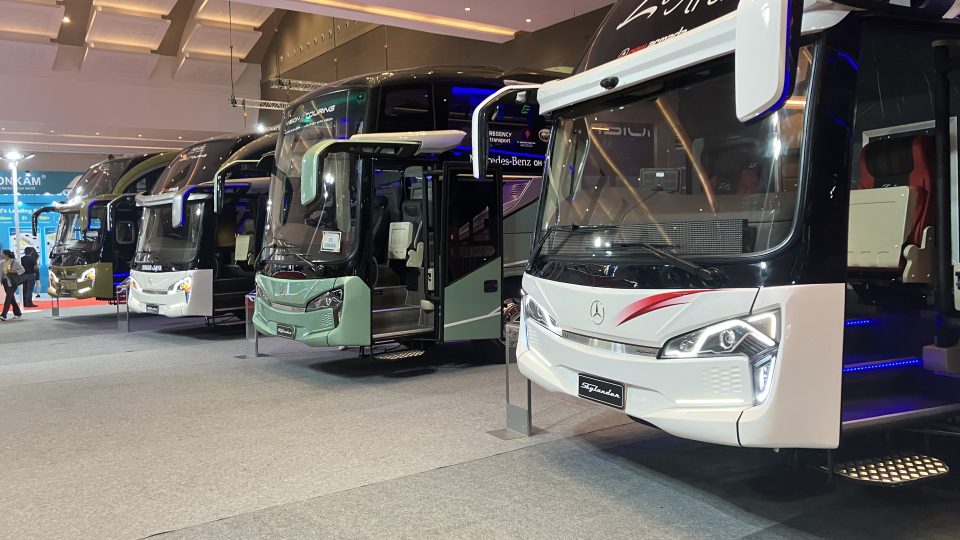
The session is positioned within a market context where electric technologies are being introduced across longer-distance services, including Class II buses and coaches. According to ACEA estimates, between 2025 and 2030 approximately 20,000 electric intercity buses and coaches are expected to enter the European market, alongside 48,000 urban buses. These deployments are associated with the need for around 30,000 dedicated charging points tailored to long-distance operations.
The Sustainable Bus Tour hosted in Berlin
The session at Bus2Bus is part of the Sustainable Bus Tour initiative, launched in 2021 and now reaching its fifth edition. In the past, panels were organized in Strasbourg and Milan.
The agenda for Aprl 15th includes contributions from stakeholders across the value chain, covering regulatory frameworks, technology pathways, and operational case studies. The program will be introduced by a presentation on trends and policy frameworks for intercity decarbonisation by ICCT (International Council on Clean Transportation). Operational perspectives will be provided through case studies and strategic overviews from public transport operators such as RVK Cologne, leading fuel cell bus deployment in Europe, and the global transport company Keolis. Industry side, Iveco Bus and Otokar will provide insights about the roadmap, the challenges and the scenarios manufacturers are facing.
Intercity transport emerges as next phase of electrification
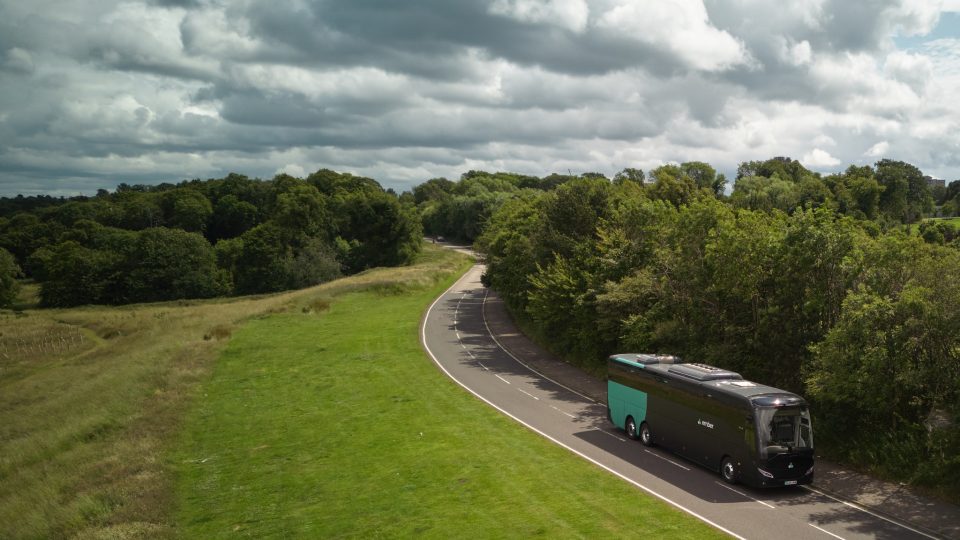
Intercity bus transport in Europe represents an annual market of 8,000 to 10,000 vehicles. The operational profile of these services differs from urban routes, with higher average speeds, extended duty cycles, and reduced dwell times. These parameters introduce additional constraints for vehicle performance, charging strategies, and scheduling.
The deployment of zero-emission technologies in this segment requires alignment between vehicle capabilities, charging infrastructure, and grid availability. Energy management, depot configuration, and en-route charging solutions become integral components of operational planning. At the same time, regulatory frameworks and financing structures are part of the conditions shaping fleet renewal strategies.
The European electric bus market has already reached a stage where zero-emission vehicles account for a substantial share of new city bus registrations, approaching 50% of the total. Annual registrations exceeded 11,000 units in 2025, reflecting a year-on-year increase of 50%. Within this context, manufacturers and operators are extending their focus toward intercity applications, supported by a growing range of available vehicle platforms.