
Talk
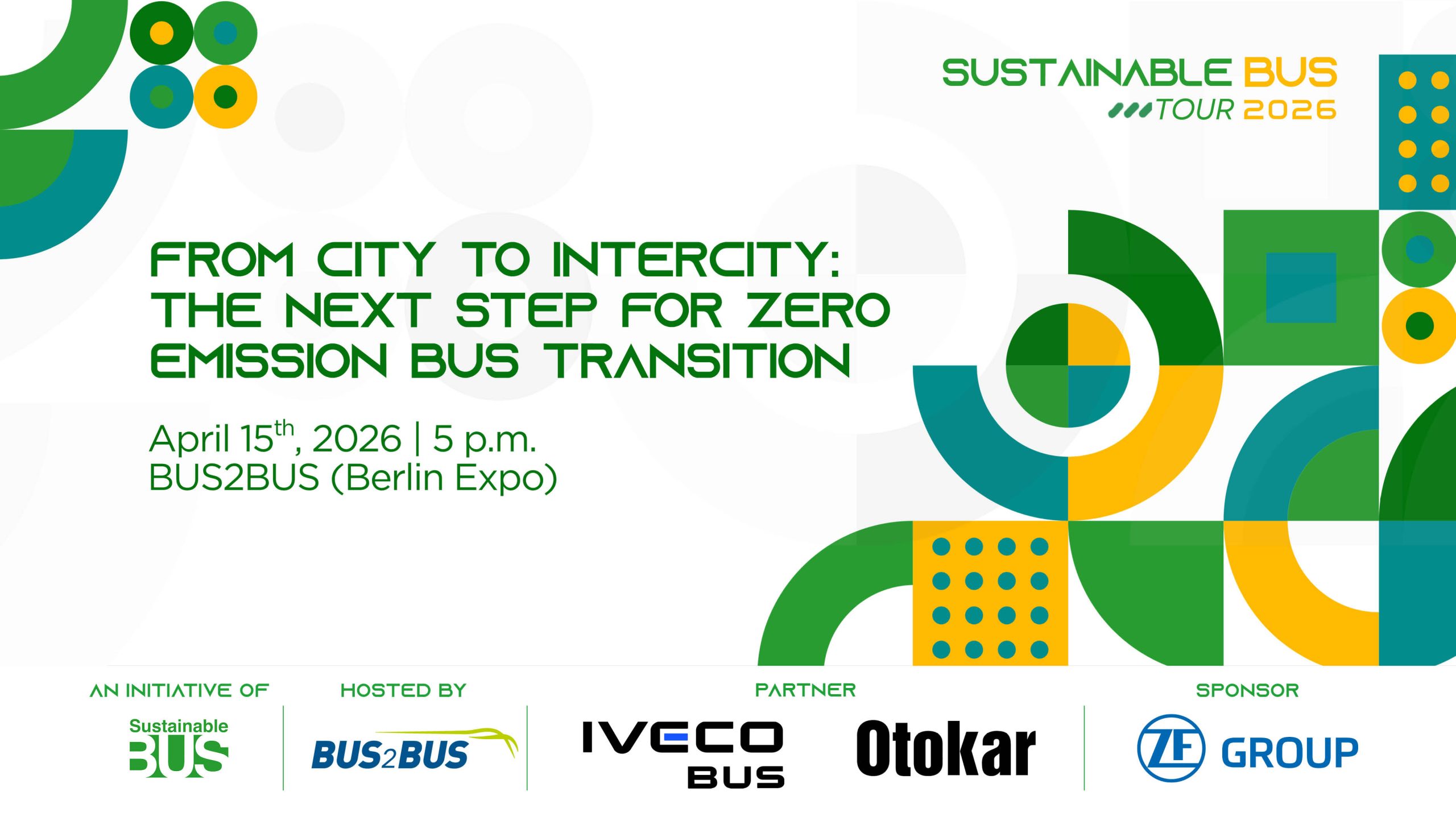
From city to intercity: the next step for zero emission bus transition
Join the talk on April 15th 2026, 17.00 CET, at Bus2Bus in Berlin
–
Days
–
Hours
–
Minutes
–
Seconds
From city to intercity: the next step for zero emission bus transition
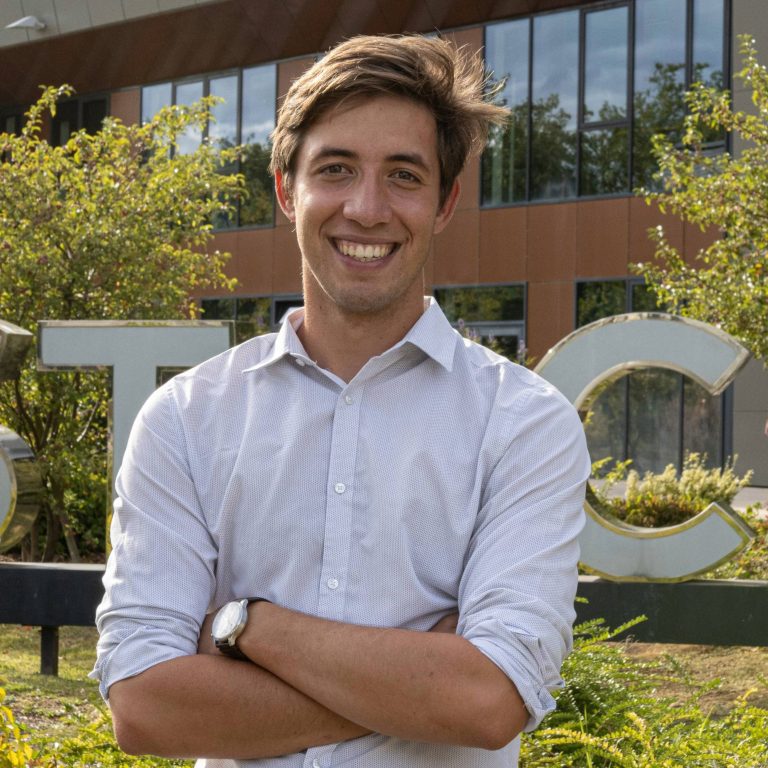
Malo Benoit
Heavy-Duty Vehicle Research Fellow, ICCT
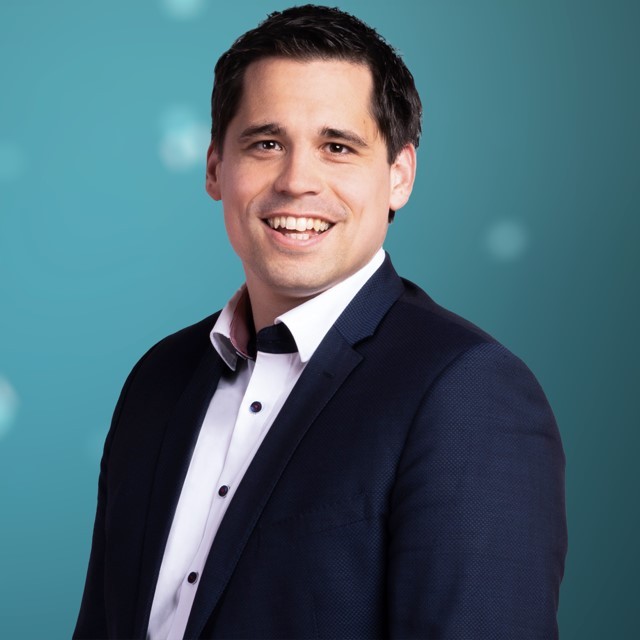
Thomas Schmalen
Head of Operations, RVK Cologne
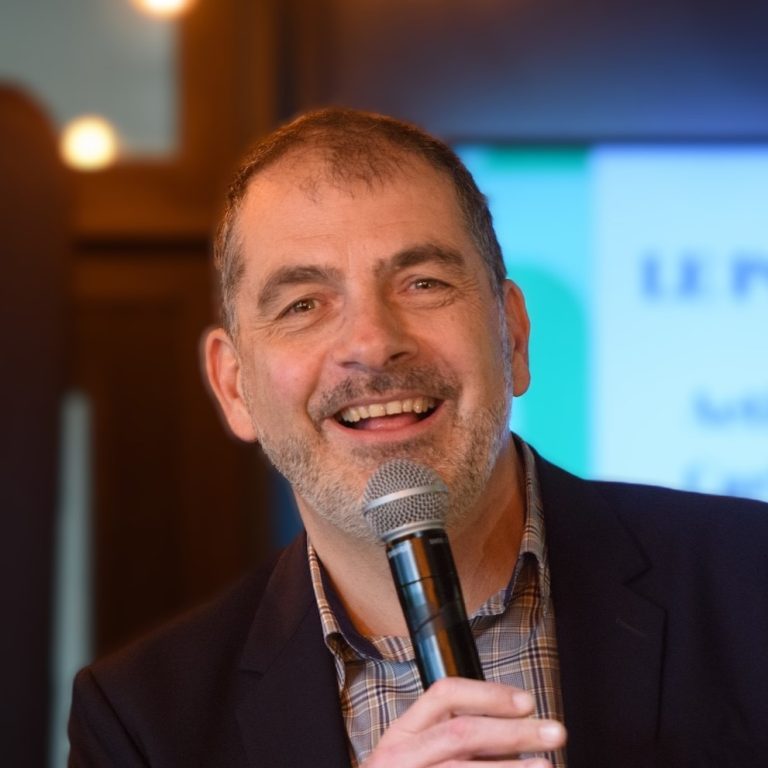
Bruno Lapeyrie
Group Director-Center of Excellence Energy Transition, Keolis Group
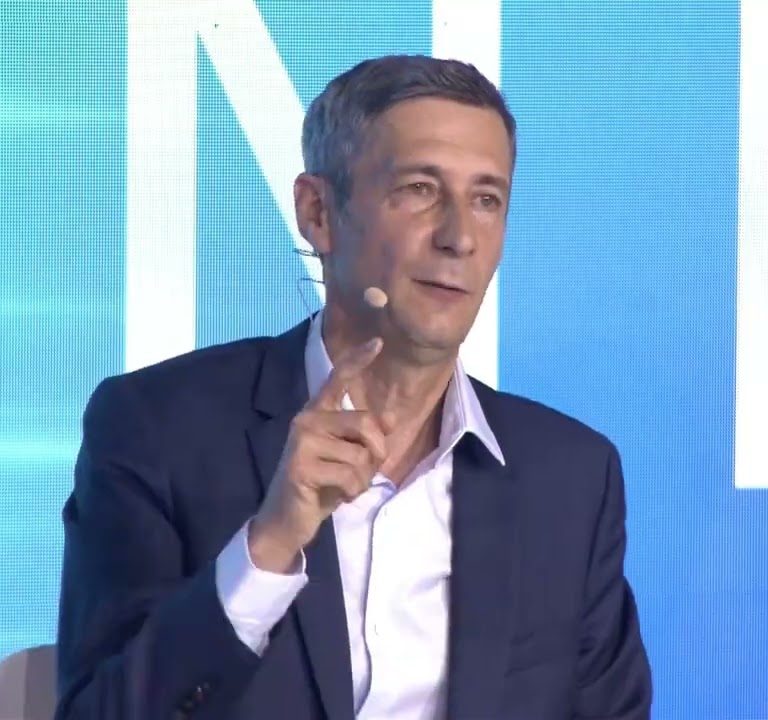
Jean-Marc Boucheret
Sustainable Mobility Manager, Iveco Bus
The framework
The European electric bus market has entered a phase of structural consolidation. zero-emission buses now account for nearly half of all new city bus registrations in the EU, with the market growing by +39% in 2025, to over 9,000 e-bus registrations.
Electrification has clearly became the default choice for urban fleets. Trade exhibitions clearly show how, beyond urban buses, intercity electric buses are emerging as the next area of focus, with a growing and increasingly mature product offering now available.
At the same time, competition is intensifying across the market. The race to profitability pushes industry players to rethink manufacturing strategies, accelerate cost reductions and evolve their business models beyond pure vehicle sales. Services, turnkey solutions, energy integration, connectivity become central levers to remain competitive.
As technology matures, attention is shifting from adoption speed to execution quality, operational reliability and long-term sustainability, shaping the next phase of the zero emission bus market in Europe. Cost control, delivery times, energy management are becoming decisive factors in deployment strategies.

Format
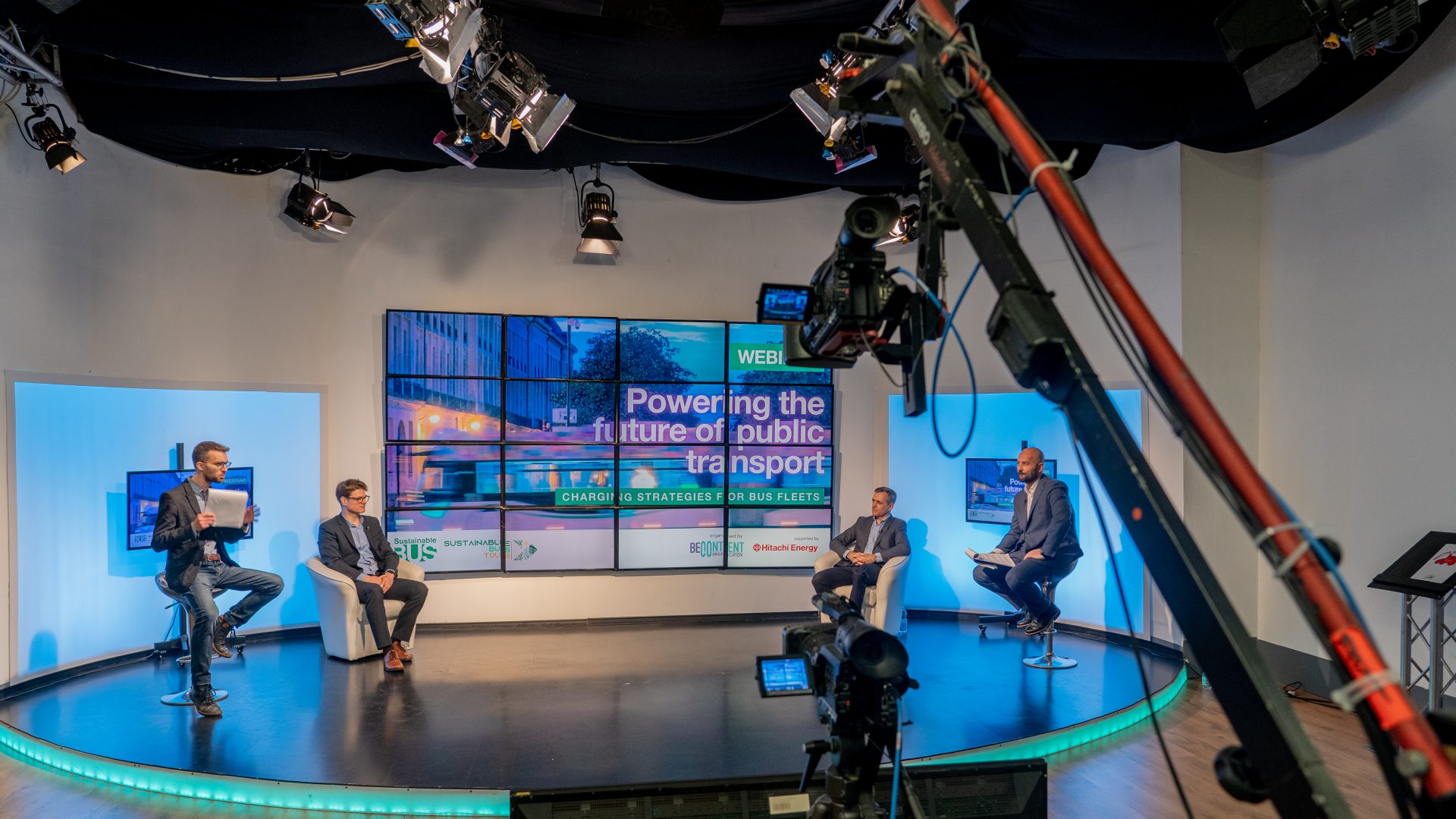
The Sustainable Bus Tour’s initiative was launched in 2021 and it’s now at its 5h edition
The Agenda
Opening and introduction
Sustainable Bus

Trends, forecast and regulatory framework for the decarbonization of intercity bus transport
Malo Benoit
Heavy-Duty Vehicle Research Fellow, ICCT

The case for fuel cell buses as a way to switch regional routes to zero emissions
Thomas Schmalen
Head of Operations, RVK Cologne
Challenges and business case for the electrification of public transport
Bruno Lapeyrie
Group Director-Center of Excellence Energy Transition, Keolis Group
Market leader in transition – with an agnostic approach
Jean-Marc Boucheret
Sustainable Mobility Manager, Iveco Bus
Sign up
“From city to intercity: the next step for zero emission bus transition” is the first event of the Sustainable Bus Tour 2026. It will be hosted by BUS2BUS.
Questions? Don’t hesitate to contact us at info@sustainable-bus.com