Depot-first autonomy for European smartbuses
For more than a decade, autonomous buses have been “almost ready.” Demonstrations with safety drivers began around 2015, and ten years later, this is still largely what we see. The reason is not a lack of ambition – it is physics, safety, and economics. Autonomous buses on city streets are inherently difficult. They carry dozens […]
For more than a decade, autonomous buses have been “almost ready.” Demonstrations with safety drivers began around 2015, and ten years later, this is still largely what we see. The reason is not a lack of ambition – it is physics, safety, and economics.
Autonomous buses on city streets are inherently difficult. They carry dozens of passengers, operate as heavy vehicles, and move through a chaotic urban environment. One of the key challenges is the so-called “minimal risk manoeuvre” – in plain terms, what the vehicle should do if something goes wrong. At speeds of up to 50 km/h, physics does not allow a bus to simply stop instantly. In many situations, an emergency stop would not even be desirable, especially with standing passengers on board.
Autonomous systems must therefore be intelligent and reliable enough to handle emergencies. So far, in the case of autonomous buses, this responsibility has been pushed onto human drivers – or “safety drivers”, as they are called in the autonomous vehicle world. This is a sensible approach from a safety perspective, but it fundamentally undermines the economics. You replace a driver with… a safety driver, while still paying for all the technology. A bus with a safety driver is not autonomous – it is simply a more expensive bus.

Depot first
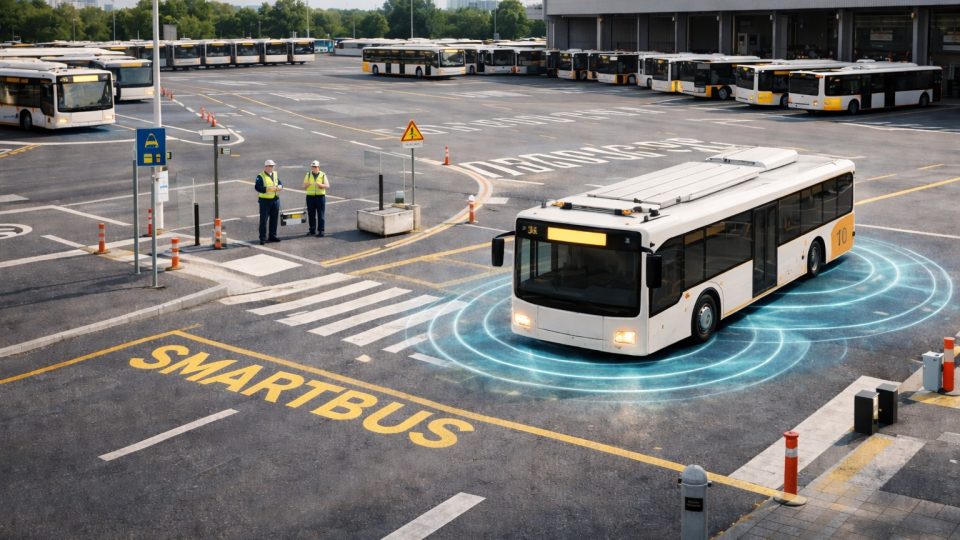
What changes when vehicles move slowly and without passengers? At speeds of around 10 km/h, the system has time to react calmly and with sufficient margin. If something unexpected appears, the vehicle can slow down or stop without introducing risk – something that is fundamentally different from operating in mixed city traffic with a fully loaded bus, where physical constraints severely limit how safely and predictably a vehicle can come to a stop.
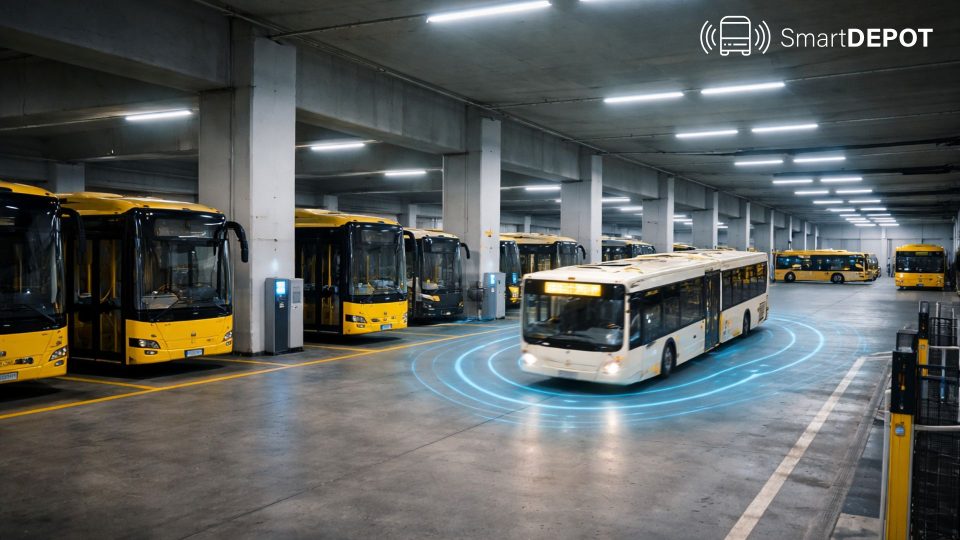
Depots offer: low speeds, empty vehicles, and a controlled layout that turns situations critical on public roads into manageable, low-risk scenarios. Here, bus autonomy becomes a real, deployable solution – one that can deliver tangible benefits to operators today: in the depot. The smartbus era begins here.
ROI now
So far, there does not appear to be a company that has generated meaningful profits from autonomous buses – or, in fact, from autonomous vehicles in general. Examples of companies losing tens of millions, or even billions, of euros are far easier to find.
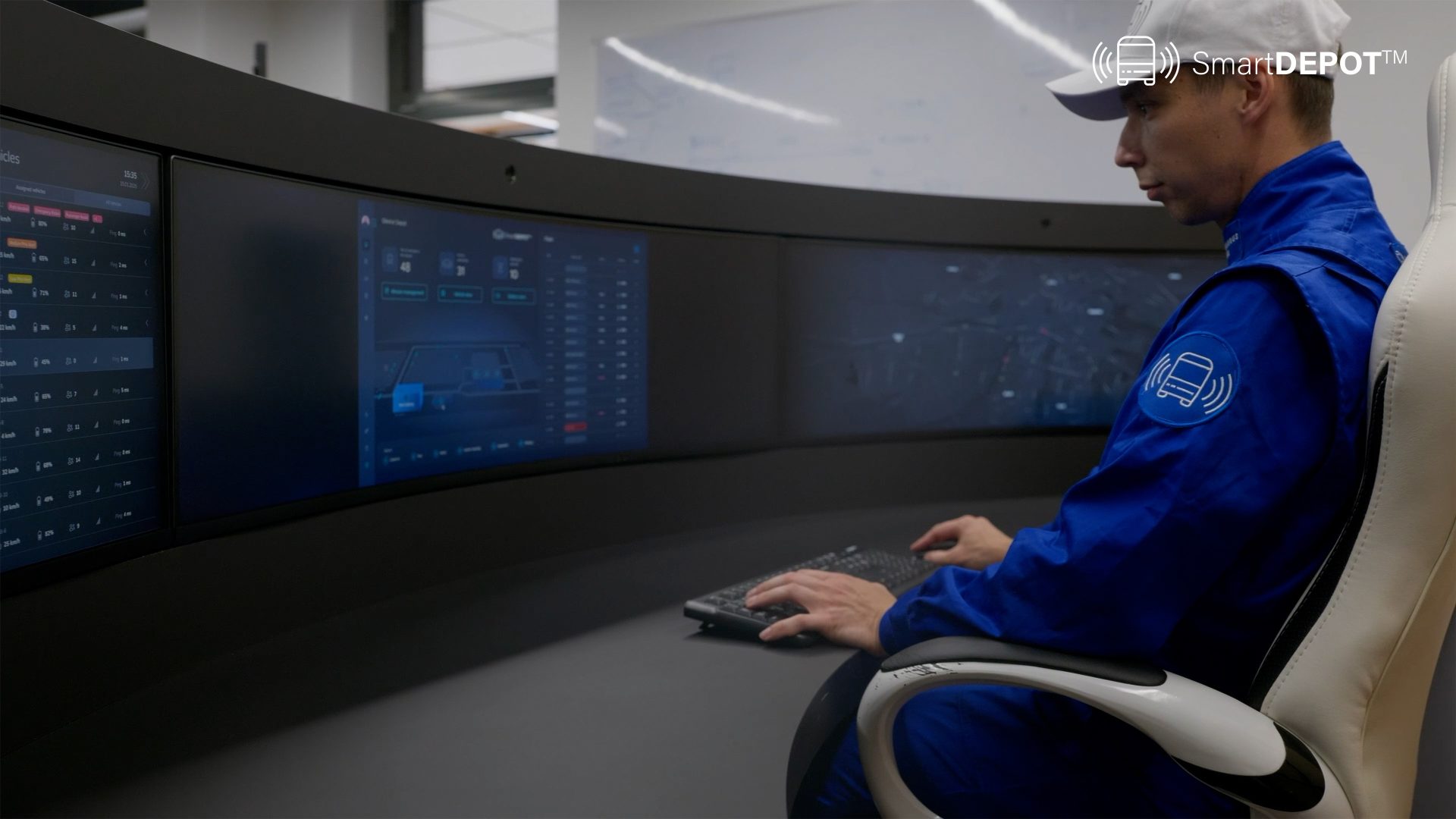
Depot-first autonomy, however, translates directly into real value. Europe is facing a growing shortage of bus drivers, and most forecasts suggest the situation will worsen as retirements accelerate. What if operators could gain the equivalent of an extra month of driving time per driver each year? That is roughly how much time drivers spend manoeuvring buses within depots.
Across Europe, the driver shortage may already be close to 10%, with further deterioration expected in the coming years. This challenge can be addressed by transitioning from conventional buses to smartbuses.
The productivity gains translate directly into financial benefits. Based on an assessment by MZA Warsaw, if a driver spends around 35 minutes per day on depot manoeuvres, this corresponds to a potential saving of approximately EUR 88,000 over a 12-year vehicle lifecycle.
Can it work at my depot?
Yes, it can. Smartbuses do not require major infrastructure changes and can operate alongside conventional buses. Most operators are likely to start with a single smartbus to validate feasibility, expand to 10 to demonstrate scalability, and eventually consider larger deployments – perhaps 100 vehicles – as part of a fleet renewal programme.
This conservative approach requires limited initial investment and is well aligned with the responsible use of public funds. The impact at different fleet sizes can be explored here: Smartbus = ordinary bus + SmartDEPOT™.
Safety built into smartbuses
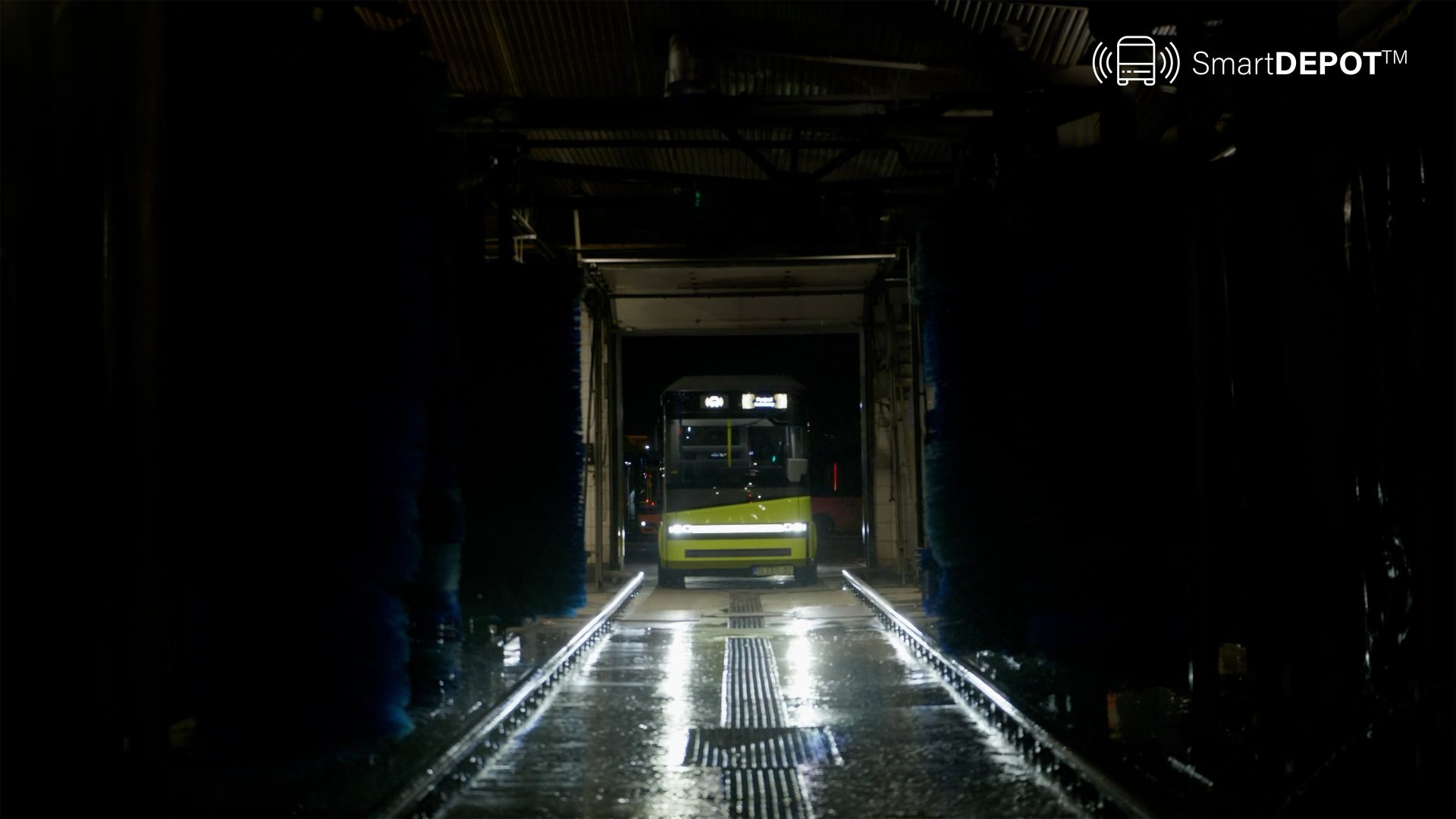
Europe’s regulatory framework is rightly strict, especially in public transport, where many lives are at stake. Even within depots, vehicles share space with people, and minor incidents are common. However for smartbuses these situations typically remain harmless, because they detect hazards early and brake immediately by design. By automating depot operations, overall safety improves, leading to lower costs associated with frequent minor collisions.
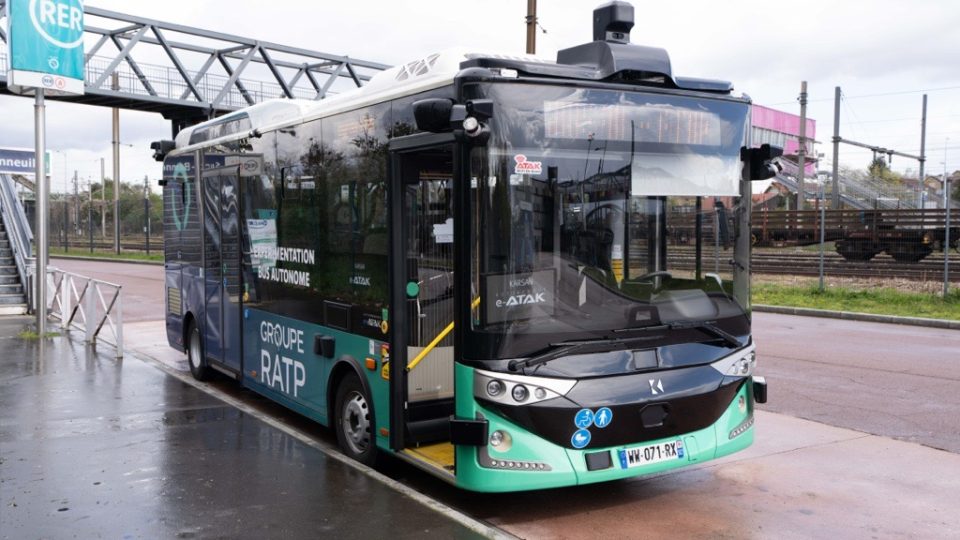
A smartbus uses a multi-LIDAR perception system that provides full 360-degree, three-dimensional awareness around the vehicle, with no blind spots and reliable performance regardless of lighting conditions.
And what about the drivers?
Smartbuses can actually improve drivers’ working conditions. Less time is spent manoeuvring vehicles late at night when fatigue is highest. Safety improves, and jobs are not displaced – because there is already a shortage of drivers. Instead, their time is focused on serving passengers, which remains the core of their role. Operators prepare for the future while keeping drivers fully involved in the transition – and benefiting from it.
Smartbuses in every depot
Most people agree that autonomous vehicles are part of the future of mobility. The rapid progress and visibility of robotaxi projects reinforce this perception. The question is what this means for public transport.
There is a way to adopt autonomy that makes business sense: start in a controlled, safe environment and prepare operators for eventual deployment on public roads. There is no need to wait. By learning through real operations, operators gain experience – and that learning is effectively financed by the operational savings it generates.
Intrigued? If you have reached this point, you may be a visionary operator interested in the smartbus concept. To explore it further, you can meet Jan Gramatyka from Autonomous Systems at IT-TRANS 2026 in Karlsruhe from 3-5 March, or watch him explain the approach in the video below.
You can also join the Smartbus Onboard Program at smartbus.tech. Whatever you do, remember: the future does not ride an ordinary bus.
sponsored by Autonomous Systems