Masats targets real-world testing for AIDA AI-powered bus door system within 12–18 months
Door manufacturer Masats is advancing the development of its AIDA artificial intelligence-based bus door system, with testing on real vehicles targeted within the next 12–18 months. At FIAA 2026 in Madrid, Marc Ball-llosera Massa, Business Development and Product Strategy Manager – Bus & Coach at Masats, outlined the latest developments of AIDA (Artificial Intelligence Driven […]
Door manufacturer Masats is advancing the development of its AIDA artificial intelligence-based bus door system, with testing on real vehicles targeted within the next 12–18 months.
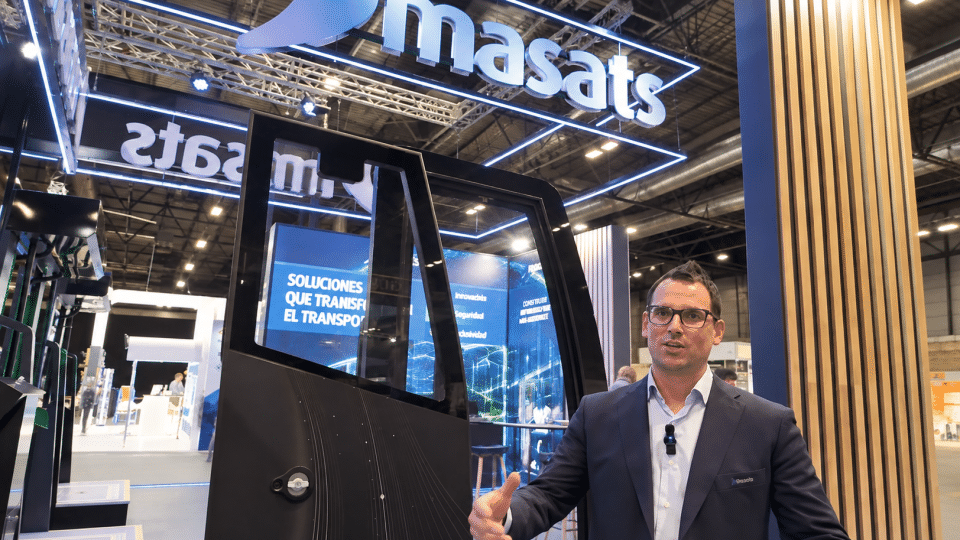
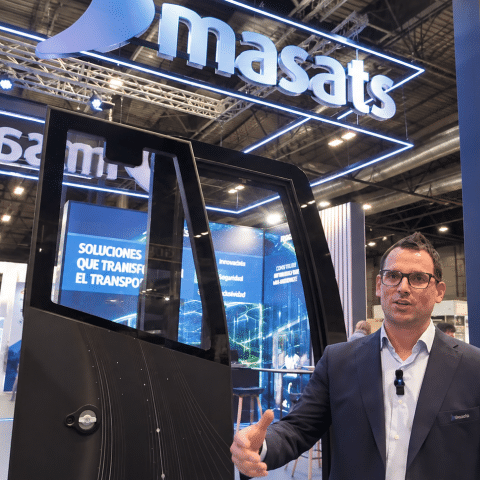
At FIAA 2026 in Madrid, Marc Ball-llosera Massa, Business Development and Product Strategy Manager – Bus & Coach at Masats, outlined the latest developments of AIDA (Artificial Intelligence Driven Access), a system designed to automate bus door opening through AI-based passenger recognition.
The current development work focuses on faster response times, reducing false detections and more compact processing hardware, alongside improved recognition of different passenger access scenarios, including those involving wheelchair ramps.
Masats AIDA: improving AI-based passenger access recognition
The AIDA technology developed by Masats applies artificial intelligence to bus door operation, using recognition algorithms to identify passenger access situations and support automated opening.
According to Masats, one of the main technical challenges concerns training the algorithms to distinguish relevant boarding situations from movements that should not trigger door activation. Development activities also address the processing capabilities required by the system and their integration into a compact onboard configuration.
In brief
- What is Masats AIDA?
An AI-based system designed to automate bus door opening through passenger access recognition. - What are the latest improvements?
Faster response times, fewer false detections and more compact hardware. - Does AIDA support accessibility functions?
The system is being developed to recognise access scenarios involving wheelchair ramps. - When will real-world testing begin?
Masats is targeting testing on actual vehicles within 12–18 months.
Accessibility remains part of the project, with AIDA being developed to recognise scenarios involving wheelchair ramps alongside conventional passenger boarding.
From FIAA demonstrations to real-world vehicle testing
At FIAA 2026, Masats presented the latest evolution of AIDA, with updates concerning detection performance and hardware integration.
The next development stage will focus on moving the technology from exhibition demonstrations to testing on actual vehicles under real operating conditions.
According to Marc Ball-llosera Massa, Masats aims to begin this testing phase within the next 12–18 months.