Italian city of Lodi introduces 14 new e-buses. Star Mobility plans full electric fleet by 2027
Star Mobility, the public transport operator of Lodi (Italy) has presented 14 new battery-electric buses, marking the second delivery phase of a wider Next Generation EU-funded fleet renewal programme. The vehicles were officially unveiled on Wednesday 17 December in Piazza della Vittoria in Lodi (40 km south-east of Milan), and are set to enter service […]
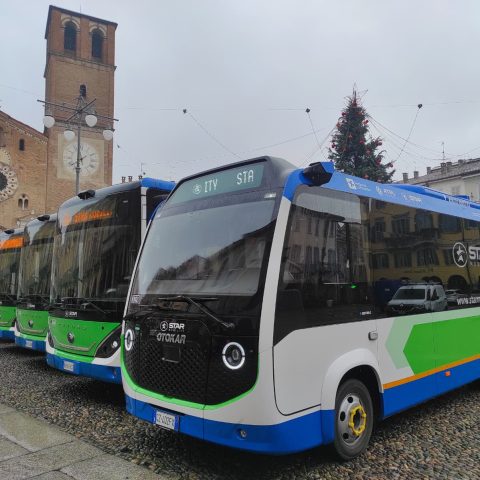
Star Mobility, the public transport operator of Lodi (Italy) has presented 14 new battery-electric buses, marking the second delivery phase of a wider Next Generation EU-funded fleet renewal programme.
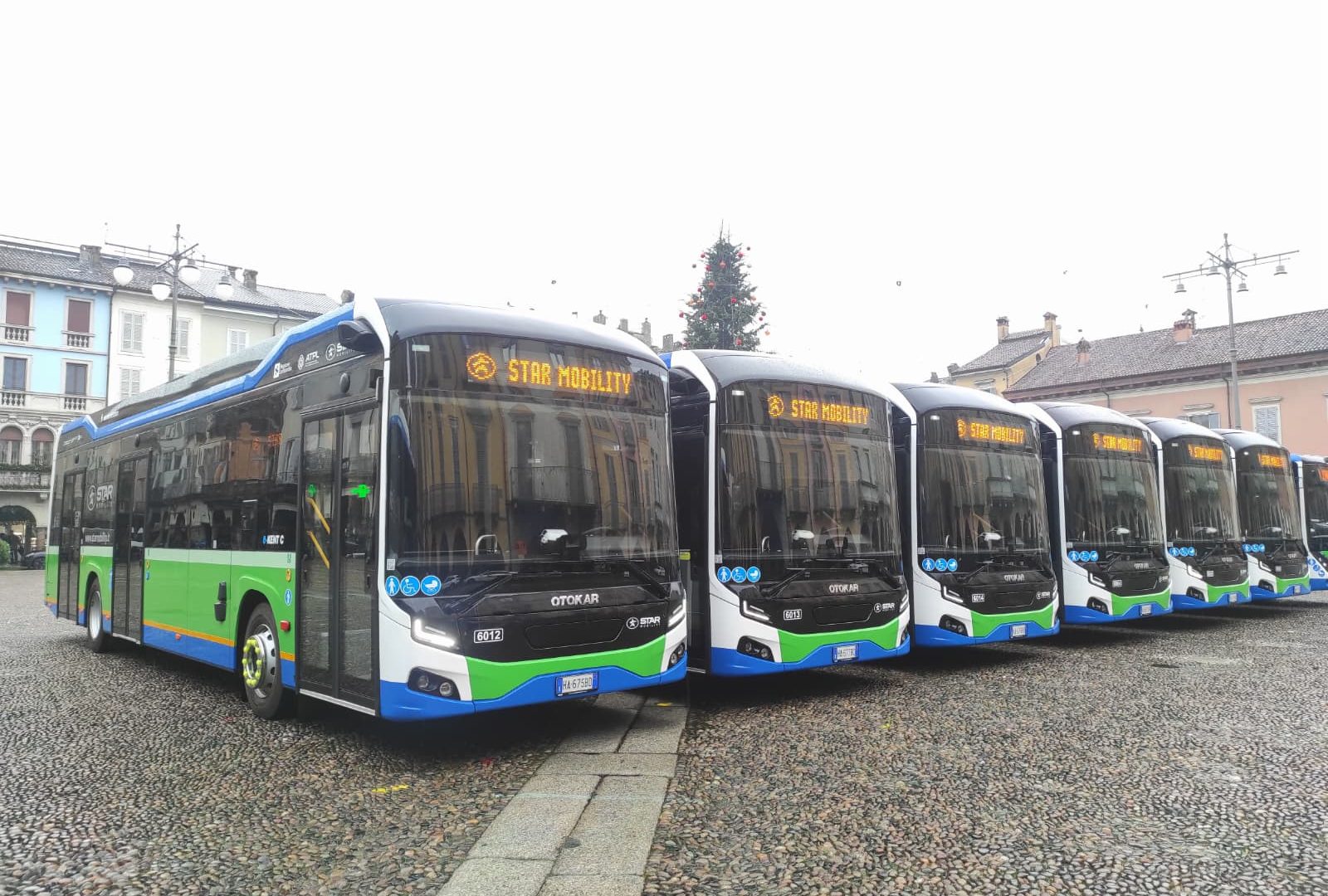
The vehicles were officially unveiled on Wednesday 17 December in Piazza della Vittoria in Lodi (40 km south-east of Milan), and are set to enter service shortly, replacing an equivalent number of ageing diesel buses.
Otokar and Yutong electric buses for Lodi
The new buses form part of a broader supply of 19 electric vehicles financed through Italy’s National Recovery and Resilience Plan (PNRR). The project has been developed in cooperation with the Municipality of Lodi and the Agenzia TPL Milano–Pavia–Lodi–Monza Brianza.
Overall, the programme is valued at approximately €10.5 million. In addition to vehicle procurement, it includes the construction of a dedicated charging station in the Cascina Polledra area. This site is also expected to host, in the future, a new logistics hub for public transport serving both the city and the wider Province of Lodi, integrating fleet operations and charging infrastructure within a single strategic location.
The 14 newly delivered buses are supplied by two manufacturers. Eight vehicles come from Turkish OEM Otokar, delivered through Otokar Italia, while six units are supplied by Chinese manufacturer Yutong, represented in Italy by dealer Powerbus.
Otokar’s contribution includes three different battery-electric models: four e-Kent buses measuring 10.8 metres, three 12-metre e-Kent units, and one e-Centro electric minibus with a length of 6.6 metres.
The six Yutong buses are E9 models, each 8.9 metres long.
Pierluigi Zoncada, president of STAR Mobility, said: “Today’s inauguration makes us proud because it brings our company to the conclusion of an operation that will contribute to energy efficiency and environmental sustainability in our region. This is a wide-ranging project that confirms our focus on the environment and welcomes the innovations offered by new technologies. We are proud to be able to make a concrete contribution to the sustainability of the area where our company was founded and grew, and where the Group I represent developed.”
“As I look at these buses lined up in the square in Lodi, I think that by 2027 the city will have a 100% fully electric fleet and that the ecological transition of local public transport is no longer just an ambition for us, but a reality. It has been a complex journey, which we wanted to undertake as a company, without ever having any doubts, in the belief that the tradition we represent must be combined with innovation, with the primary objective of satisfying the people we transport every day to school, to the office and around the city and the region,” added Valentina Astori, CEO of STAR Mobility.