Seven Iveco Crossway LE Elec intercity buses planned for rural services in Germany’s Lüchow-Dannenberg district
Lüchow-Schmarsauer Eisenbahn (LSE) will deploy seven battery-electric buses in regular service in the Lüchow-Dannenberg district from 2027, supported by regional and EU funding, as the district itself announces in a press note. The project is supported by a total of €3.528 million in funding from the State of Lower Saxony and the European Union, channelled […]
Lüchow-Schmarsauer Eisenbahn (LSE) will deploy seven battery-electric buses in regular service in the Lüchow-Dannenberg district from 2027, supported by regional and EU funding, as the district itself announces in a press note.
The project is supported by a total of €3.528 million in funding from the State of Lower Saxony and the European Union, channelled through the state development bank NBank.
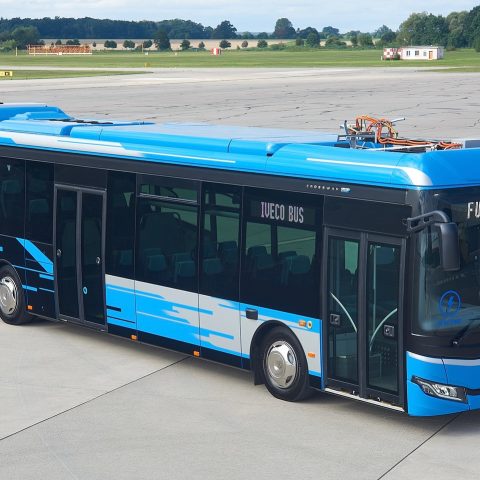
The vehicle supply contract was awarded to Iveco Bus shortly before Christmas. The press release does not specify the exact vehicle model ordered by LSE. However, given the reference to a Low-Entry configuration, the vehicles can reasonably be expected to belong to Iveco’s Crossway LE Elec range, launched in 2023. The same model has been ordered in 200 units in Germany by the purchasing group “BusGruppe” in late 2024.
Iveco Crossway LE Elec for Lüchow-Dannenberg
Lüchow-Schmarsauer Eisenbahn GmbH (LSE) is a regional public transport operator based in the Lüchow-Dannenberg district, in eastern Lower Saxony. The company provides bus services in a predominantly rural area.
Entry into service is scheduled for spring 2027. Ahead of full deployment, Iveco will provide a demonstrator vehicle in 2026, enabling a test phase for drivers and an initial introduction of electric bus operations to passengers.
As mentioned, the buses will be low-entry, battery-electric vehicles equipped with heat pumps and energy recuperation systems. Interior layouts are designed for flexibility, featuring a mandatory wheelchair space complemented by an additional multifunctional area suitable for wheelchairs, prams, or bicycles. Fold-down seats allow capacity to be adapted to peak and off-peak demand. Accessibility features include step-free boarding and visual and acoustic passenger information systems, it is stated.
Charging will initially take place exclusively at LSE’s depot. In the longer term, the operator plans to develop decentralised charging infrastructure as part of a broader e-mobility strategy.