Freiburg’s VAG adds 22 new e-buses and announces new tender as zero emission fleet reaches two-thirds
The Freiburg public transport operator, Freiburger Verkehrs AG (VAG), has inaugurated a second e-bus depot and introduced 22 additional battery-electric buses, marking a major step toward its goal of achieving climate-neutral line operations by 2030. With the new vehicles, two-thirds of the operator’s bus fleet now run on electricity, VAG states. The next phase includes […]
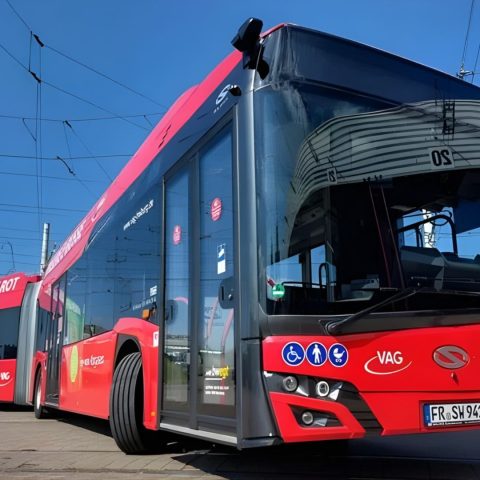
The Freiburg public transport operator, Freiburger Verkehrs AG (VAG), has inaugurated a second e-bus depot and introduced 22 additional battery-electric buses, marking a major step toward its goal of achieving climate-neutral line operations by 2030. With the new vehicles, two-thirds of the operator’s bus fleet now run on electricity, VAG states.
The next phase includes a Europe-wide tender for 25 additional electric buses and the expansion of charging capacity across the network.
Credit pictures: VAG Freiburg
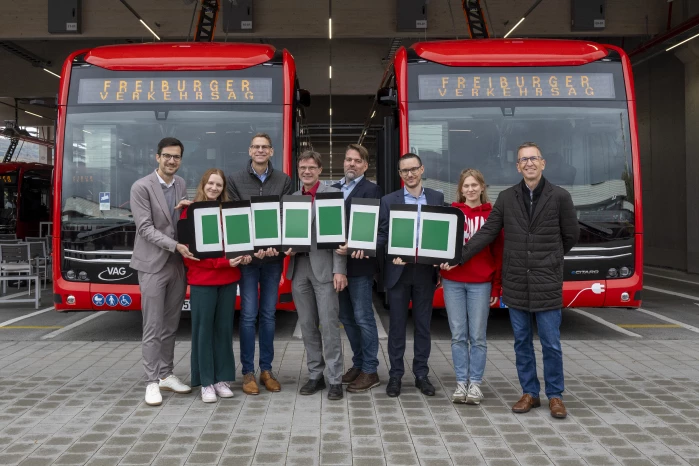
Freiburg to implement chargers for electric buses
The latest expansion includes 16 opportunity charging stations distributed across the city network, doubling the number from eight. The new charging points are located at major interchanges such as Munzinger Straße and Paduaallee, where buses can recover up to 40% of their battery capacity in about ten minutes.
The transition has required a complete reorganization of depot operations and maintenance: high-voltage systems and rooftop components demand specialized equipment and training.
Between 2023 and 2030, VAG plans to invest approximately €59 million in fleet electrification and supporting infrastructure. Of this, €44 million will go toward bus procurement and €15 million toward charging and depot facilities, as stated by government’s agency Now.
Funding comes from multiple sources: €7.2 million from the federal government, €12.2 million from the Baden-Württemberg state transport ministry, and €23.4 million from the City of Freiburg, including €8 million from its Climate Protection Future Fund.
“We now handle repairs mainly on the roof rather than underneath the vehicle,” explained Michael Zausch, VAG’s head of workshops and vehicle technology. “We operate two drivetrain systems and three generations of battery technology — maintenance has become more complex.”
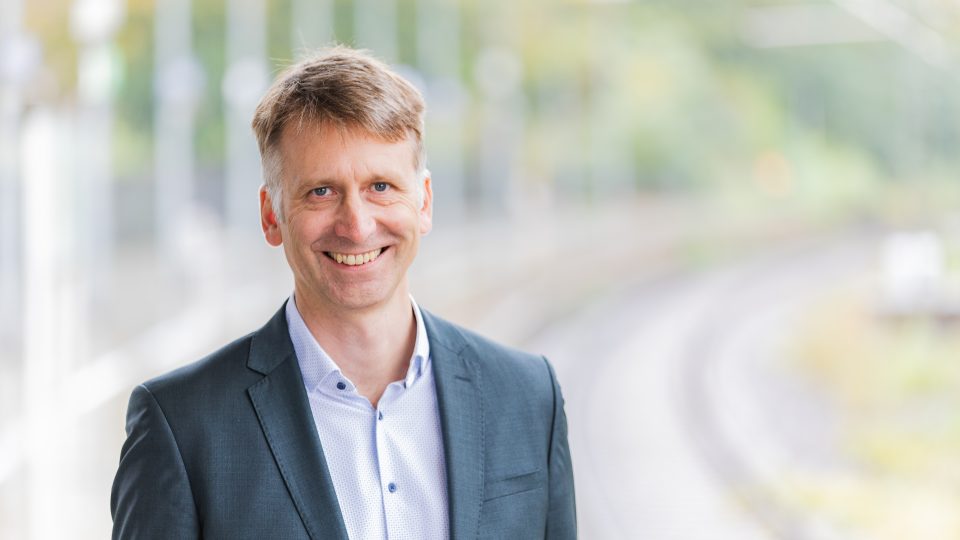
“We are optimistic that we will achieve our goal of operating a completely climate-neutral public transport service by 2030“, said Oliver Benz, CEO of VAG. “The e-buses not only reduce our carbon footprint, but also noise emissions. This is an advantage for residents, passengers and thus for the entire city”.
Federal Transport Minister Patrick Schnieder is quoted as saying: “Modern and clean buses are an important component of attractive public transport. They improve the service for passengers and contribute directly to climate protection. That is why we are providing targeted support to transport companies in their switch to environmentally friendly drive systems. We are providing around 7.2 million euros in funding to VAG – an important boost for efficient and sustainable local transport in the region”.