Zenobe finances over 280 electric buses under new framework agreement with Go-Ahead
Zenobē and Go-Ahead Group have launched a new committed finance framework agreement designed to support the rollout of electric buses through a scalable pre-agreed financing structure. The agreement, announced on 18 May 2026, has already supported the financing of more than 280 electric buses from four different OEMs across Go-Ahead operations. According to the companies, […]
Zenobē and Go-Ahead Group have launched a new committed finance framework agreement designed to support the rollout of electric buses through a scalable pre-agreed financing structure.
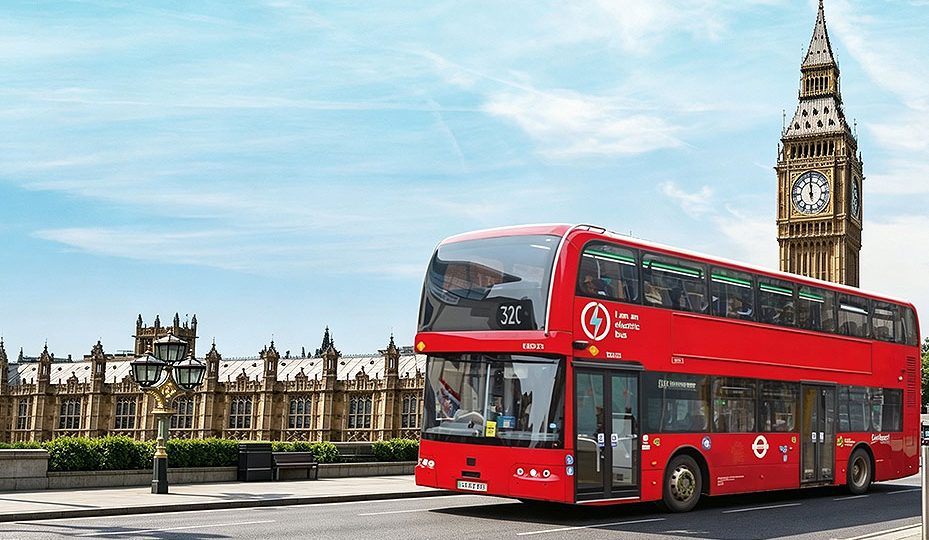
The agreement, announced on 18 May 2026, has already supported the financing of more than 280 electric buses from four different OEMs across Go-Ahead operations. According to the companies, the framework is the first arrangement of its kind in the bus sector.
Under the committed finance framework agreement (CFFA), Go-Ahead can access a pre-approved credit line to finance electric vehicle deployments as required, without negotiating separate leasing agreements for each procurement cycle. Zenobē states that the structure is intended to reduce administrative complexity and accelerate funding access for fleet electrification projects.
Zenobē and Go-Ahead expand electric bus financing cooperation
Zenobē and Go-Ahead have been working together since 2021 on electric bus projects. The new financing structure comes as Go-Ahead plans to electrify its entire bus fleet by 2035.
The companies state that the framework provides flexibility in relation to vehicle delivery schedules and franchise award timing. Funding can be drawn down under pre-agreed commercial terms when vehicles are ready for deployment.
According to Zenobē, the structure is also designed to provide greater cost predictability as fleet electrification scales across multiple projects and vehicle suppliers.
Electric bus rollout linked to scalable funding access
Zenobē describes the agreement as a mechanism aimed at simplifying the financing process for zero-emission bus adoption. The company adds that removing repeated negotiations for individual transactions allows operators to access funding more rapidly.
Go-Ahead states that the agreement supports long-term fleet planning while reducing delays linked to financing execution. The operator highlights that contracts are often awarded on a route-by-route or franchise basis, requiring financing solutions that can adapt to different timelines and procurement cycles.
Steven Meersman, Founder and Director, Zenobē, commented: “This agreement marks a significant step forward in how public transport operators can finance the transition to zero-emission fleets. We’ve worked closely with Go-Ahead for many years, and this first-of-its-kind framework gives them the flexibility, speed and cost certainty they need as electrification accelerates. The move away from diesel buses is inevitable – the question is how quickly operators can scale. By removing repetitive negotiations and enabling funding to be drawn down rapidly under pre-agreed terms, we’re making it easier, faster and more cost-effective to deploy electric vehicles at scale, while allowing operators to stay focused on running their networks.”
Gonzalo Velasco, Group Structured Finance Director, Go-Ahead Group said: “Electrifying our bus fleet at pace is central to our strategy, but it requires financing solutions that are flexible, scalable and quick to execute. This committed finance framework with Zenobē gives us certainty that funding is available when we need it, while removing unnecessary complexity and delay. As routes are awarded on a franchise-by-franchise basis, the ability to draw down funding rapidly under pre-agreed terms supports more effective planning and enables us to accelerate the rollout of zero-emission buses, while continuing to focus on delivering reliable services for passengers.”