Cagliari introduces three hydrogen buses as fleet reaches 236 zero emission units, full electrification target set for 2030
CTM Cagliari has presented three hydrogen buses, bringing its zero-emission fleet to 236 vehicles. CTM Cagliari today presented in Quartu Sant’Elena its first three hydrogen buses, the first to enter service in Sardinia. They are part of a batch of 15 vehicles already funded and procured through central purchasing body Consip. The news is reported […]
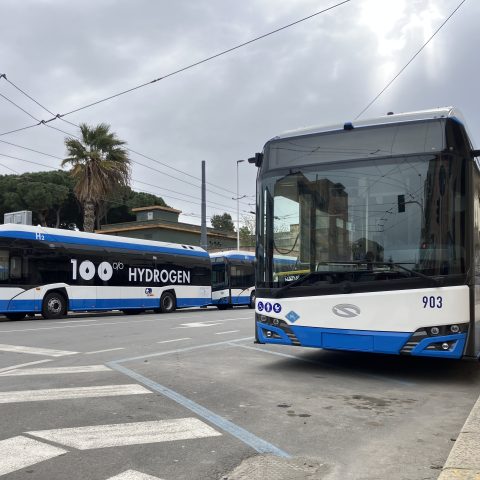
CTM Cagliari has presented three hydrogen buses, bringing its zero-emission fleet to 236 vehicles.
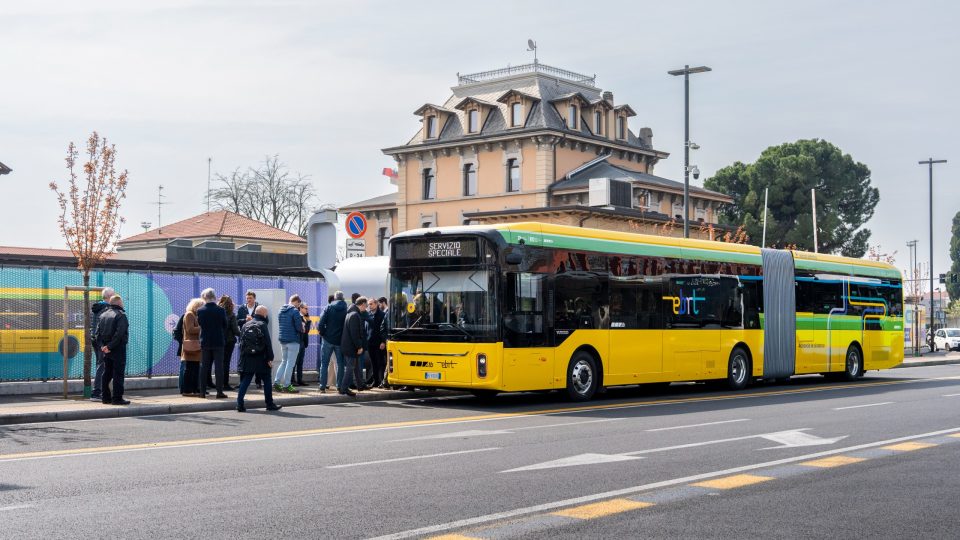
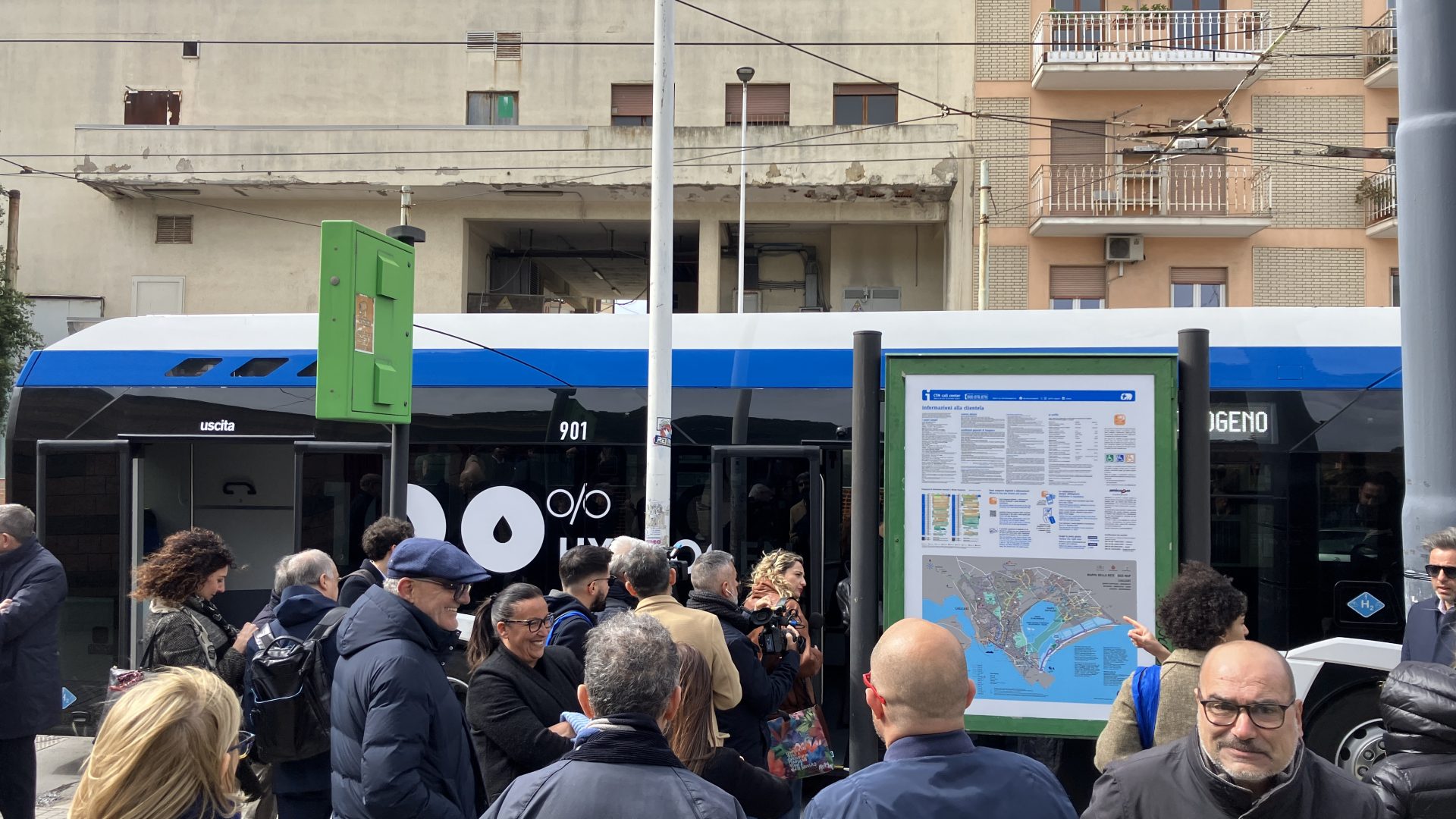
CTM Cagliari today presented in Quartu Sant’Elena its first three hydrogen buses, the first to enter service in Sardinia. They are part of a batch of 15 vehicles already funded and procured through central purchasing body Consip. The news is reported on Italian trade media, and our sister media, Autobusweb.
The introduction of the fuel cell vehicles, Solaris Urbino 12 Hydrogen models, marks an expansion of the company’s zero-emission fleet, which now totals 236 vehicles, including 203 battery-electric buses, 30 trolleybuses and the three new hydrogen buses.
The event is part of the ongoing renewal of the urban and suburban fleet in the Sardinian capital, with a progressive increase in the share of electric traction vehicles and the objective of reaching a fully zero-emission urban fleet by 2030.
Hydrogen buses for suburban operations
With the entry in operation of the three fuel cell buses, CTM expands the technological mix of its zero-emission fleet. The hydrogen vehicles are intended to operate on longer suburban routes.
The industrial plan foresees a further expansion of the zero-emission fleet to around 290 vehicles at full deployment. Within this programme, six eight-metre buses funded through PNSMS are expected, along with 14 trolleybuses (12- and 18-metre) financed through PSNMS.
CTM currently operates seven fully electric lines within the urban network of Cagliari.
The vehicles unveiled today are Solaris Urbino 12 Hydrogen models, 12 metres long with a capacity of 95 passengers – 28 seated and 67 standing. The batteries? Supplied by Impact, LTO chemistry, 30 kWh, which support a 70 kW Ballard fuel cell. The tank has capacity for 37 kg of hydrogen in five 312-litre ‘cylinders’. Cost of the vehicles? €678,000 each.
Fleet development is accompanied by the rollout of charging infrastructure. The network includes 72 charging points in total, divided into 50 slow charging systems and 22 fast charging systems.
A significant share of this infrastructure is located at the CTM depot in viale Ciusa, where 43 charging points are installed.
Toward the service contract deadline
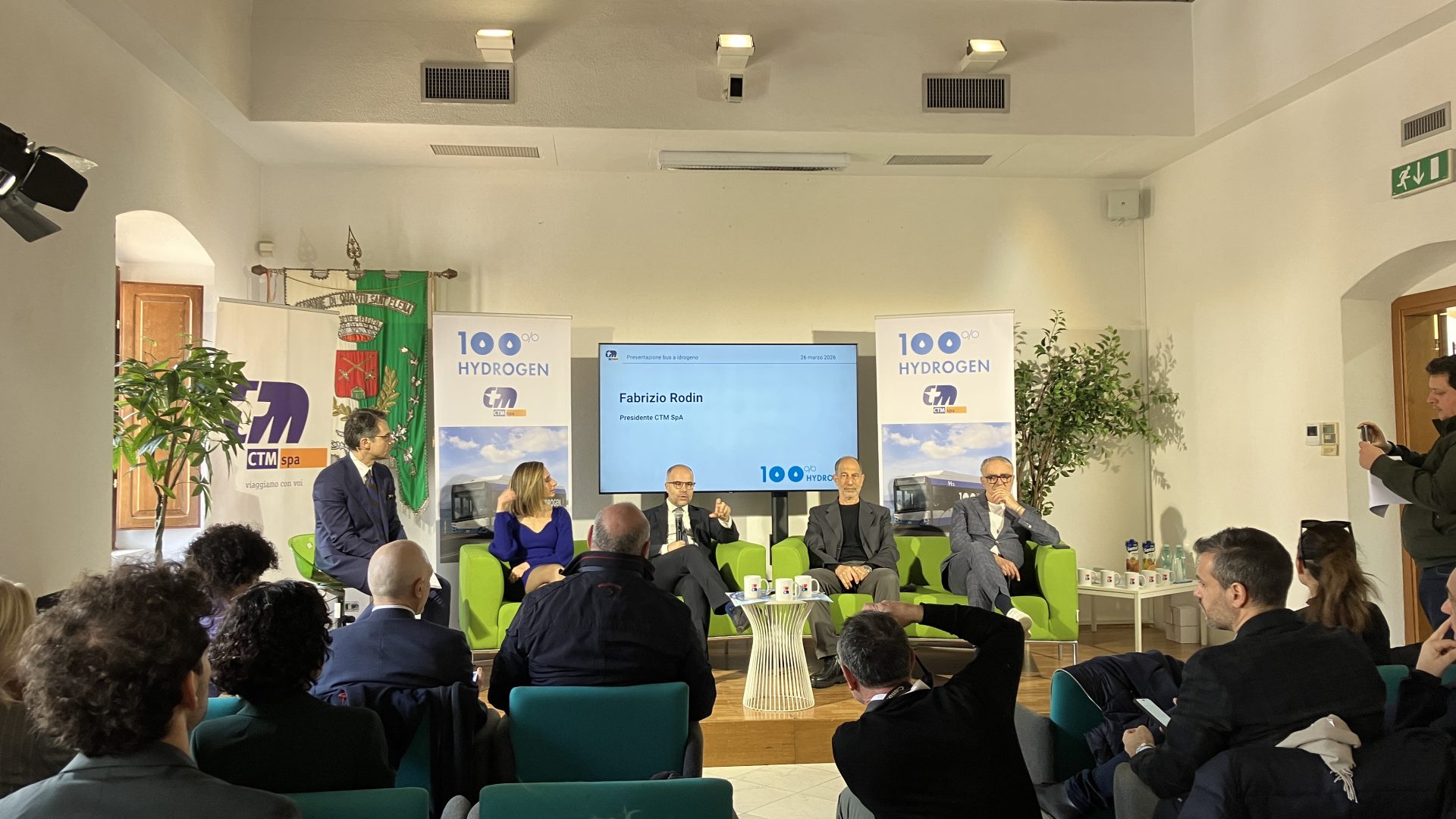
Fabrizio Rodin, President of CTM spa: “By September we will reach 236 electric buses in service. Once the five charging sites strategically distributed across the territory are completed, CTM will have a fully sustainable and green public transport system, integrated and ready to respond to the daily needs of citizens. The hydrogen buses we present today are the first in Sardinia. We approach them with great interest and we will carry out our evaluations with the seriousness that this type of innovation requires, because we are convinced that the energy mix represents an added value not only for the public transport system, but above all for the environment and for the health of those who live and move in our territories.”
During the press conference, Rodin added: “On 31 December 2026 the service contract binding Sardinian public transport companies with the Region of Sardinia will expire. The challenges ahead are significant: being able to raise this system is crucial, and it can only happen with a collective effort, without opposition between companies. In short, the objective is a system capable of improving the service through collaboration. The results will be seen over the next few months. From 1 January 2026 there will already need to be a response, which I hope will be an extension of the service contract, albeit with some adjustments, in order to then move in the medium term towards a system that delivers results.”
CTM Director Bruno Useli adds: “CTM is a company in full transformation. In this path it is essential to be protagonists of change, focusing on skilled human resources and on a strong commitment to achieving European sustainability targets. We have already electrified primary and secondary lines with electric buses and we are now preparing to test the use of hydrogen vehicles on suburban lines 9 and 19. We are also engaged in the construction of charging infrastructure, which will soon be operational in viale La Plaia in Cagliari, in Quartu Sant’Elena, at the Policlinico of Monserrato and at the Brotzu Hospital. This infrastructure development will also allow electric vehicles to become increasingly competitive and efficient in service.”