Software ownership and vertical integration: VinFast European winning cards according to Head of Commercial Vehicles Diego Ghirardi
VinFast is accelerating its ambitions in the commercial vehicle sector, with new electric bus models under development for Europe and a growing role in regional export markets. The Vietnamese manufacturer has already entered the European e-bus conversation with the presentation of a 12-metre and 8-meter battery-electric buses at Busworld 2025, while continuing to expand domestic […]
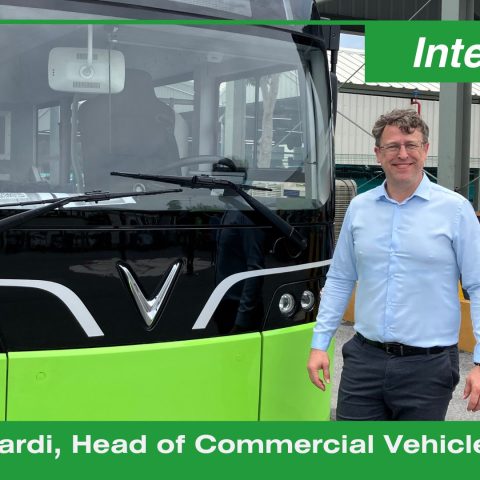
VinFast is accelerating its ambitions in the commercial vehicle sector, with new electric bus models under development for Europe and a growing role in regional export markets. The Vietnamese manufacturer has already entered the European e-bus conversation with the presentation of a 12-metre and 8-meter battery-electric buses at Busworld 2025, while continuing to expand domestic operations, also through the VinBus network.
Against this backdrop, during a recent media trip in Vietnam that gave us the opportunity to take stock of VinGroup ecosystem and of VinFast manufacturing processes, Sustainable Bus spoke with Diego Ghirardi, recently appointed Head of Commercial Vehicles, about the group’s production volumes, vertical integration strategy, export roadmap and the next generation of buses being developed for international markets.
With more than 25 years of experience in the global automotive industry, Diego Ghirardi has held senior engineering and program leadership roles at Rivian, Ford Motor Company, Bosch and MEVCO across Europe, Australia, the United States and Asia.
Originally from Italy and graduated in Mechanical Engineering from the University of Genoa, Ghirardi joined VinFast in 2024 after working in the United States on electric pickup trucks and SUVs at Rivian. At VinFast he initially served as Chief Engineer for the VF8 program before moving to the helm of the commercial vehicles division in March 2026.
On our e-buses for the European market we are currently introducing changes inside the bus structure compared to the vehicles presented at Busworld 2025. And we aim to introduce our new electrical architecture, which we developed and started introducing in passenger cars a year ago, and which gives us the possibility to reduce the number of components, reduce assembly, and therefore save not only on costs, but also on weight. It also makes the vehicle easier to repair in case there are problems, so we also meet customer needs in terms of maintenance.
Diego Ghirardi, Head of Commercial Vehicles, VinFast
Diego Ghirardi, VinFast: speed of execution is a key lesson
Let’s begin with a two-part question: what experience did you brought to VinFast, and what did you find at VinFast that somehow complements everything you had done before?
I definitely already had experience in vehicle development, pickup trucks, commercial vehicles, both in the combustion engine field and in electric vehicles. So I brought that experience with me when I arrived here at VinFast, where I started in the position of Chief Engineer for the VF8. What I learned here was definitely the speed of execution, which here in Asia is completely different compared to Europe, the United States and Australia.
However, above all, one thing that is different in Asian markets, not only in automotive but in every field, is that in Europe or in the Western world we are always forced to make a trade-off between quality, cost and time. People always say: you have this triangle in which you can move, and if you want to have high quality and be fast, then you must spend a lot, or the other permutations. Here this concept does not exist. Here you must have all three at the same time, and you must aim to get to market quickly, bring the highest quality, and keep costs low.
Since March 2026 you are covering the position of Head of Commercial Vehicles. Can you provide us a sort of identity card of the group in terms of volumes?
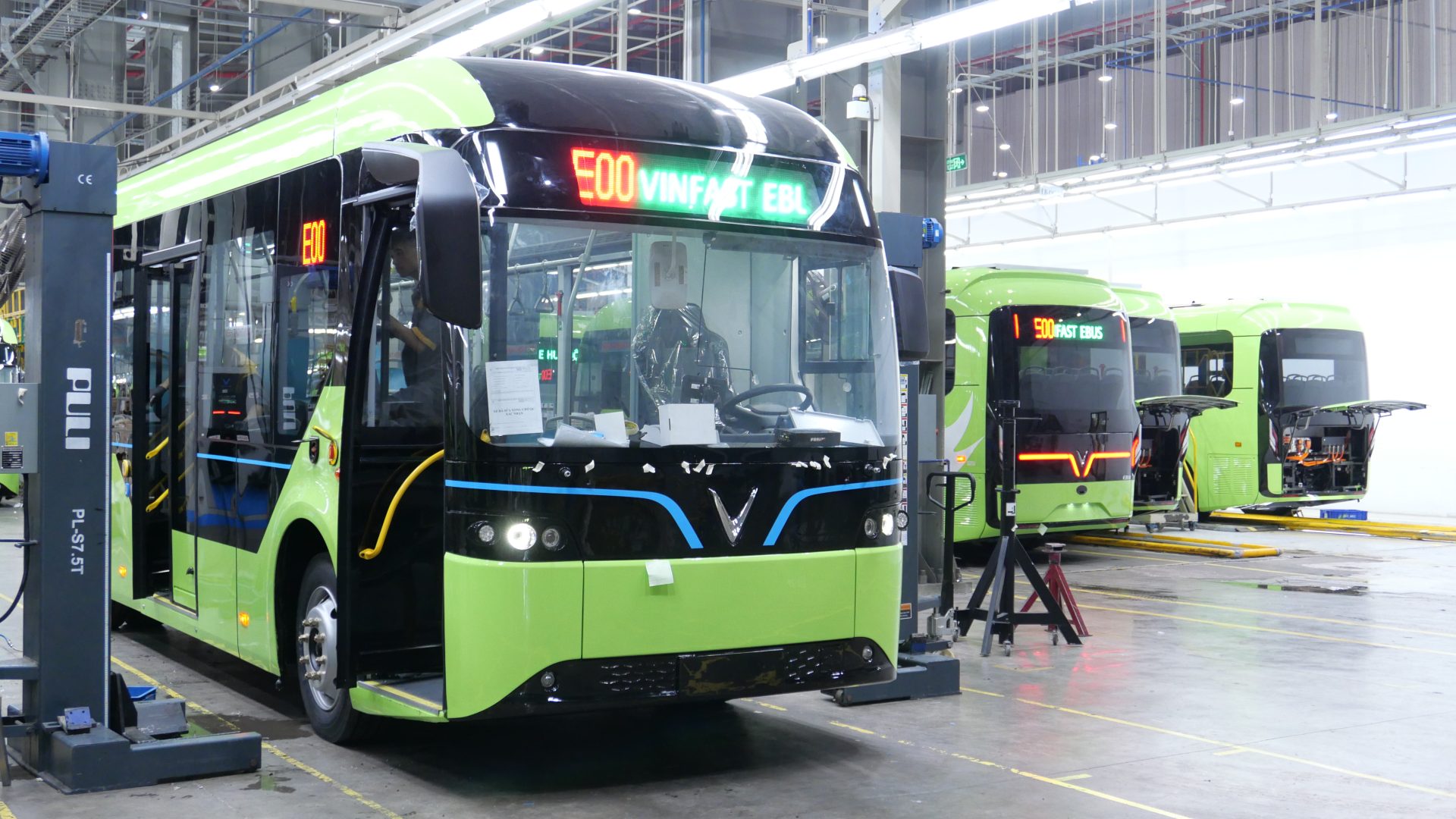
Currently our commercial vehicles production is 90 percent headed to the domestic market. We made a 12-metre electric e-bus for Europe a couple of years ago, and now we are developing a revised 12-metre and an 8-metre vehicle, again for the European market.
The number of buses we sell here in Vietnam is obviously heavily influenced by the fact that we also have a company within VinGroup, namely VinBus, and therefore we also build our buses for our own company. This gives us the flexibility to handle contracts for the city of Hanoi, the city of Ho Chi Minh or other contracts, and therefore keep our production full in moments when fewer orders arrive. This allows us to keep the factory running continuously, without needing downtime because there are no orders. We produce around 4,500 to 5,000 buses per year across different models, in the 6, 8 and 10-metre segments.
We have complete ownership of the software stack, so we design our hardware components, manufacture them ourselves and run our own software on top of them. This gives us the ability to optimise the system continuously and introduce changes almost instantly. As a result, we can react much faster to market feedback, implement improvements more quickly, add new functionalities and address areas where customers may not yet be fully satisfied. Because the entire chain is managed internally, we do not need to coordinate separately with one supplier for hardware, another for software, and then handle integration, testing and validation afterwards. We can do everything directly in-house.
Diego Ghirardi, Head of Commercial Vehicles, VinFast
And about goods transportation?
We have a van called the EC Van, designed for last-mile delivery in the city. It is very small, basic, but it is receiving an excellent response from the market. We launched it four or five months ago and it has started selling very well because it adapts perfectly to local conditions: small and narrow roads, heavy traffic, not very large volumes to transport. So that vehicle fits perfectly into its market. We also have plans to move into larger vans, but we are talking about maybe a year and a half from now.
Why vertical integration is a winning card
Vertical integration is a topic that is widely discussed in the market and is often presented by Chinese manufacturers as one of their main selling points. How VinFast positions itself on this topic overall?
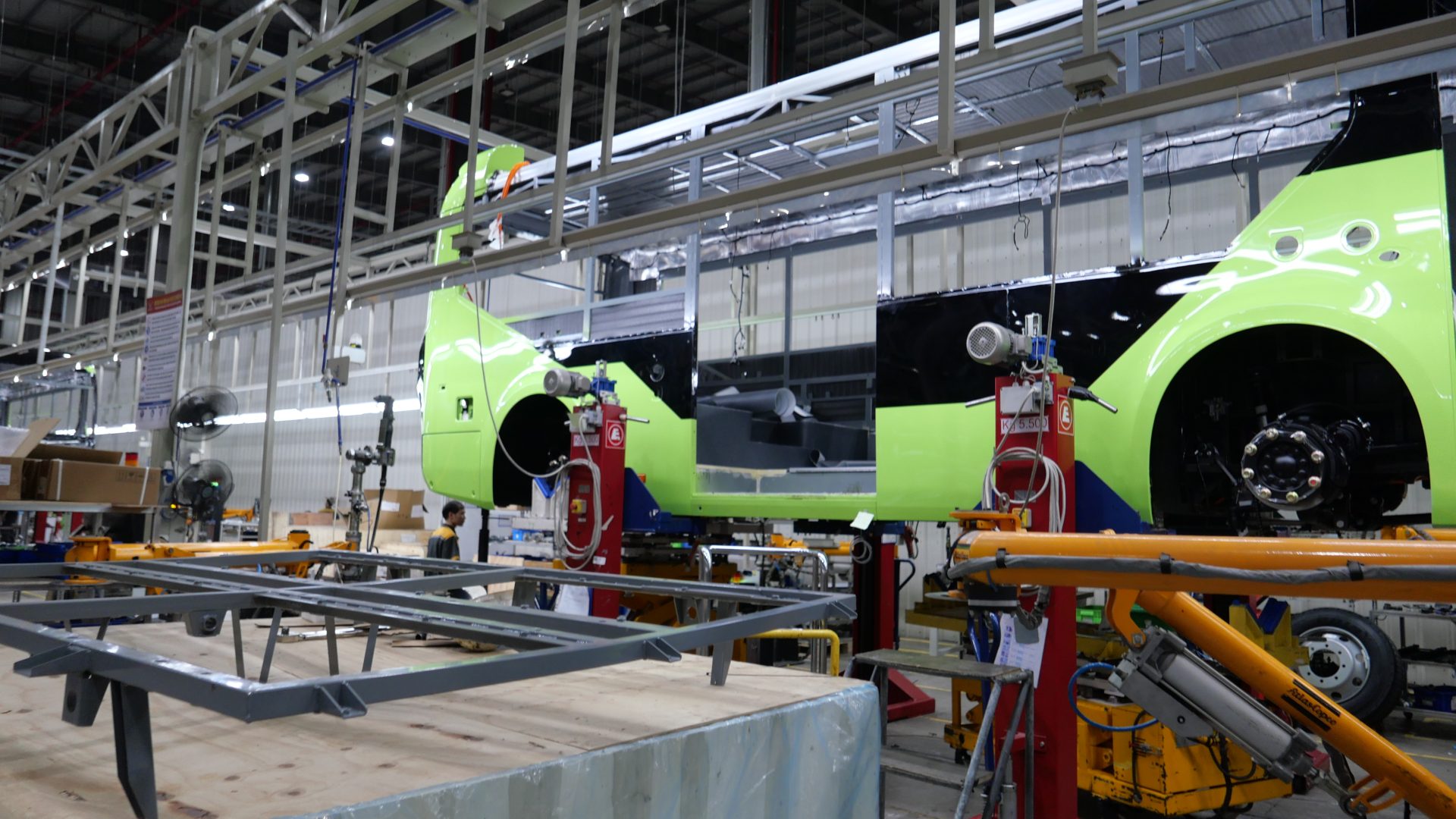
Actually, vertical integration is VinFast’s winning card, because in the factory we not only have hot stamping, cold stamping and assembly, which every manufacturer has, but besides batteries — therefore both our own cells and battery assembly — we also make our electronic components ourselves. That is, we take the motherboards and we have our own assembly factory where we assemble all the various electronic components.
What about software?
We have complete ownership of the software stack, so we design our hardware components, manufacture them ourselves and run our own software on top of them. This gives us the ability to optimise the system continuously and introduce changes almost instantly. As a result, we can react much faster to market feedback, implement improvements more quickly, add new functionalities and address areas where customers may not yet be fully satisfied. Because the entire chain is managed internally, we do not need to coordinate separately with one supplier for hardware, another for software, and then handle integration, testing and validation afterwards. We can do everything directly in-house.
Is this just for passenger cars or also for commercial vehicles?
Also for commercial vehicles.
But in the case of buses, you’re not using your own batteries, right?
Yes at the moment, for buses, we use both CATL and Gotion as suppliers. The reason is because bus volumes are much lower compared to passenger cars, so in bus production it is more convenient for us to buy the batteries.
One thing that is different in Asian markets, not only in automotive but in every field, is that in Europe or in the Western world we are always forced to make a trade-off between quality, cost and time. People always say: you have this triangle in which you can move, and if you want to have high quality and be fast, then you must spend a lot, or the other permutations. Here this concept does not exist. Here you must have all three at the same time, and you must aim to get to market quickly, bring the highest quality, and keep costs low.
Diego Ghirardi, Head of Commercial Vehicles, VinFast
VinFast export’s strategies and European ambitions
How does export fit into your strategy?
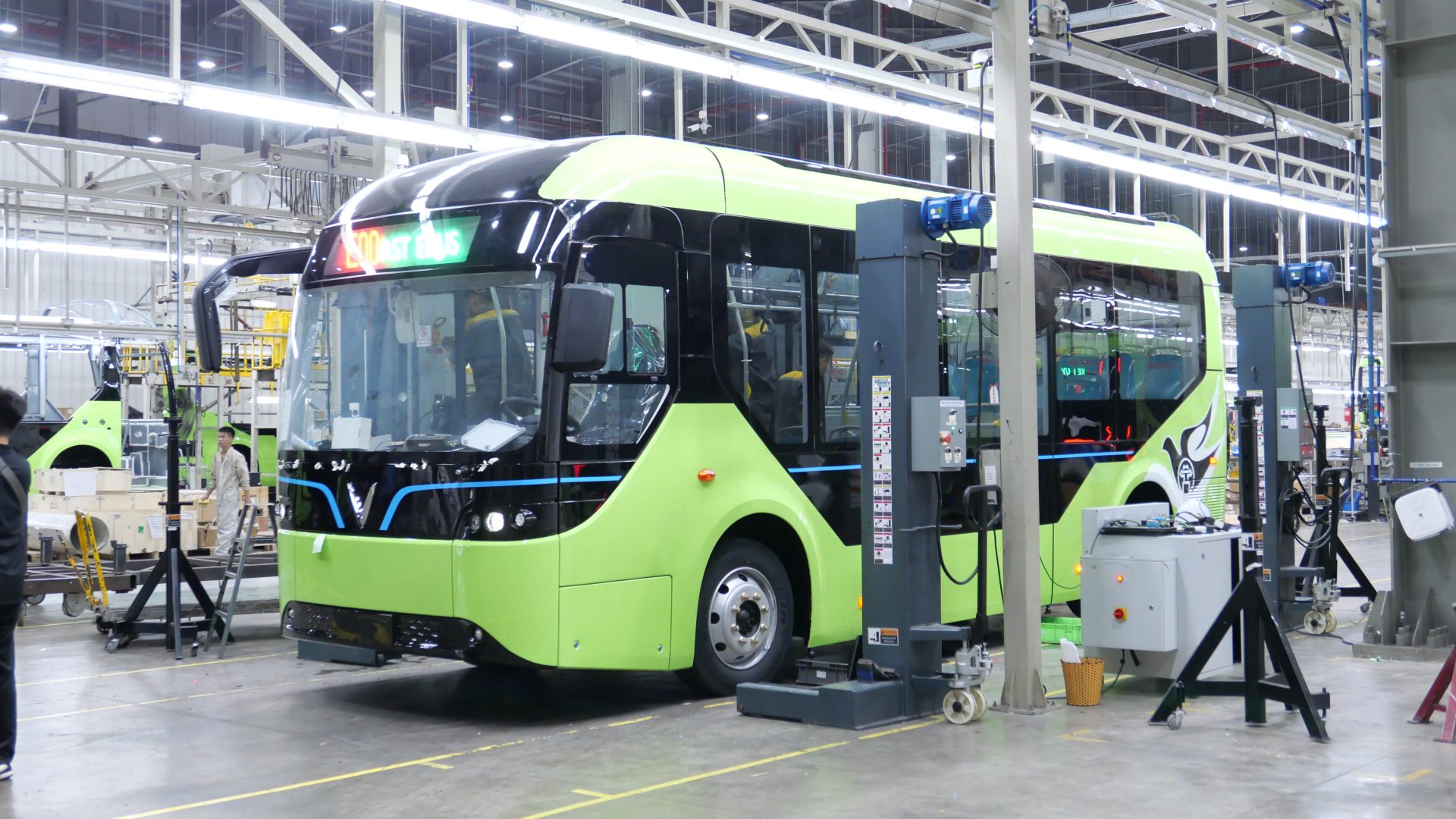
For commercial vehicles we only have the factory here in Hai Phong, Vietnam; we have not yet opened other factories as we have done for passenger cars. However, we have plans to approach other markets, especially India, because we are having enormous success with our passenger cars, so we are building a name for ourselves in India and we want to use this image also to export buses. And obviously the countries closest to us — Indonesia, the Philippines, Cambodia and Laos — are our main markets when we start looking abroad. As for Europe, as we said before, we plan to provide a new and improved 12-metre model and we are also developing an 8-metre model for that market.
What do you mean by “new and improved”?
We are introducing changes mainly inside the bus structure compared to the vehicles presented at Busworld 2025. And we aim to introduce our new electrical architecture, which we developed and started introducing in passenger cars a year ago, and which gives us the possibility to reduce the number of components, reduce assembly, and therefore save not only on costs, but also on weight. It also makes the vehicle easier to repair in case there are problems, so we also meet customer needs in terms of maintenance.
One of the technological directions currently being explored in the e-bus sector is the floor-mounted battery. Is that an area of interest for you as well?
No, at the moment we are not interested in floor-mounted batteries. Having batteries as single units is simpler for us and gives us more flexibility. For example, on the 8-metre bus we have one version with 8 modules and one version with 10 modules, so this gives us the possibility to adapt more quickly. If instead you make a floor-mounted battery, you have that configuration only, and if you want to change it you must change the vehicle structure, and that would be penalising.
A quick comment on competition. The European market is very crowded. Who are your competitors — more the Chinese brands or the local ones? And what are your selling points?
The European market is currently very fragmented. There are many brands, both local European brands and Chinese brands that are arriving. We mainly see the Chinese as our main competitors, because clearly we know we have the image of foreigners arriving with their products, and the other big foreign players arriving are the Chinese ones. So we know perfectly well that we will be compared with Chinese competitors.
However, we want to produce buses with a quality comparable to European standards. Therefore we want to be seen as a manufacturer of buses and commercial vehicles that offers guarantees of durability, guarantees of quality, and above all offers a product that has nothing to envy from the rest of the products on the market.