HSL selects INIT container-based on-board system for Helsinki’s multimodal fleet of 1,700 vehicles
Helsinki’s public transport authority HSL has commissioned INIT to supply a container-based on-board computer system for its multimodal public transport fleet in Finnish capital region. The Helsinki Regional Transport Authority will deploy a new on-board system supplied by INIT across approximately 1,700 vehicles, including buses, trams, metro cars, trains and ferries. According to the INIT […]
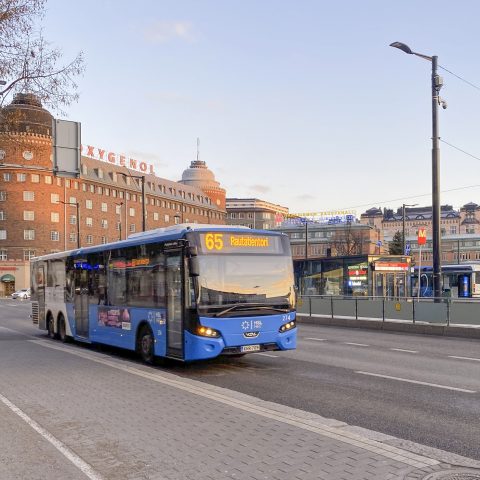
Helsinki’s public transport authority HSL has commissioned INIT to supply a container-based on-board computer system for its multimodal public transport fleet in Finnish capital region.
The Helsinki Regional Transport Authority will deploy a new on-board system supplied by INIT across approximately 1,700 vehicles, including buses, trams, metro cars, trains and ferries. According to the INIT press release, the project covers on-board software, vehicle hardware and associated services, with the aim of establishing a single technical platform for vehicle operations across all transport modes in the region.
We chose a container-based solution because we want a unified, flexible, and future-proof platform for our entire fleet across different modes of transport. Container technology allows us to update and expand functionalities quickly without disrupting services for our passengers
Tuomas Savikangas, Director HSL Technology
INIT container-based on-board architecture for multimodal fleet
At the core of the solution is INIT’s COPILOTcontainer, a Docker-based software platform that hosts all operational, driver and communication functions of the on-board computer. The platform uses container technology to run multiple software components independently on the same device, allowing different functions to be operated and updated separately. INIT states in its press release that the containerized architecture is designed to support modular software deployment and long-term maintainability within vehicle IT systems.
The solution will be implemented consistently across the fleet, creating a uniform on-board environment regardless of vehicle type. According to INIT, the software is built on ITxPT services and open application programming interfaces, enabling compatibility with standardized public transport IT frameworks. The system supports both existing hardware interfaces for vehicle peripherals and HTML5-based applications for passenger information displays.
The on-board architecture is also designed for offline operation, allowing continuous functionality in environments with limited or interrupted connectivity, such as tunnels and ferry routes. INIT describes the platform as capable of supporting future software extensions and additional applications without requiring changes to the underlying hardware.
Integration with HSL systems and vehicle equipment
A central part of the project is the integration of the new on-board system into HSL’s existing IT environment. INIT will develop interfaces to connect the on-board computers with passenger information displays, traffic signal priority modems, ticket validators, passenger counting systems and existing control panels used in rail vehicles. According to the INIT press release, vehicle data middleware will be provided as a central integration layer between vehicles and backend systems.
The middleware will initially support real-time communication based on the Nordic NOPTIS standard. INIT notes that the system architecture also allows for a potential transition to SIRI in a later phase, depending on HSL’s requirements.
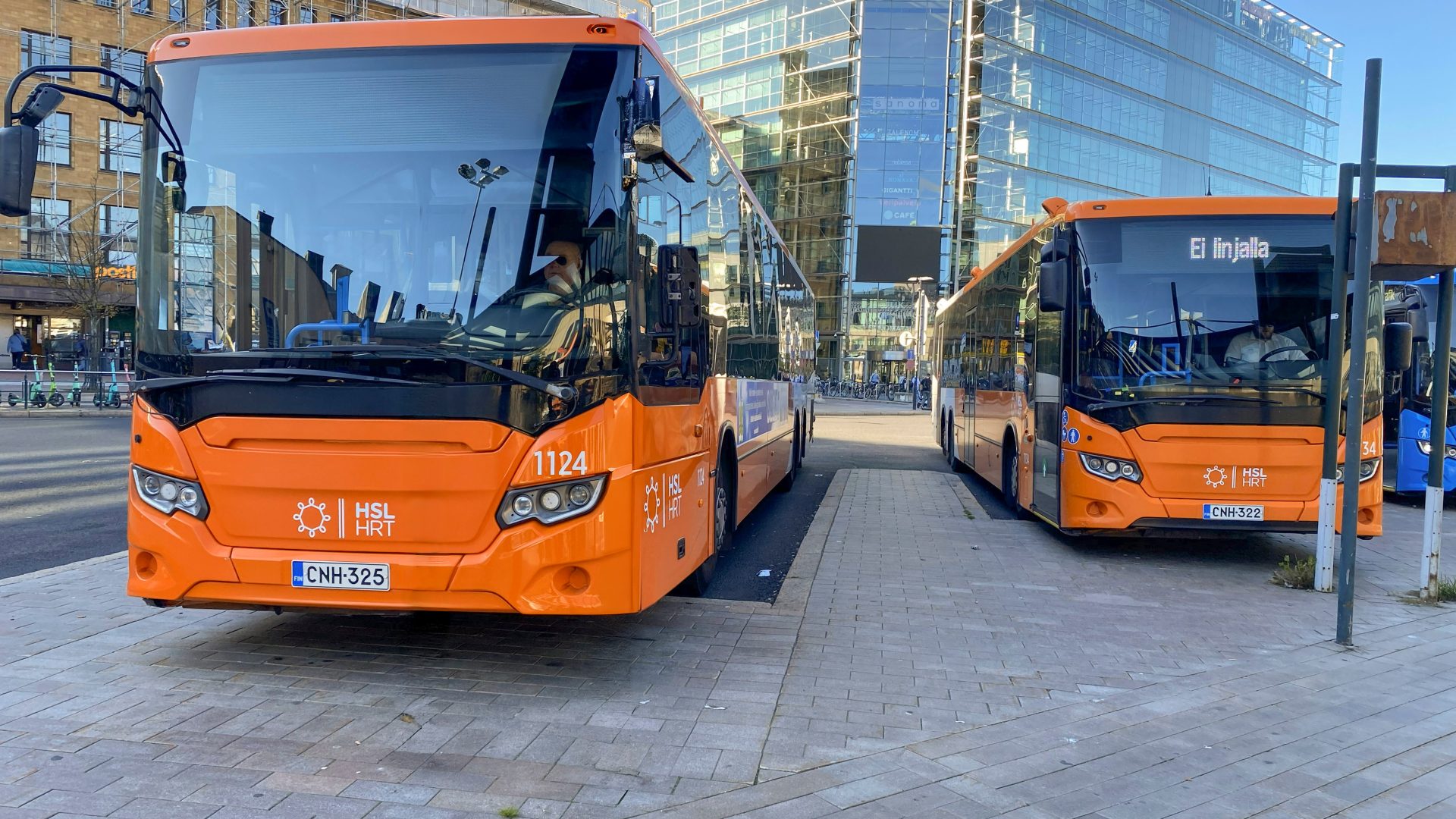
For bus operations, 1,350 vehicles operated on behalf of HSL will be equipped with INIT’s TOUCHmdt driver console. The driver workstation includes an NFC reader for contactless driver log-in and provides an interface for daily operational tasks. INIT reports that the console will be standardized across the bus fleet while being integrated into the broader on-board system architecture.
The COPILOTcontainer software will run on INIT’s latest-generation COPILOTpc on-board computer as well as on compatible third-party vehicle platforms that support ITxPT standards and open APIs. INIT states in its press release that this approach reduces the number of separate devices installed in vehicles while allowing multiple functions to operate simultaneously on a single platform.
Tuomas Savikangas, Director HSL Technology, said: “We chose a container-based solution because we want a unified, flexible, and future-proof platform for our entire fleet across different modes of transport. Container technology allows us to update and expand functionalities quickly without disrupting services for our passengers. INIT stood out by offering a technically advanced, standards-based, and seamlessly integrated solution that supports both our current operational needs and our long-term development vision.”