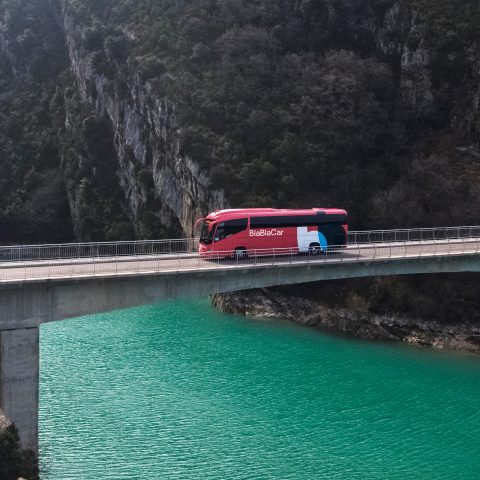
BlaBlaCar Bus heading towards ceasing operations in France?
“For BlaBlaCar Bus, the exit is this way!” reads the headline of an article by Pierre Lancien published in Mobilycités, a French media outlet specializing in the transport sector and well-versed in national dynamics. The website reports a rumor concerning the operator, which has allegedly — as stated — initiated an information and consultation procedure […]
“For BlaBlaCar Bus, the exit is this way!” reads the headline of an article by Pierre Lancien published in Mobilycités, a French media outlet specializing in the transport sector and well-versed in national dynamics. The website reports a rumor concerning the operator, which has allegedly — as stated — initiated an information and consultation procedure with its CSE (Social and Economic Committee) regarding a project to cease its long-distance regular coach operations.
“If the project is confirmed at the end of the procedure, the group could fully exit the long-distance services market starting from January 4, 2027. The company, which relies heavily on regional subcontractors to operate its routes, would leave behind many uncertainties regarding the future of routes, drivers, and the vehicles dedicated to this activity”, the article states.
The potential exit of a major national player such as BlaBlaCar Bus would leave a significant gap in the road transport ecosystem.
In the meantime, we have contacted BlaBlaCar Bus: updates will follow.
In France, concern is rising over the possible end of BlaBlaCar Bus operations
Thanks to our colleague Jean Philippe Pastre from TRM24, we reviewed a press release — strikingly concerned in tone — from the French association OTRE (which brings together owner-operators and small transport companies, both in freight and passenger services). The association—quote—“expresses strong concern following the announcement of a project for BlaBlaCar Bus to withdraw from the French long-distance services market. This decision, both sudden and unexpected, could—if confirmed—have significant consequences, particularly for around sixty transport operators running routes on behalf of BlaBlaCar Bus. These companies, mostly SMEs rooted in local territories, have structured a significant part of their business around these contracts. Some have recently invested in vehicles, hired staff, or adapted their organization to meet the client’s requirements. Today, they find themselves exposed to abrupt economic uncertainty”.
OTRE therefore calls for: “full transparency on the timeline and modalities of the project; strengthened support for partner transport operators to ensure business continuity and employment; and the mobilization of public authorities to anticipate the territorial and economic impacts of this possible market exit”.