New York State delays electric school bus mandate by five years amid cost and infrastructure concerns
New York State has approved a five-year postponement of its electric school bus mandate as part of the state budget agreement, extending deadlines that school districts and transport operators had argued were difficult to meet due to costs and infrastructure requirements. Under the revised framework, school districts will now have until 2032 — instead of […]
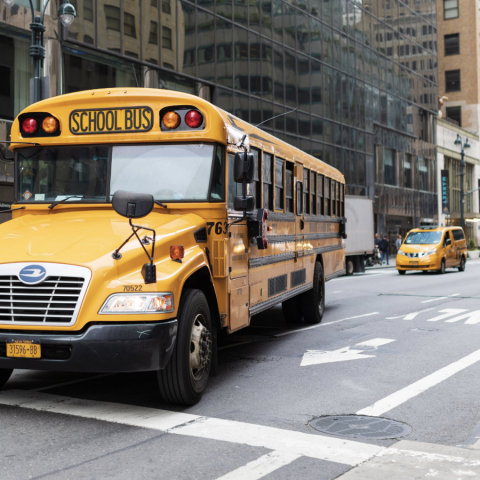
New York State has approved a five-year postponement of its electric school bus mandate as part of the state budget agreement, extending deadlines that school districts and transport operators had argued were difficult to meet due to costs and infrastructure requirements.
Under the revised framework, school districts will now have until 2032 — instead of 2027 — before being required to purchase only zero-emission school buses. The deadline for the complete transition of school bus fleets has also been moved from 2035 to 2040.
The measure was included in the Education, Labor and Family Assistance section of the budget and received support from lawmakers representing rural and upstate districts, where concerns had been raised over procurement costs, charging infrastructure and operational readiness.
In summer 2025 New York State had announced an expansion of its electric school bus program with an additional $200 million in funding.
New York school districts: concerns over electric bus transition
The electric school bus mandate was introduced in 2022 as part of the state’s zero-emission transport strategy.
Assemblywoman Carrie Woerner said the delay followed discussions with school transportation officials, garage administrators, private transport operators and the New York State Energy Research and Development Authority (NYSERDA) regarding implementation challenges linked to fleet electrification.
State Senator Dan Stec stated that districts across the region had repeatedly reported that the original deadlines were difficult to meet due to costs and timing constraints. Assemblyman Robert Smullen also supported the postponement, while continuing to call for additional flexibility for rural districts.
Concerns regarding electric school bus deployment had already emerged earlier this year during presentations by school districts in Queensbury.
District officials stated that compliance with the original mandate would have increased annual bus expenditures from approximately $1.3 million to nearly $4 million.
Charging infrastructure investments were estimated at around $1.4 million, while transportation administrators noted that some rural routes could not currently be completed on a single battery charge.
School officials also reported operational limitations during periods of extreme cold weather, when electric buses entered reduced-power operating mode during temperatures reaching minus 19 degrees.