BYD launches 3rd generation e-bus platform with 1,000-Volt architecture
BYD introduced its third-generation electric bus platform during an event held in China on September 15th. The e-Bus Platform 3.0 reportedly features a 1,000-volt electrical architecture, Cell-to-Chassis integration of LFP Blade batteries, and upgraded safety and efficiency systems. The first model built on this platform is the BYD C11, an 11-meter bus available with battery […]
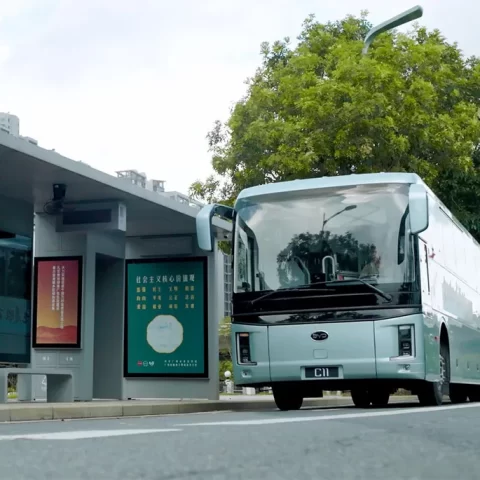
BYD introduced its third-generation electric bus platform during an event held in China on September 15th. The e-Bus Platform 3.0 reportedly features a 1,000-volt electrical architecture, Cell-to-Chassis integration of LFP Blade batteries, and upgraded safety and efficiency systems. The first model built on this platform is the BYD C11, an 11-meter bus available with battery capacities up to 593 kWh (with modular options such as 184 kWh, 257 kWh, 311 kWh, 425 kWh) and state ranges of 220 to 730 kilometers, as reported on media such as Cleantechnica and ChinaEVHome.
The 1,000-volt setup, a first in the bus sector, powers the drivetrain, electronics, and auxiliary systems. BYD has already applied the same architecture in its passenger car range, including the Tang EV and Han EV, notes Cleantechnica.
No information were released concerning markets where the new platform will be made available and timing for its commercial availability.
BYD new e-bus platform 3.0
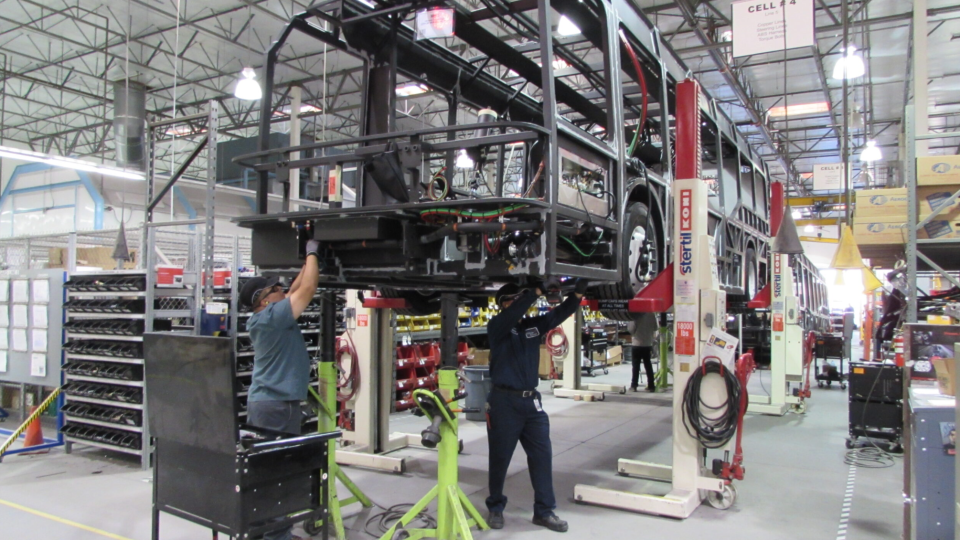
Using Cell-to-Chassis (CTC) technology, the Blade batteries (manufactured for Western markets by BorgWarner) are built directly into the chassis between the axles, as happen also for the new range headed to the European market after presentation in 2023. This design aims to increase structural rigidity, reducing height, and eventually preserving luggage space. The company describes the result as its thinnest bus-dedicated battery system.
The platform employs silicon carbide power electronics and a new 7-in-1 thermal management unit. According to BYD, these upgrades cut energy consumption by up to 18% and add 50–80 kilometers of range in low-temperature operation.
The e-Bus Platform 3.0 incorporates, according to reports, Driver Disability Assistance 2.0, allowing passengers to stop the vehicle via an emergency dashboard button; a tire blowout stability system with millisecond-level response at speeds up to 100 km/h; Intelligent torque control (iTAC) and optional active suspension on one or both axles.