Colorado, USA: Mesa County backs $100,000 zero-emission transit study
Mesa County, in western Colorado, has approved a $100,000 grant agreement to carry out a Zero-Emission Vehicle Transition Study for Grand Valley Transit. The decision, approved by the Mesa County Commissioners on Jan. 20, authorizes a technical study aimed at assessing how the publicly operated Grand Valley Transit system, serving the Grand Junction area, can […]
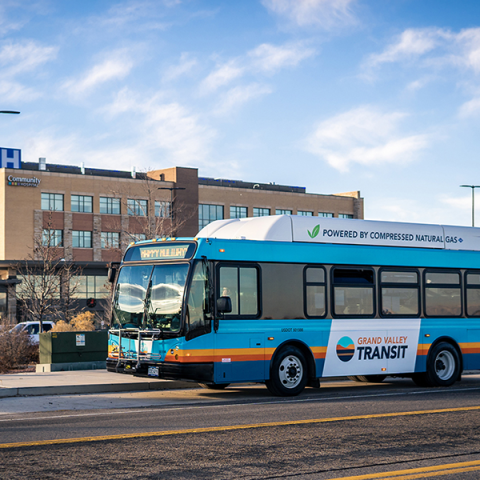
Mesa County, in western Colorado, has approved a $100,000 grant agreement to carry out a Zero-Emission Vehicle Transition Study for Grand Valley Transit.
The decision, approved by the Mesa County Commissioners on Jan. 20, authorizes a technical study aimed at assessing how the publicly operated Grand Valley Transit system, serving the Grand Junction area, can continue progressing toward zero-emission vehicle technologies while building on its existing clean-fuel infrastructure, according to Mesa County.
Mesa County looks at transit’s electrification
The study is funded primarily through $90,000 in Clean Transit Enterprise resources awarded by the Colorado Department of Transportation’s Division of Transit and Rail. A $10,000 local match is already included in Mesa County’s 2026 adopted budget and will be covered through the Grand Valley Transit intergovernmental agreement. Mesa County states that the Mesa County Regional Transportation Planning Office applied for the grant and will oversee the study.
The Zero-Emission Vehicle Transition Study will document which elements of the current Grand Valley Transit fleet already meet zero-emission criteria, with specific attention to vehicles powered by renewable natural gas within the compressed natural gas fleet. The analysis will also review options to expand renewable natural gas production and use across the transit system.
In addition, the study will provide a high-level assessment of emerging technologies, including battery-electric buses, smaller electric vehicles, and hydrogen fuel-cell options, where applicable. Mesa County notes that a significant share of Grand Valley Transit’s renewable natural gas is derived from captured methane at the Persigo Wastewater Treatment Facility, which is used as vehicle fuel instead of being flared.
Mesa County reports that completion of the study will support future applications for state and federal transit funding programs that require a formal zero-emission transition plan. County officials stated that the study does not mandate fleet changes or vehicle purchases and that affordability, reliability, and service needs will continue to guide transit decisions.