Bus sales rise 2% year on year as Daimler Truck 2025 results show group volumes down 8%
Daimler Buses closed 2025 with stable unit sales, while Daimler Truck group volumes declined -8%, mainly due to weaker truck demand in North America. Back in 2024, Daimler Buses was the best performing — and almost the only growing — division of the group. Daimler Truck ended the 2025 financial year with total group unit […]
Daimler Buses closed 2025 with stable unit sales, while Daimler Truck group volumes declined -8%, mainly due to weaker truck demand in North America. Back in 2024, Daimler Buses was the best performing — and almost the only growing — division of the group.
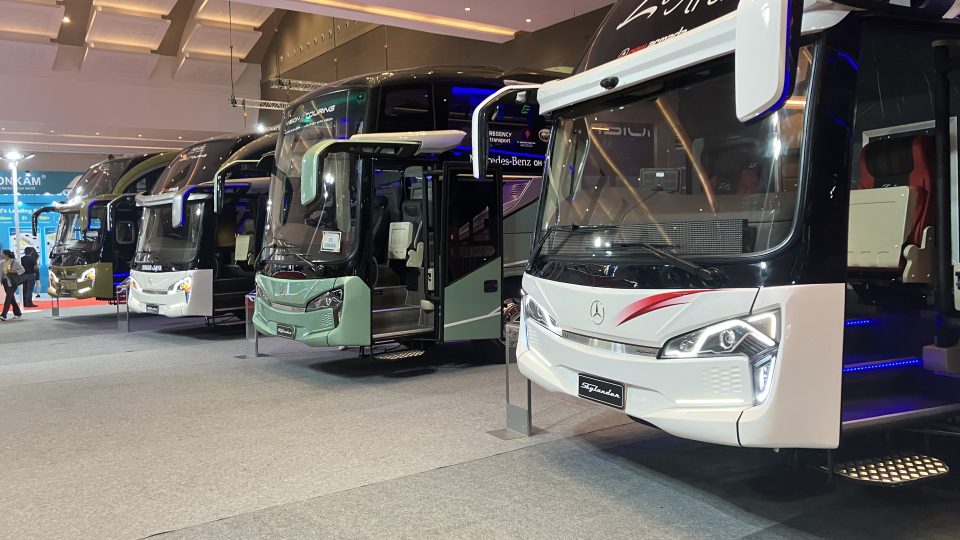
Daimler Truck ended the 2025 financial year with total group unit sales of 422,510 vehicles, down from 460,409 units in 2024. The overall decrease reflects challenging market conditions in several truck regions, particularly in North America. Within this context, Daimler Buses delivered 26,991 units worldwide, slightly above the 26,592 units recorded in the previous year.
Daimler Buses among the most stable segments
As part of the Daimler Truck 2025 results, battery-electric vehicle sales rose significantly at group level. Total battery-electric deliveries reached 6,726 units in 2025, up from 4,035 units in 2024, representing an increase of 67 percent. The company does not disclose battery-electric volumes by segment in its sales figures. However, Daimler Buses continues to play a central role in the group’s electrification activities, particularly in Europe.
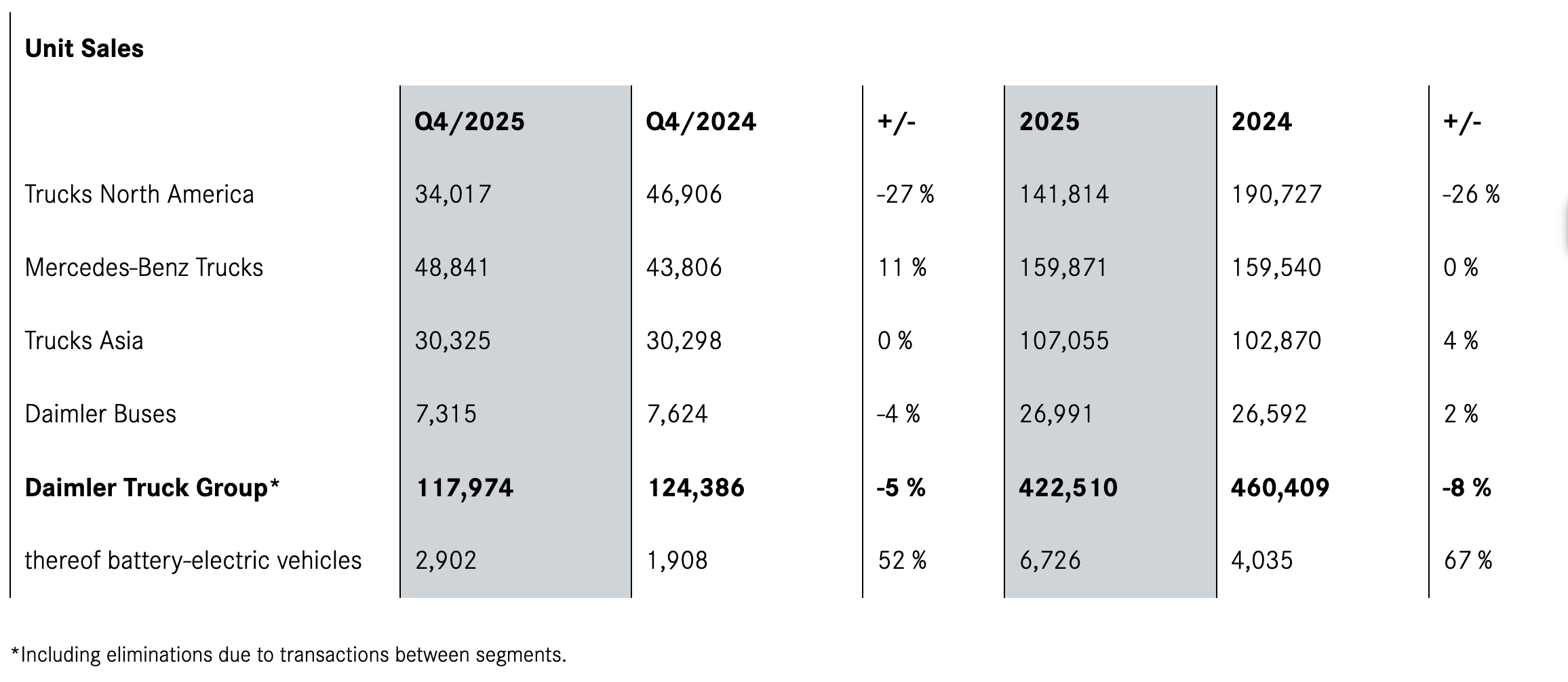
In the framework of the Daimler Truck 2025 results, the bus segment showed limited volatility compared with other parts of the group. Daimler Buses increased unit sales by around 2 percent year on year, while total group volumes declined by 8 percent.
Alongside Mercedes-Benz Trucks, which closed the year broadly in line with 2024, Daimler Buses remained one of the more stable business units. Trucks North America, by contrast, recorded a 26 percent drop in unit sales, underlining the uneven performance across regions and segments within the group.