Decarbonizing public transport in South Tyrol, mission possible! The Eurac Research study
Sasa Bolzano was the first transport operator in Italy to focus heavily on hydrogen to embrace the decarbonization challenge. And Bolzano is home to Eurac Research’s Renewable Energy Institute, which recently published in the World Electric Vehicle Journal a study on the possibility of electrifying the fleet, considering both the technology (electric or hydrogen) and […]
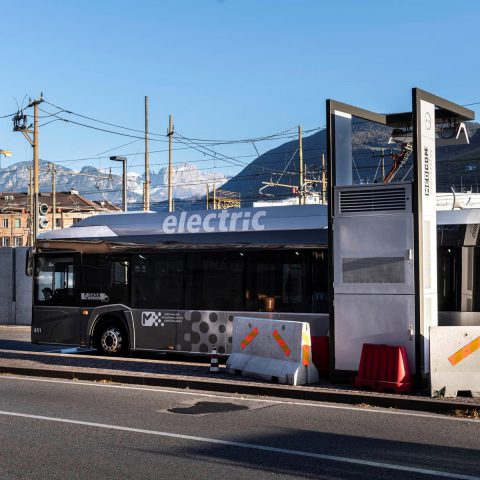
Sasa Bolzano was the first transport operator in Italy to focus heavily on hydrogen to embrace the decarbonization challenge. And Bolzano is home to Eurac Research’s Renewable Energy Institute, which recently published in the World Electric Vehicle Journal a study on the possibility of electrifying the fleet, considering both the technology (electric or hydrogen) and also the infrastructure in place.
Decarbonization of public buses is becoming increasingly important to combat global climate change. In order to act as a representative region for green transport, South Tyrol defined a provincial climate plan, which includes reducing transport emissions. Within this framework, The South Tyrolean Transport Agency (STA) evaluated the possibilities of converting several hundred buses to zero emissions in the coming years and therefore commissioned the experts of the Institute for Renewable Energy of Eurac Research to carry out a feasibility study about switching the current fleet of diesel buses with zero emission buses (electric or hydrogen buses).
Researchers were involved in this work from October 2020 until May 2021 analyzing the state of the art of zero-emissions buses, all South Tyrolean intercity bus lines, and their timetables, and developing a simulation tool to calculate the compatibility of zero‐emission technologies with the current needs of the public transportation. The goal of this study was to understand which technology – battery electric buses or fuel cell electric buses – fits for a particular line. To do so, a model has been set up based on the vehicle’s energy balance. The energy consumption has been evaluated based on the physical characteristics of the single bus line (distance and altitude), climatic conditions and its timetables. As such the model can be implemented in mountainous areas and on intercity lines allowing the specific energy consumption.
«Most of the feasibility studies concerning zero-emission buses (electric and hydrogen) refer to urban lines, while this study concerns intercity lines considering distance, altitude difference and climate conditions», says Andrea Grotto, co-author of the work.
Considering the schedule of a typical day and allowing the electric buses to be partially recharged at stop times of more than 10 minutes, it turned out that for both technologies around 80% of the time one diesel bus could be replaced by one electric/fuel cell bus. Furthermore, the results suggest that a technology shift to zero emission buses should be even less complicated with fewer charging stations/refueling stations needed and less lines asking for more zero-emissions buses than diesel buses in service.
By Valentina Ciolli, Scientific Communication Institute for Renewable Energy Eurac Research