DB Regio awards framework contracts for 3,300 buses. Over 3,000 coming from MAN, BYD to provide BEV intercity buses
Deutsche Bahn has concluded its largest-ever bus procurement, securing long-term framework contracts for more than 3,000 new buses for DB Regio operations across Germany. The contracts cover the supply of around 3,300 solo and articulated buses and have a duration of six years, with deliveries planned between 2027 and 2032. In financial terms, DB values […]

Deutsche Bahn has concluded its largest-ever bus procurement, securing long-term framework contracts for more than 3,000 new buses for DB Regio operations across Germany.
The contracts cover the supply of around 3,300 solo and articulated buses and have a duration of six years, with deliveries planned between 2027 and 2032. In financial terms, DB values the agreements at more than €1 billion.
The agreements mark a structural step in DB Regio’s fleet renewal strategy, combining long-term industrial partnerships with a gradual but systematic shift toward zero-emission vehicles. It follows a Europe-wide tender.
Deutsche Bahn maxi framework agreement for 3,300 buses
DB Regio remains Germany’s largest bus operator, carrying around 561 million passengers in 2024. On a typical day, approximately 1.5 million people use DB Regio buses, which play a key role in feeding rail services and providing public transport in rural and peripheral regions.
At the core of the procurement are multi-year framework agreements with several bus manufacturers, allowing DB Regio to call off vehicles flexibly depending on operational needs and tender wins in regional transport markets.
The structure is designed to balance standardisation and flexibility. While vehicle configurations and drivetrains are broadly predefined, DB Regio retains the option to adjust specifications and volumes over time, including drawing additional contingents should the company secure new long-term public transport contracts.
MAN Truck & Bus emerges as the dominant partner, expected to deliver around 95 percent of the vehicles, in DB’s words. It would mean over 3,100 buses. The Munich-based manufacturer will supply both low-floor city buses and intercity models equipped with hybrid and battery-electric drivetrains, as the OEM itself communicates a few days ago.
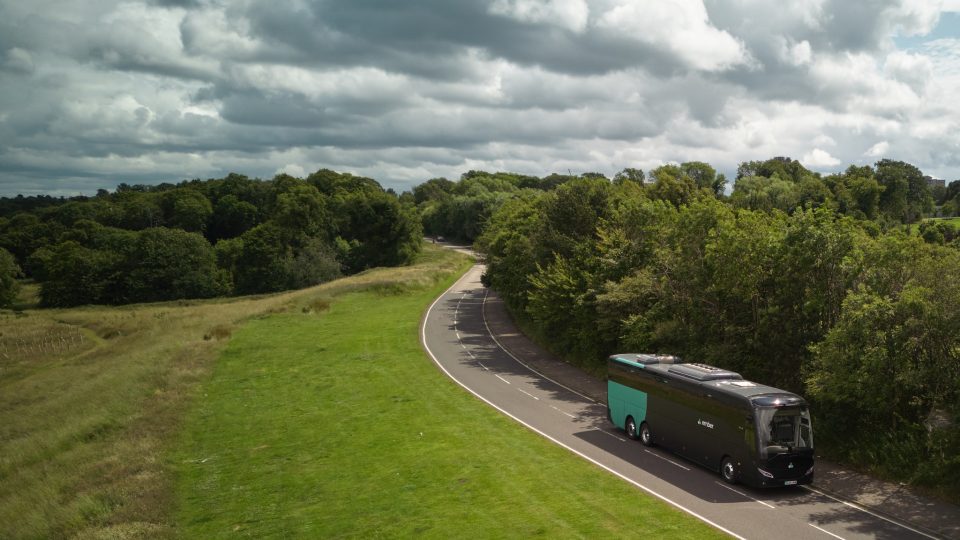
A smaller fleet of electric intercity buses is being supplied by Chinese manufacturer BYD from its production facility in Hungary, Deutsche Bahn explains in its press note. Prior to Deutsche Bahn official release, Der Spiegel had reported some anticipations that mentioned BYD being awarded 700 units. This reportedly led to trade unions criticism amid calls for ‘economic patriotism’.
This segment accounts for around five per cent of the expected vehicles. In addition, DB states it is concluding subordinate framework agreements with IVECO, Scania, Daimler Buses and Zhongtong “to ensure the availability of new vehicles”.
Beyond drivetrains, DB Regio has specified a uniform baseline for passenger comfort and safety. All vehicles will feature USB charging points at seats, LED interior lighting and air conditioning. Intercity buses will be equipped with enhanced seat padding for longer journeys.
Electric buses will use climate-neutral refrigerants and operate without fossil-fuel auxiliary heaters. Safety systems include LED headlights, turning assistants and reversing cameras as standard across both solo and articulated vehicles.
The tender evaluation placed strong emphasis on total cost of ownership rather than purchase price alone. Energy consumption, maintenance requirements and service concepts were assessed alongside vehicle quality. Within the limits of procurement law, DB Regio also factored in production locations and the density of manufacturers’ service networks.
In parallel, the company applied extended criteria related to environmental, social and governance standards, requiring bidders to demonstrate compliance with DB’s expectations on sustainability, labour standards and responsible supply chains.
Harmen van Zijderveld, DB Board Member for Regional Transport: ‘With the new buses, our passengers will continue to reach their destinations reliably, comfortably and in an environmentally friendly manner. The long-term contracts guarantee that we will always have modern vehicles and can continue to develop them in close cooperation with the manufacturers. The fact that the vast majority of the buses come from a Munich-based manufacturer is good news for Germany as an industrial location.’