E-retrofitting as a way to accelerate bus fleet electrification in Europe? A guest contribution
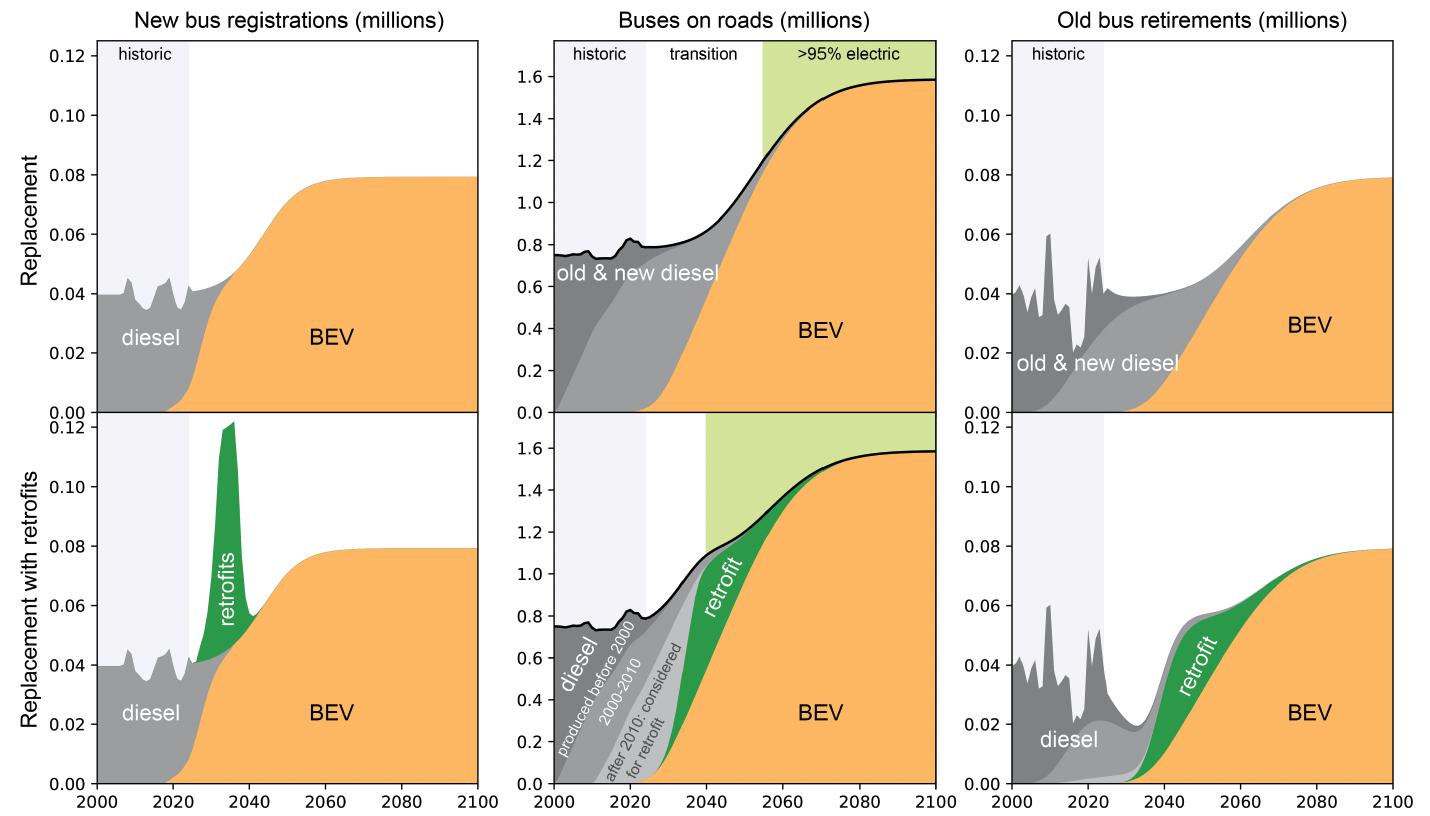
Assuming a similar operational lifetime of the existing bus fleet in the coming decades, >95% electrification of the European bus fleet will not be achieved before 2055. As most European countries aim at becoming climate neutral before 2050, this strategy of replacing the current, predominantly diesel-powered bus fleet with new BEV will arrive too late. What we need, thus, is a strategy capable of accelerating bus electrification, not least to make public transport more attractive to motivate reduced car reliance.
A contribution by Harald Desing, Scientist, Empa – Swiss Federal Laboratories for Materials Science and Technology, Technology and Society Laboratory, Lerchenfeldstrasse 5, 9014 St. Gallen, Switzerland
The electrification of bus transit is one essential milestone on the road to reach cities’, regions’, and countries’ climate goals, improve air quality in urban areas and reduce noise pollution. Mature technological options are available on the market and new city bus registrations in Europe are on a fast track to reach 100% likely still this decade provided current growth rates continue (estimate by Transport & Environment). And in regional and inter-city bus transit, the share of battery electric vehicles (BEV) is also constantly increasing.
But the question is: is it fast enough to electrify the existing fleet compatible with Europe’s climate ambition? In the past 25 years, the number of buses on European roads (EU+4) remained about constant at roughly 800,000 units. More than 95% of the existing fleet in 2025 was powered by fossil drive trains (mostly diesel, some petrol, gas, and hybrids), which will have to be replaced to reach emission-free bus transit. The average lifetime in the last 25 years was around 20 years and replacements of buses were driven by improving emission standards and fuel efficiency.
If 95% of all buses produced since 2010 and still on the road today would be retrofitted, it would allow to achieve electrification 15 years earlier than in the replacement scenario. For whole of Europe, this can safe 300 million tons of CO2,e emissions, more than the emissions of Spain in 2024
Harald Desing, Scientist, Empa – Swiss Federal Laboratories for Materials Science and Technology
Bus electrification: time to replace the fleet are too long
Assuming a similar operational lifetime of the existing bus fleet in the coming decades and a very ambitious target of reaching 100% clean bus registrations by 2035, >95% electrification of the European bus fleet will not be achieved before 2057. As most European countries aim at becoming climate neutral before 2050, this strategy of replacing the current, predominantly diesel-powered bus fleet with new BEV will arrive too late even if we would ambitiously ramp-up new BEV bus registrations. What we need, thus, is a strategy capable of accelerating bus electrification, not least to make public transport more attractive to motivate reduced car reliance.
One possibility would be to shorten the lifetime of existing diesel buses and replace them with BEV prematurely. This strategy will, however, increase the cost of the public transport system and requires the bus industry to temporarily increase production numbers. If old diesel buses continue to get sold to countries outside Europe, they will remain on the road and thus still emit CO2 for many decades to come. Scraping functioning diesel buses prematurely, in contrast, is perceived a waste of resources and counter to the circular economy paradigm even though this would be environmentally beneficial.
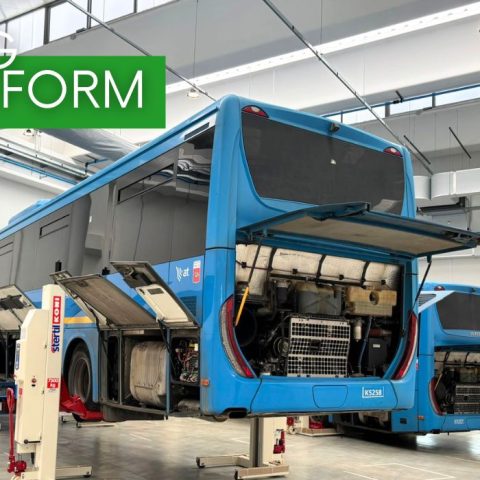
A circular alternative is the emerging strategy of e-retrofit. The system-wide effects are explored in the recent study “E-retrofitting can accelerate Europe’s bus fleet electrification by 15 years“, published in Environmental Research: Infrastructure and Sustainability review.
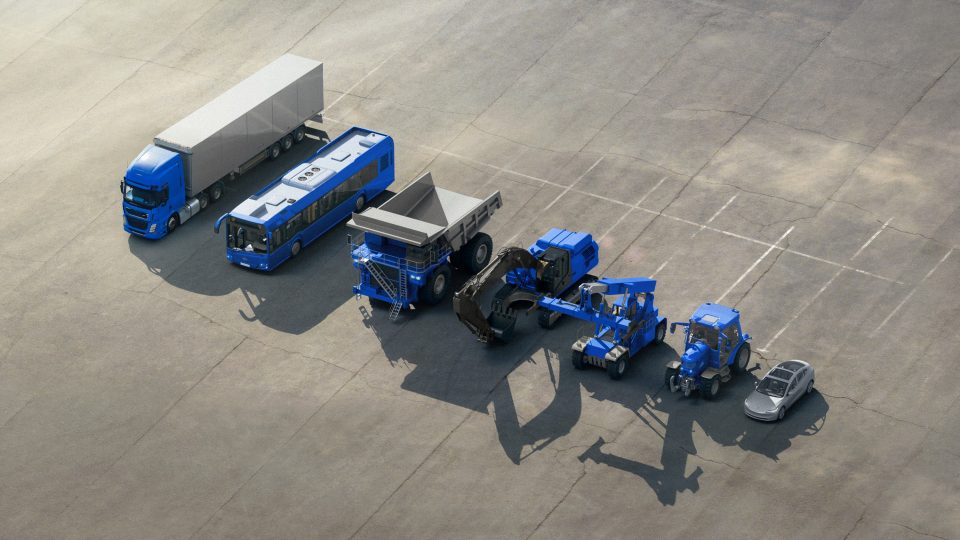
An increasing number of companies and projects pioneer this approach across vehicle types, from cars, trucks, mining equipment, ships, trains, and—of course—buses. Not only does it save life cycle impacts as bus body, interior and parts of the suspension system don’t have to be newly produced, but it also offers economic benefits from reduced operating and investment costs.
From a lifecycle perspective, the remaining lifetime of a retrofitted bus needs to be at least 2/3 that of a new BEV bus to be environmentally preferable across impact categories. It can be expected, however, that retrofitted vehicles can have a similar lifetime as new ones because the main limiting elements (controllers, batteries, motors) are new anyways. And when maintained well, BEV and retrofits may be used for significantly longer than diesel buses, as there will be no need to upgrade emission standards anymore.
E-retrofit as a way to decarbonize public transport… quickly?
Scaled to the entire bus fleet of Europe, e-retrofits allow to electrify much faster compared to replacements. If 95% of all buses produced since 2010 and still on the road today would be retrofitted, it would allow to achieve electrification 15 years earlier than in the replacement scenario. For whole of Europe, this can safe 300 million tons of CO2,e emissions, more than the emissions of Spain in 2024, and offers an opportunity for local industry to innovate retrofit solutions. In addition, valuable resources can be saved, local jobs created, and costs reduced.
The question is: is it fast enough to electrify the existing fleet compatible with Europe’s climate ambition? In the past 25 years, the number of buses on European roads (EU+4) remained about constant at roughly 800,000 units. More than 95% of the existing fleet in 2025 was powered by fossil drive trains (mostly diesel, some petrol, gas, and hybrids), which will have to be replaced to reach emission-free bus transit. The average lifetime in the last 25 years was around 20 years and replacements of buses were driven by improving emission standards and fuel efficiency.
Harald Desing, Scientist, Empa – Swiss Federal Laboratories for Materials Science and Technology
These benefits also materialize when the bus fleet and therewith public transport services expand. For example, assuming a doubling of the bus fleet by 2100 to increase public mobility shares, e-retrofitting yields the same benefits and in addition allows to expand the bus fleet earlier. E-retrofitting is thereby not in competition with the production of new BEV buses, rather an addition to accelerate the transition. To achieve these system-wide benefits, a maximum of 70,000 buses would need to be converted in a single year over about one decade, which would require roughly 1% of the skilled personnel currently working in car maintenance and repair. Again, this is not in competition with the car maintenance industry, as electric vehicles require less maintenance and therewith less personnel; e-retrofitting allows to further employ parts of this skilled workforce. The concept of retrofitting is also not limited to buses and thus can offer long-term prospects when extended to trucks, construction machinery and other vehicles.
Overall, e-retrofitting offers a quadruple-win strategy for Europe and worldwide: it can reduce emissions, noise, and pollution, saves costs for operators, offers business opportunities, and creates skilled, local jobs. Materializing these opportunities, the bus sector can lead the way towards a climate-compatible and resilient future.