Brazil’s Goiânia deploys electric bi-articulated fleet (Volvo – Marcopolo) on upgraded BRT corridors
Goiânia has launched a fleet of electric bi-articulated buses in regular passenger service, deploying 21 high-capacity Volvo BZRT vehicles supported by a new dedicated charging hub. The Brazilian city has introduced 16 articulated and 5 bi-articulated battery-electric buses built on the Volvo Buses BZRT chassis and bodied by Marcopolo (Attivi model). The vehicles operate within […]
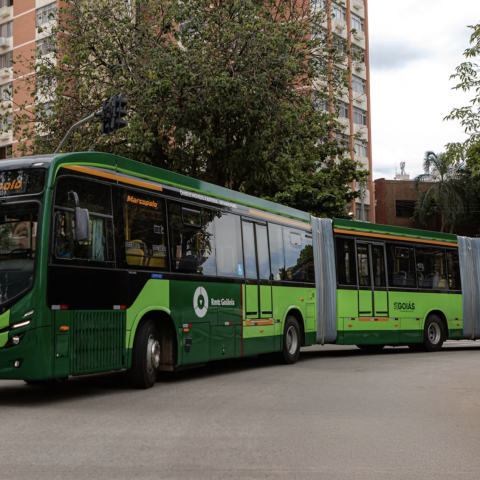
Goiânia has launched a fleet of electric bi-articulated buses in regular passenger service, deploying 21 high-capacity Volvo BZRT vehicles supported by a new dedicated charging hub.
The Brazilian city has introduced 16 articulated and 5 bi-articulated battery-electric buses built on the Volvo Buses BZRT chassis and bodied by Marcopolo (Attivi model). The vehicles operate within the RMTC metropolitan public transport network, alongside the inauguration of the Eletroposto Oeste charging facility located at the METROBUS S.A. depot.
Volvo BZRT electric platform for high-capacity BRT operations
The electric buses are based on Volvo’s BZRT platform designed for Bus Rapid Transit (BRT) systems. The bi-articulated model measures 28 metres in length and offers capacity for up to 250 passengers, while the 21-metre articulated version accommodates up to 180 passengers.
Both configurations are equipped with two 200 kW electric motors delivering a combined output of 400 kW (540 hp). The bi-articulated buses can be fitted with up to eight batteries, providing a total installed energy capacity of 720 kWh.
The driveline layout features centrally mounted underfloor motors, aimed at optimized weight distribution and vehicle stability. Battery packs are floor-mounted, enabling a fully unobstructed passenger saloon layout.
Introducing the world’s first electric bi-articulated bus fleet in regular operation shows what strong partnership and a shared commitment to sustainable mobility can achieve. Goiânia has a long history of pioneering mobility solutions, and we are proud to continue that legacy together. From the first bi-articulated buses in 2005 to today’s fully electric fleet, our collaboration has consistently pushed the boundaries of modern public transport.
Andre Marques, Vice President, Volvo Buses in Latin America
Safety and driver assistance systems include Volvo Buses’ active safety technologies, camera-based visibility systems, and front and side sensors for blind-spot monitoring. Traffic sign recognition functionality is also integrated to support safer driving operations.
The deployment of the fleet is supported by the Eletroposto Oeste charging hub, designed to serve large-scale electrified BRT operations. The facility is equipped with 23 chargers rated at 240 kW each, capable of serving up to 46 buses simultaneously.
According to Volvo Buses, the infrastructure has been designed to ensure operational reliability for high-capacity electric corridors, aligning charging operations with depot-based fleet management practices.
The project was developed in cooperation with HP Mobilidade, GreenMob Capital, Suécia Veículos, Volvo Financial Services and the Volvo Buses team.
“This marks a transformational moment for high-capacity urban transport,” says Andre Marques, Vice President, Volvo Buses in Latin America. “Introducing the world’s first electric bi-articulated bus fleet in regular operation shows what strong partnership and a shared commitment to sustainable mobility can achieve. Goiânia has a long history of pioneering mobility solutions, and we are proud to continue that legacy together. From the first bi-articulated buses in 2005 to today’s fully electric fleet, our collaboration has consistently pushed the boundaries of modern public transport. Together, we are accelerating the shift to zero-emission transport. Our core belief Driving Prosperity guides every solution we deliver. These vehicles will improve the quality of everyday life for thousands of passengers and contribute to a more sustainable future for the region”.