Greater Manchester reaches 500 electric buses in operation, with 163 more vehicles on order
Greater Manchester’s Bee Network has exceeded 500 electric buses in operation, with a further 163 vehicles scheduled for delivery as the city region works towards a fully electric bus fleet by 2030. The milestone was announced by Transport for Greater Manchester (TfGM) on 16 October 2026, three years after the authority began bringing local bus […]
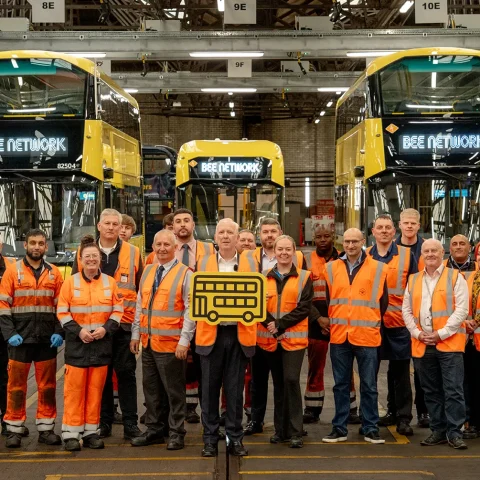
Greater Manchester’s Bee Network has exceeded 500 electric buses in operation, with a further 163 vehicles scheduled for delivery as the city region works towards a fully electric bus fleet by 2030.
The milestone was announced by Transport for Greater Manchester (TfGM) on 16 October 2026, three years after the authority began bringing local bus services under public control. At that time, 35 electric buses were operating in the city region. The fleet now includes more than 500 zero-emission vehicles, with 99 Bee Network services operated entirely by electric buses.
The 500th vehicle was manufactured by UK bus producer Wrightbus at its Ballymena facility in Northern Ireland and transported by ferry to Great Britain. It was delivered to Stagecoach’s recently electrified Oldham depot and has since entered passenger service.
According to TfGM, the ongoing fleet transition is expected to reduce annual emissions by more than 76,000 tonnes of CO2 and 280 tonnes of nitrogen oxides once the planned electrification programme is completed.
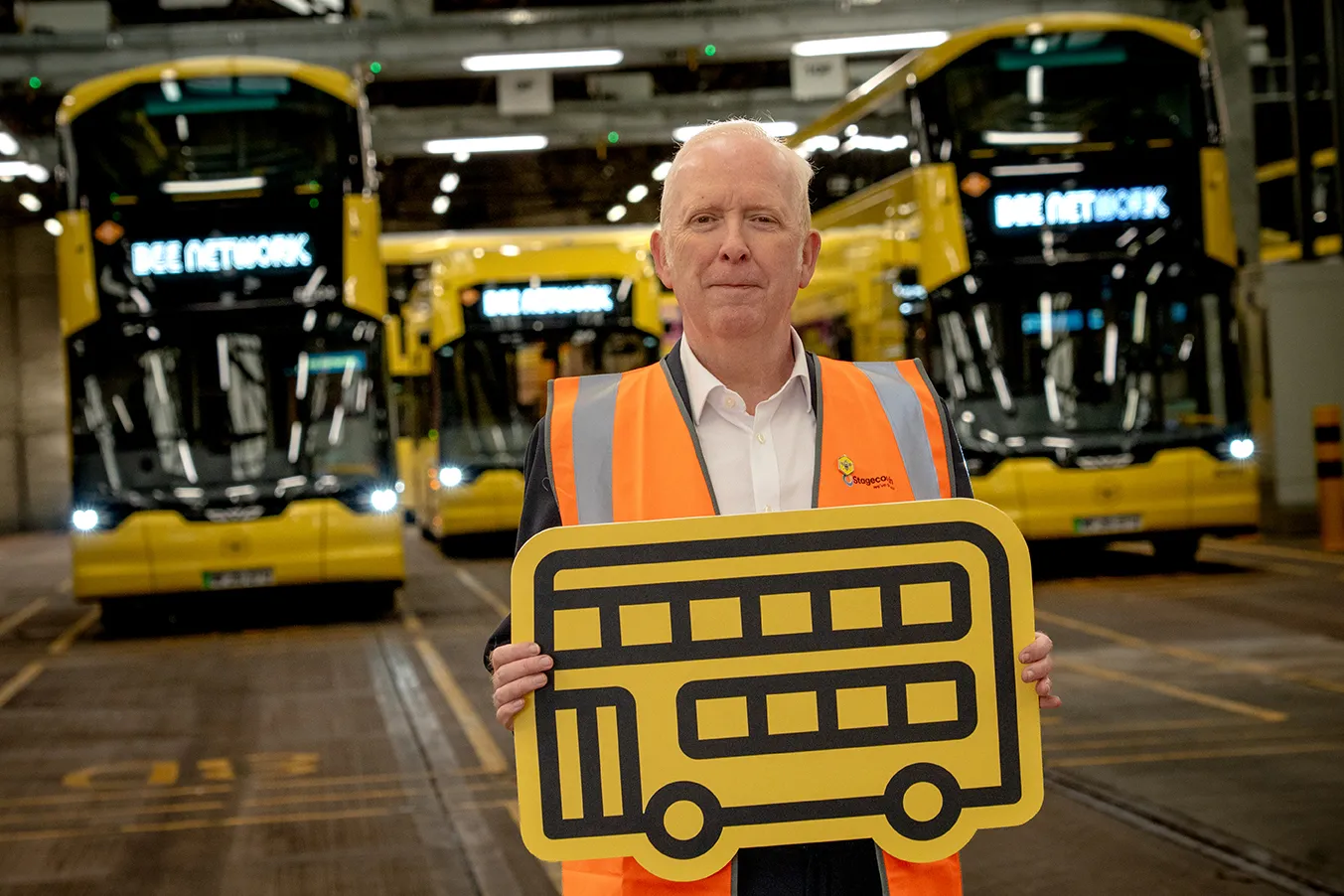
Bee Network electric buses: from 35 to over 500
The latest milestone follows several procurement and funding programmes launched over the past three years. In May 2026, TfGM ordered 125 additional electric buses from Wrightbus, adding to a 55-vehicle order placed in March and 76 vehicles previously purchased from the manufacturer. The 125-unit contract included 25 buses for Stagecoach, comprising 16 single-deckers and nine double-deckers, and 100 vehicles for Metroline’s Hyde Road depot.
In November 2025, Greater Manchester had approved £65 million for public transport electrification, including £59.1 million for approximately 220 additional electric buses. At that stage, the Bee Network had nearly 350 electric buses in operation, representing around 20% of the regional fleet. The funding also included £5.7 million for the development of the Oldham–Rochdale–Heywood–Bury tram-train project
The programme is also part of a wider investment framework. In June 2025, the UK Government announced £15.6 billion for local transport projects across England, including £2.5 billion for Greater Manchester. The regional allocation covered public transport infrastructure and the planned introduction of 1,000 new zero-emission buses by 2030. Earlier in January 2025, the Government had confirmed an £86 million air-quality investment package for Greater Manchester, including £51.1 million towards bus investment covering 40 zero-emission buses, 77 Euro VI vehicles and charging infrastructure.
It’s great to see the depot in Oldham join the growing list of bus depots in Greater Manchester to be electrified. This means even more zero emissions buses can join the Bee Network and keep us on track to have a fully electric fleet by the end of the decade. This electrification work is a crucial part of our investment-led approach to improving air quality which is working. By taking old buses off our streets and keeping fares on the Bee Network affordable, we’re improving the experience of getting on board the bus for communities right across the city region
Vernon Everitt, Transport Commissioner for Greater Manchester
In its October 2026 announcement, TfGM confirmed that a further 163 electric buses can now be delivered and introduced into operation following the completion of additional depot charging infrastructure. The final three bus orders placed during 2026 have been awarded to Wrightbus, based in Ballymena, Northern Ireland. The authority has not provided a detailed breakdown of these orders by vehicle model or delivery date.
The 163 additional vehicles form part of Greater Manchester’s programme to complete the electrification of the Bee Network bus fleet by the end of the decade.
Five bus depots electrified in Greater Manchester
The expansion of the electric bus fleet is accompanied by the installation of charging infrastructure and new electricity supplies at depots across Greater Manchester.
According to TfGM, electrification works have now been completed at five locations. The latest projects concern Stagecoach’s Oldham depot and Metroline’s Hyde Road depot in Manchester, with the Oldham works completed during summer 2026.
New power supplies and electric bus charging infrastructure have also been installed at the Ashton, Bolton and Middleton depots.
All five projects were delivered by Oldham-based construction company Willmott Dixon, which had previously worked with TfGM on the £113 million Stockport Interchange, opened in 2024. The company has now completed seven projects for the transport authority across Greater Manchester.
Design work is underway for the remaining Bee Network depots, with further electrification works scheduled to begin in 2027.
TfGM has also announced a long-term renewable electricity supply agreement, under which electricity will be provided at a fixed price. The agreement covers the increasing energy requirements of the Bee Network as additional battery-electric buses enter operation.
In brief
- How many electric buses are operating on Greater Manchester’s Bee Network? More than 500 electric buses are in service as of October 2026, compared with 35 when buses began returning to public control three years earlier.
- Who manufactured the 500th Bee Network electric bus? Wrightbus manufactured the vehicle at its Ballymena factory in Northern Ireland. It was delivered to Stagecoach’s Oldham depot.
- How many additional electric buses are planned? A further 163 electric buses are scheduled for introduction, with the latest three orders placed with Wrightbus.
- When will the Bee Network become fully electric? Transport for Greater Manchester is targeting a fully electric bus fleet by the end of 2030.
TfGM, Wrightbus and Willmott Dixon comments
Vernon Everitt, Transport Commissioner for Greater Manchester, said: “It’s great to see the depot in Oldham join the growing list of bus depots in Greater Manchester to be electrified. This means even more zero emissions buses can join the Bee Network and keep us on track to have a fully electric fleet by the end of the decade. This electrification work is a crucial part of our investment-led approach to improving air quality which is working. By taking old buses off our streets and keeping fares on the Bee Network affordable, we’re improving the experience of getting on board the bus for communities right across the city region.”
Anthony Dillon, Managing Director for Willmott Dixon in the North, said: “It’s fantastic to see another two bus electrification projects completed for TfGM, taking the number of projects we’ve delivered across Greater Manchester for TfGM to seven. We’re proud to have played a part in supporting the region’s transition to a cleaner, more sustainable public transport network, creating the infrastructure needed to support the growing fleet of electric buses.”
Christian Reynolds, Managing Director at Wrightbus, said: “For more than 80 years, Wrightbus has championed a UK-based supply chain. Building these buses at our factory in the UK not only provides direct jobs and skills but also creates additional employment here in Greater Manchester. We have developed strong ties with companies such as McKenna Brothers and North West Seating, meaning every Wrightbus on the streets of Manchester is serving the local community in more ways than one. The Bee Network is the blueprint for city public transport. As a proud partner, and manufacturer of the landmark 500th electric bus, Wrightbus is honoured to be playing a leading role in Greater Manchester’s ongoing transition to zero-emission public transport.”