New Mercedes eCitaro coming in 2028: what changes in batteries, drivetrain, platform and manufacturing
Daimler Buses has unveiled the first near-production prototype of the next-generation Mercedes-Benz eCitaro, featuring LFP batteries replacing the current NMC technology, a new 360 kW electric drive axle and a dedicated battery-electric platform, with production planned in Germany, France and the Czech Republic ahead of its market launch in 2028. Presented on 10 November 2026 […]
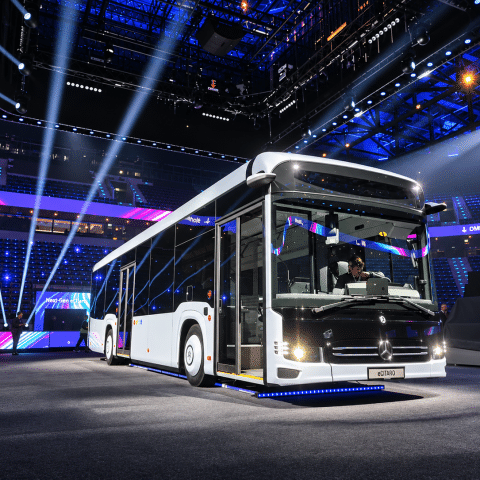
Daimler Buses has unveiled the first near-production prototype of the next-generation Mercedes-Benz eCitaro, featuring LFP batteries replacing the current NMC technology, a new 360 kW electric drive axle and a dedicated battery-electric platform, with production planned in Germany, France and the Czech Republic ahead of its market launch in 2028.
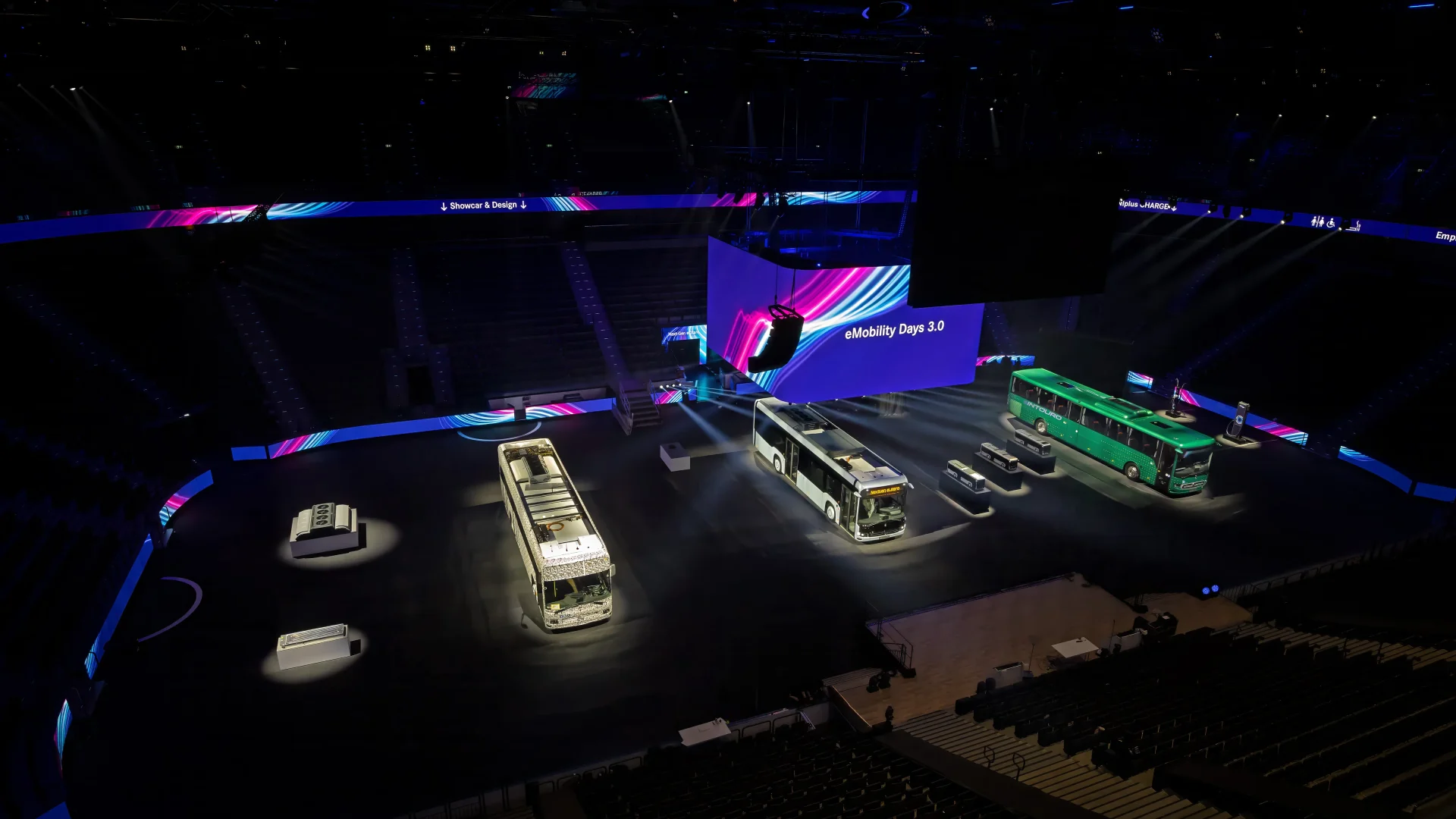
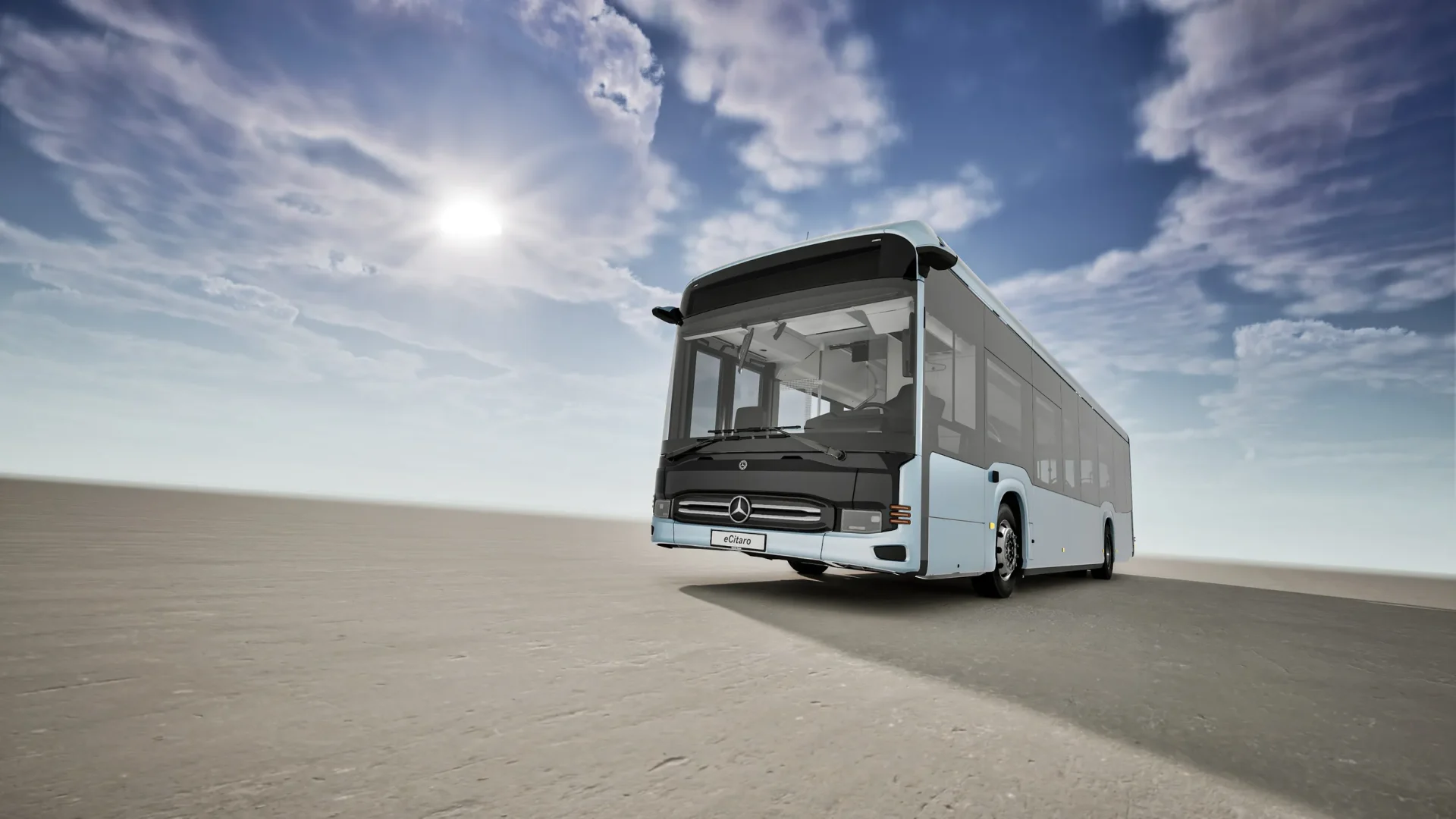
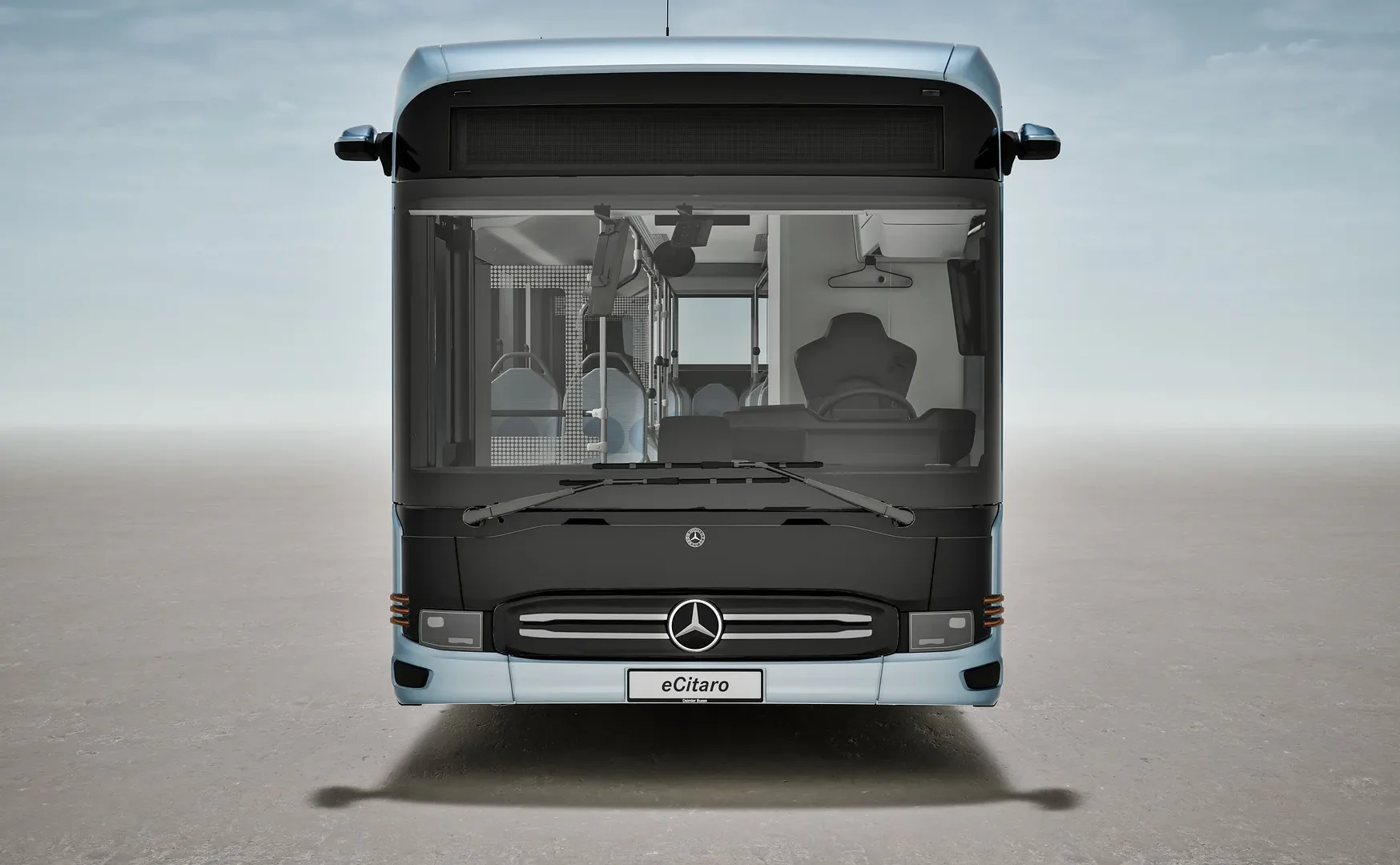
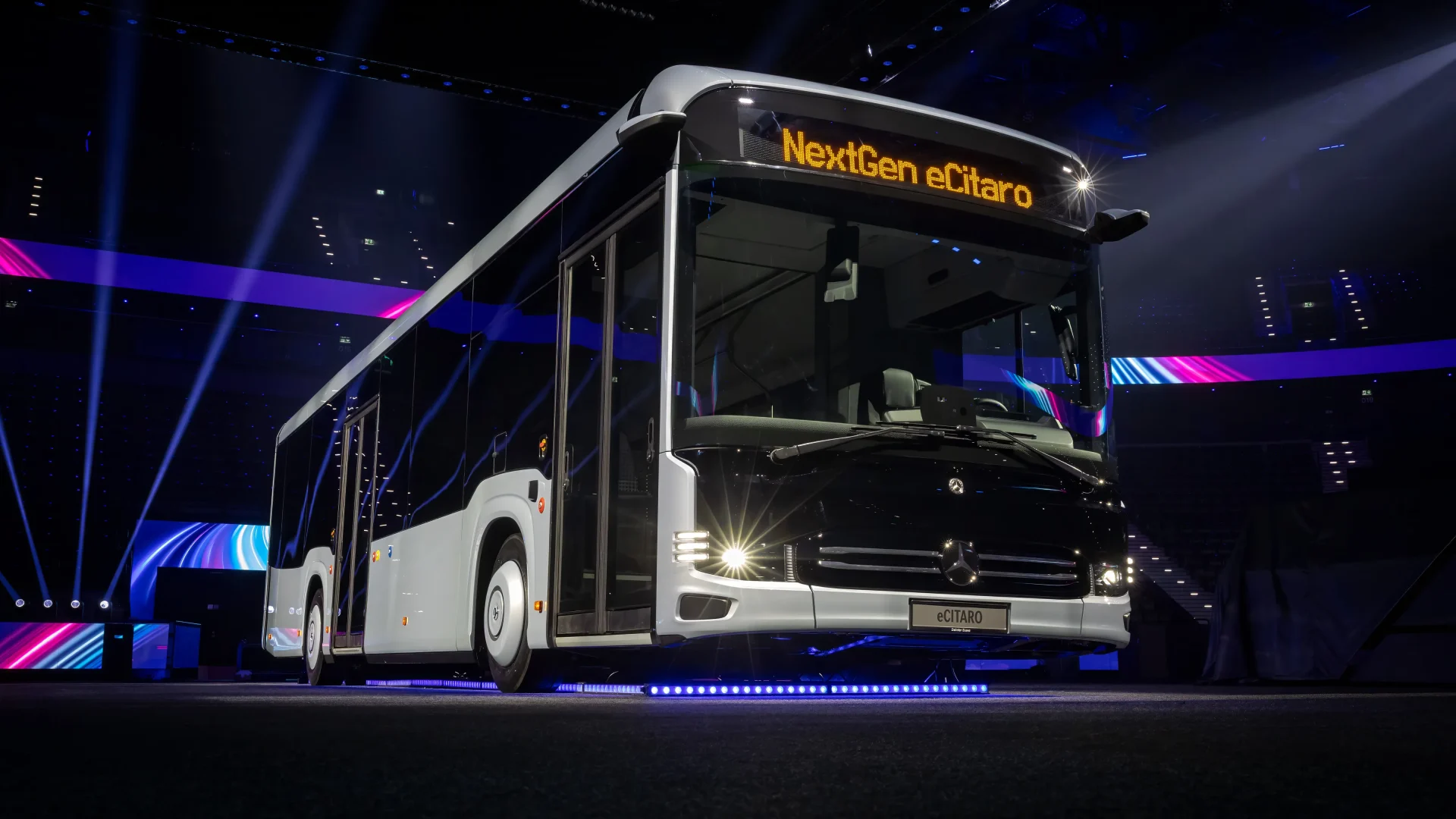
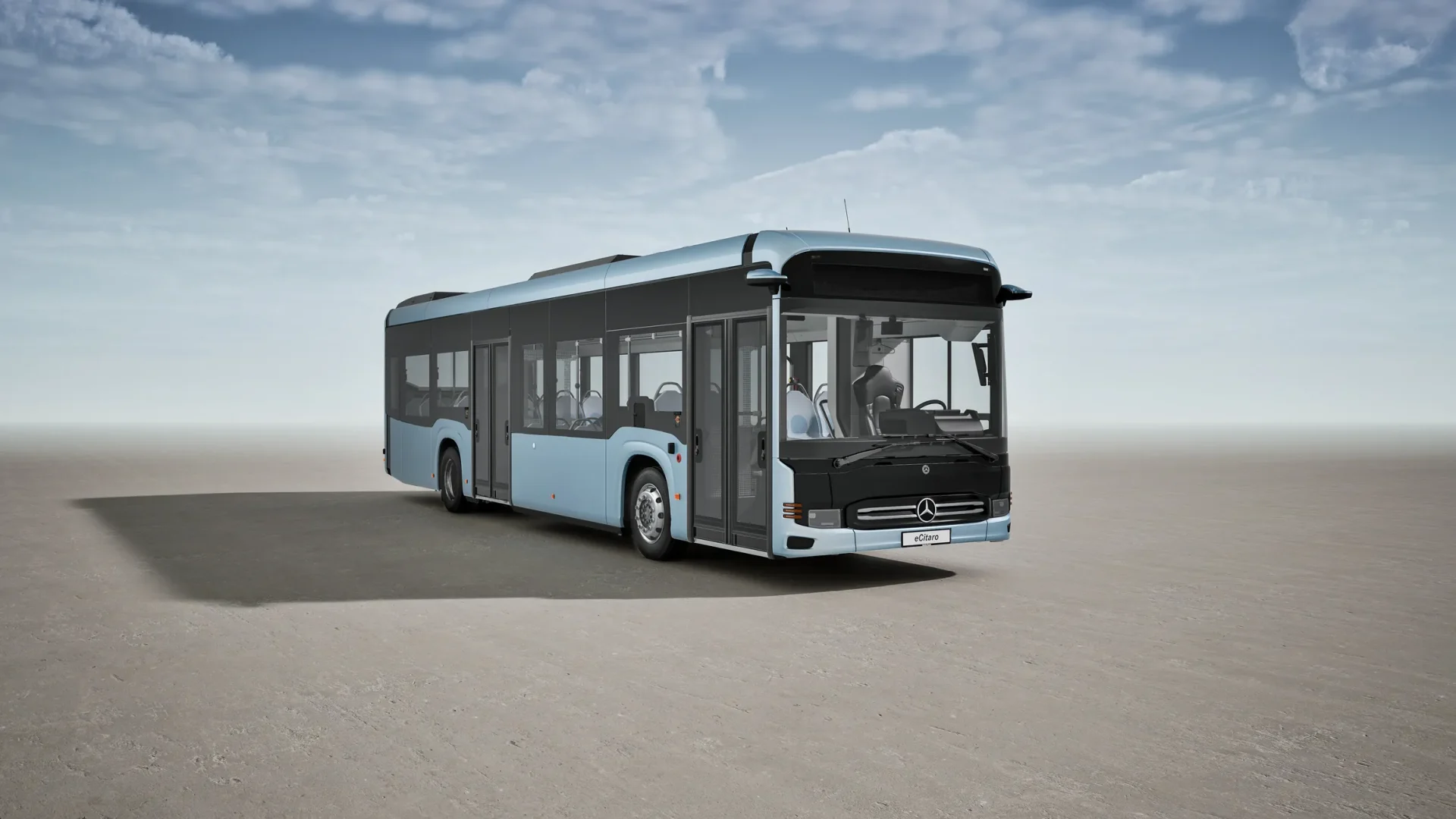
Presented on 10 November 2026 during the third Daimler Buses eMobility Days in Munich, the new eCitaro introduces a complete technical redesign compared with the model launched in 2018. The transition from a diesel-derived architecture to a platform developed specifically for electric propulsion is accompanied by changes to the battery system, drivetrain, body structure and electronic architecture.
The new low-floor range will comprise three vehicle lengths: 10.63, 12.13 and 18.13 metres, while a subsequent low-entry range will extend the portfolio with four versions measuring 10.63, 12.34, 13.08 and 14.68 metres.
Structural changes include a new sandwich roof replacing the conventional steel structure and revised battery positioning. According to Daimler Buses, the new vehicle equipped with eight compact battery packs has an unladen weight of approximately 13,050 kg, compared with 13,800 kg for the current eCitaro with five NMC4 battery packs, representing a reduction of 750 kg.
The official world premiere is scheduled for Busworld Europe in Brussels in October 2027, followed by commercial introduction in 2028, ten years after the first eCitaro entered the market. According to Daimler Buses, more than 4,600 eCitaro buses have been delivered to customers since 2018.
From NMC to LFP batteries: a new supplier still to be announced
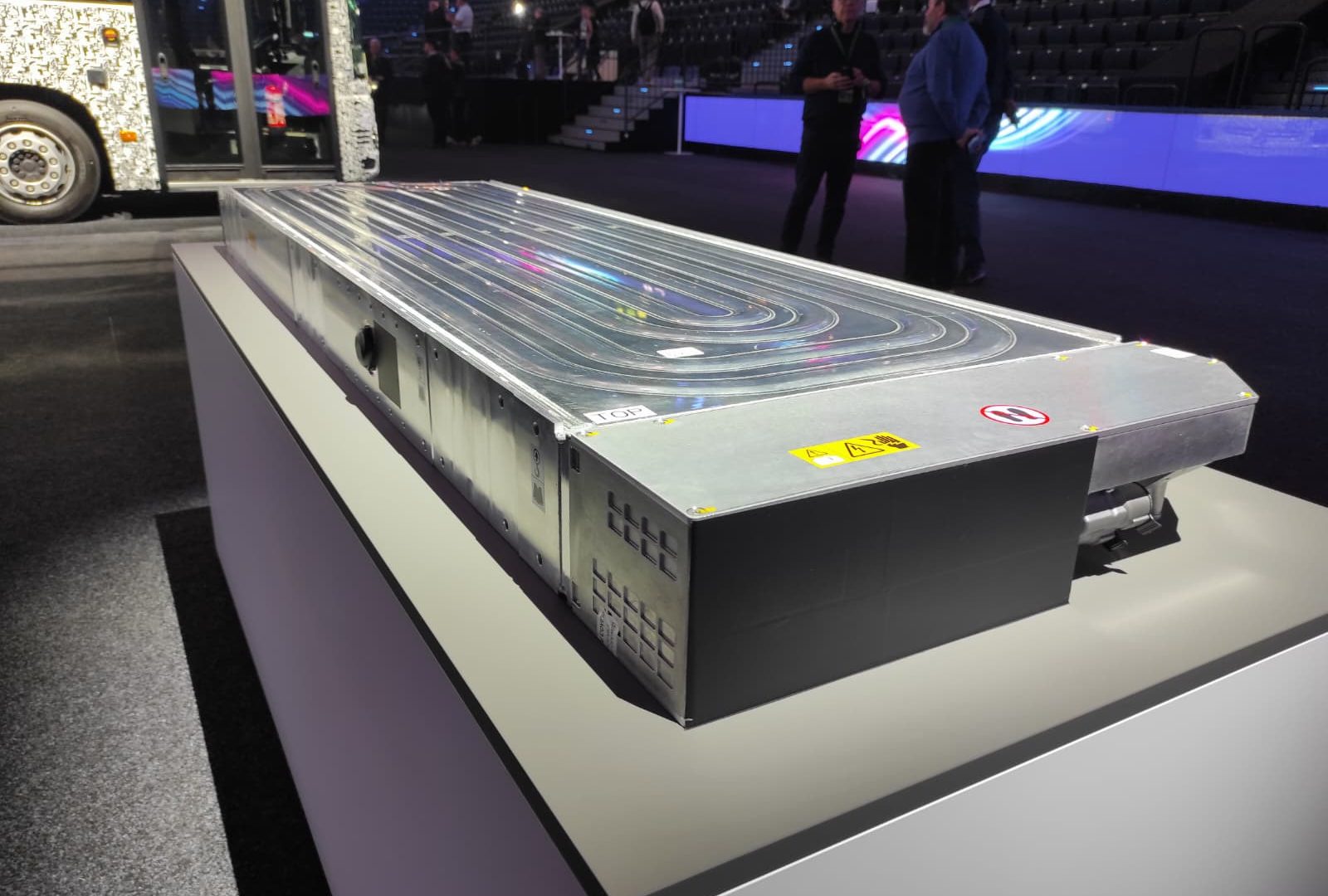
One of the main technical changes concerns battery chemistry. While the current Mercedes eCitaro uses nickel manganese cobalt (NMC) batteries, the next generation will adopt lithium iron phosphate (LFP) technology, with a new standardized compact battery pack developed specifically for the new vehicle architecture.
The transition follows the introduction of fourth-generation NMC4 batteries in 2026, developed in collaboration with Polish supplier BMZ. The current NMC4 packs provide 111 kWh each, compared with 98 kWh for the preceding NMC3 generation supplied by BorgWarner. The existing eCitaro can accommodate up to 666 kWh in solo configuration and 777 kWh in articulated configuration.
The new LFP system introduces a different battery packaging concept. Each compact pack provides approximately 50 kWh of nominal gross energy capacity when new. The 12-metre solo version will be available with six, eight, ten or twelve battery packs, corresponding to 300, 400, 500 or 600 kWh of gross capacity. The articulated version will accommodate eight, ten, twelve or fourteen packs, resulting in configurations ranging from 400 to 700 kWh.
We are clearly committed to Germany and Europe as business locations: This is where we are developing and producing the next generation of our electric city bus. Europe has the expertise and the industrial base for the mobility of the future. The EU must create the right conditions to ensure that industrial value creation here remains competitive. To achieve this, we need simple and consistent rules across national borders, without exceptions. And we need them now, not in the next decade.
Till Oberwörder, CEO, Daimler Buses
Daimler Buses states that the new platform has been designed around LFP chemistry from the outset, with the lower energy density compared with NMC addressed through revised battery packaging and installation space.
Four battery packs are integrated into the underfloor area between the axles. In the solo bus, the remaining packs are installed on the roof, with configurations accommodating up to eight roof-mounted units. The articulated model also carries four packs beneath the front section, while up to ten additional packs can be distributed across the roof, six on the front section and four on the rear.
According to the manufacturer, selecting the battery configuration according to operating requirements can, in certain applications, increase passenger capacity by more than 10% compared with configurations carrying a higher battery weight.
Although Daimler is already equipping the eIntouro with LFP batteries coming from CATL, the supplier of the new LFP battery cells for the new generation eCitaro has not yet been disclosed. Daimler Buses says the compact battery system has been developed specifically for bus applications, incorporating in-house engineering work. The company has not provided details concerning cell-level energy density, usable battery capacity or warranty conditions.
Charging specifications have also been revised. The new eCitaro will support CCS2 charging at up to 400 kW and pantograph or charging-rail systems at up to 450 kW. Up to three charging interfaces can be combined on the same vehicle, including configurations with three CCS2 connectors or two CCS2 connectors and one pantograph.
New AxTrax 2 LF drive axle: power increases from 280 to 360 kW
Another major technical change concerns the traction system. The low-floor next-generation eCitaro will use the AxTrax 2 LF electric portal axle, featuring electric motors positioned close to the wheels. According to Daimler Buses, the new drive system delivers up to 360 kW, compared with approximately 280 kW of peak output for the axle installed in the current eCitaro. This represents an increase of 80 kW, or approximately 29%.
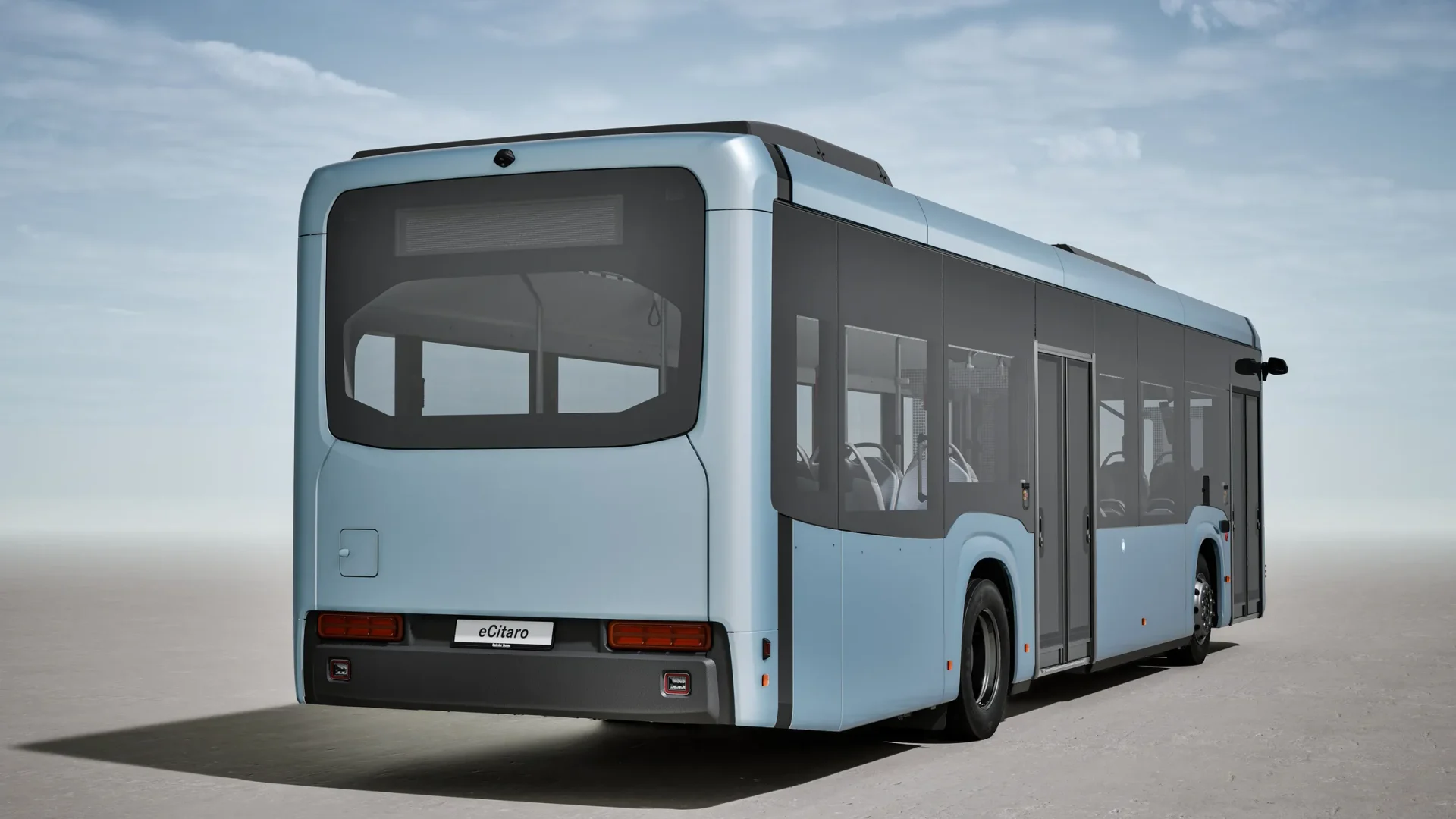
The manufacturer reports improvements in acceleration and gradeability under full-load conditions, alongside reduced energy consumption in stop-and-go urban operation.
For the articulated version, Daimler Buses has selected a configuration with a single driven axle. The company also states that the compact dimensions of the new axle allow the rear passenger compartment to feature a continuous flat floor without reducing the wheelchair area at the second door.
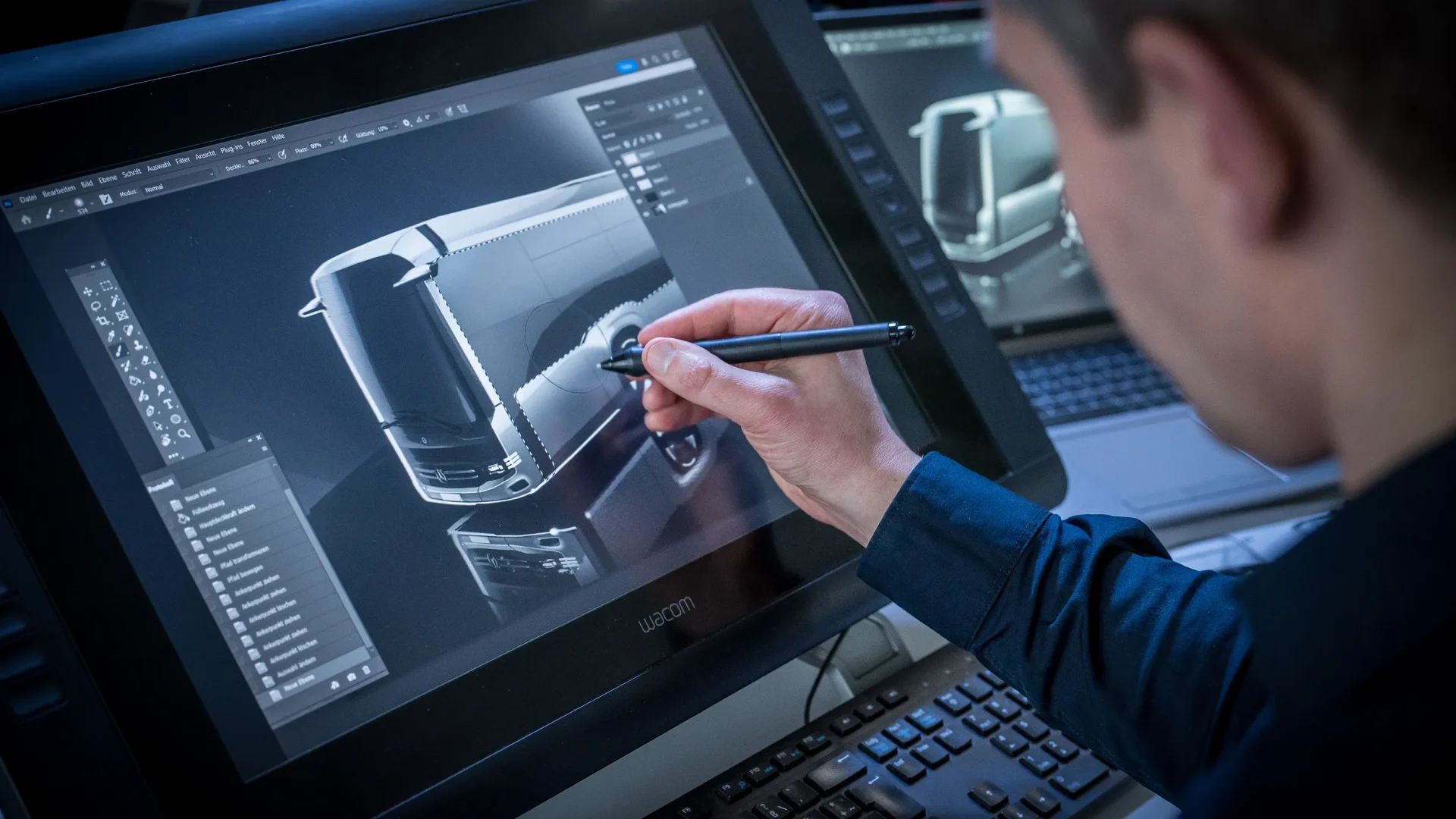
A different drivetrain will be installed in the future low-entry versions. These vehicles will use a central electric motor combined with the Mercedes-Benz RO 440 rear axle, with a maximum speed of 100 km/h and approval planned for both Class I urban and Class II interurban applications.
Another development is the introduction of the Modular Multi Torque Interface (MMTI), a control system integrating traction and braking management. The system regulates recuperative and mechanical braking separately for each wheel, with real-time intervention based on operating conditions. Daimler Buses states that MMTI extends energy recuperation phases, reduces mechanical brake wear and improves driving stability.
The front suspension retains the independent-wheel configuration already used on the current eCitaro. Electronically controlled damping will be available as an option.
A dedicated electric platform for the new generation eCitaro
Unlike the current eCitaro, whose basic vehicle concept originated from the diesel-powered Citaro, the next generation has been developed specifically for battery-electric operation. The platform incorporates a modular body structure based on standardized front and rear modules, combined with central sections of different lengths and wheelbases.
The low-floor range will comprise three vehicle lengths: 10.63 metres, 12.13 metres and 18.13 metres. A subsequent low-entry range will extend the portfolio with four versions measuring 10.63, 12.34, 13.08 and 14.68 metres.
Daimler Buses has also redesigned the body-in-white, underbody and roof structure. One of the changes is the introduction of a sandwich roof replacing the conventional steel roof. The new roof consists of two aluminium outer layers, each approximately one millimetre thick, surrounding a foam core measuring around 40 mm. Its total thickness is approximately 42 mm, compared with around 70 mm for the previous steel structure.
According to the manufacturer, the new roof reduces weight by approximately 100 kg on the 12-metre solo bus and 150 kg on the articulated version. The foam core also provides thermal insulation for the passenger compartment.
Another structural change concerns the side walls, which are now straight rather than slightly curved towards the roof. This geometry allows the same roof and underbody concepts to be applied across low-floor and low-entry configurations.
The rear structure has also been redesigned, removing the traditional rear engine tower and allowing different passenger compartment layouts, including a fully low-floor rear section depending on vehicle configuration.
New generation Mercedes eCitaro weighs 750 kg less
Daimler Buses provides a direct weight comparison between the current and future generations. The new bus, equipped with eight compact battery packs, has an unladen weight of approximately 13,050 kg, compared with approximately 13,800 kg for the current eCitaro equipped with five NMC4 battery packs.
The difference amounts to 750 kg. According to the manufacturer, the revised weight distribution and lower unladen weight allow passenger capacity to reach levels comparable with the diesel-powered Citaro.
The new architecture also incorporates components adapted from the Mercedes-Benz Trucks portfolio. These include the power distribution unit, high-voltage cables, charging connectors and compressor. Other systems, including the compact battery packs, pantograph, charging rail and electric drive axle, have been developed specifically for bus applications.
High-voltage equipment, including the inverter, distribution box and charging power distribution unit, is concentrated in the rear section within a structure designed around defined crash zones. The new platform retains the front impact protection concept used on the existing eCitaro.
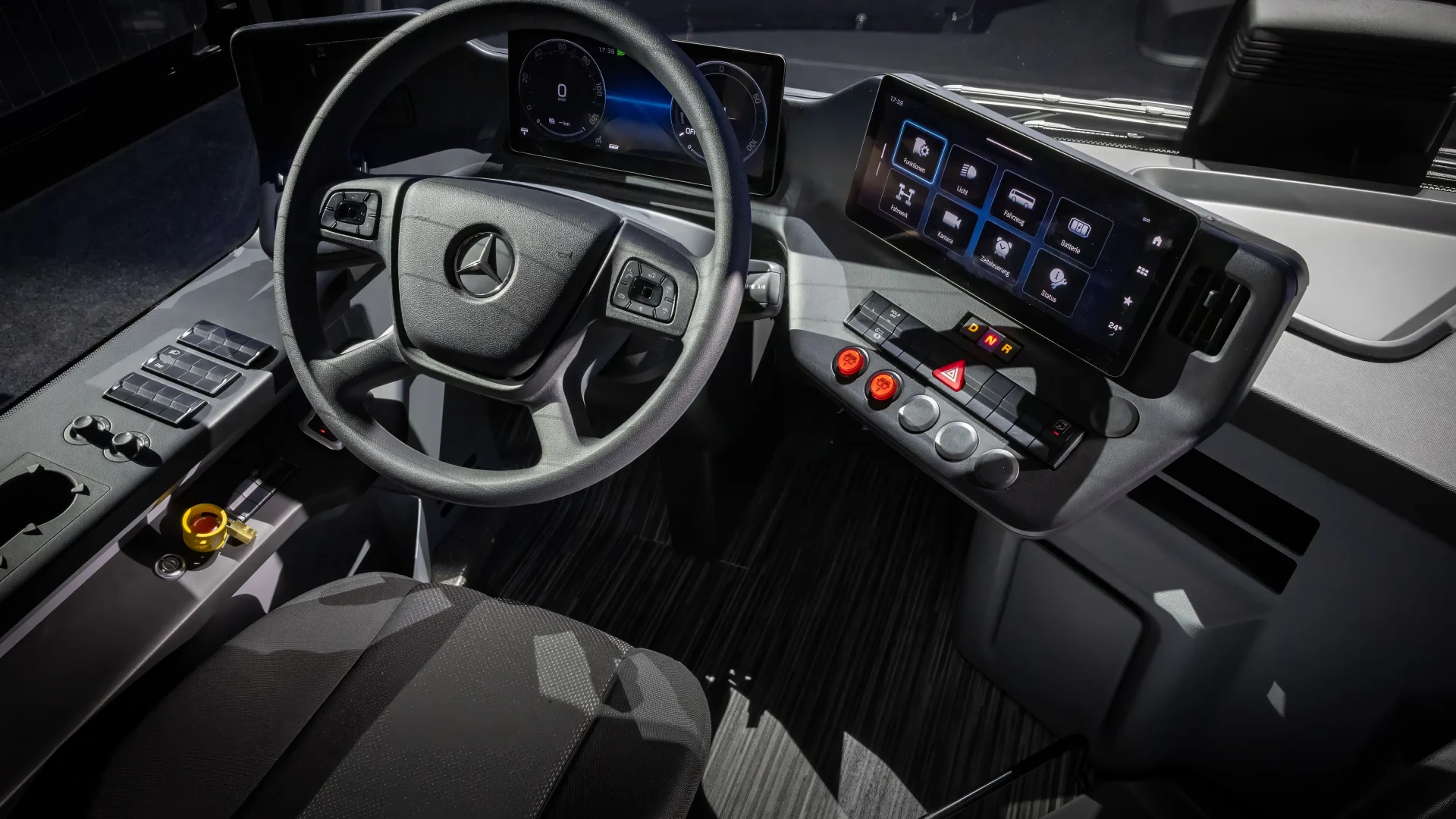
On the electronic side, the new generation introduces an updated vehicle architecture supporting over-the-air software updates via mobile networks and the subsequent activation of optional functions.
Mercedes eCitaro manufacturing: what’s up?
Daimler Buses has confirmed that development of the next-generation eCitaro is being led by Mannheim, while production is planned in Germany, France and the Czech Republic, maintaining the European industrial footprint of the current generation.
The manufacturing strategy follows the industrial reorganization agreed between Daimler Buses and its works council. Making a few steps back, under that agreement, Mannheim was designated as the competence centre for electric city buses, while the Holýšov plant in the Czech Republic was assigned complete bus bodyshell construction for the Mannheim, Neu-Ulm and Ligny-en-Barrois plants from 2028. In France, eCitaro production began at the Ligny-en-Barrois plant in 2024. Daimler Buses announced an investment of approximately €50 million by 2030 to expand electric bus manufacturing at the facility, with plans to create 250 additional jobs. Mannheim also hosts the Daimler Truck Battery Technology Center, inaugurated in July 2024, which covers battery technology and high-voltage systems, including pilot cell production.
The latest announcement confirms the three-country manufacturing framework for the next-generation eCitaro, although Daimler Buses has not provided a detailed plant-by-plant allocation of production activities for the new platform, individual manufacturing volumes or specific investment figures.
The industrial timetable accompanies the vehicle’s planned world premiere at Busworld Europe in October 2027 and market launch from 2028.
Daimler Buses electrification roadmap: electric city buses from 2030, coaches to follow
The next-generation eCitaro forms part of Daimler Buses’ wider electrification roadmap. From 2030, the manufacturer intends to offer only electrically powered city buses in its European new-vehicle business.
The company is also extending battery-electric propulsion to intercity buses and coaches. The Mercedes-Benz eIntouro, presented as a near-production prototype in 2024 and launched at Busworld Europe 2025, introduced LFP batteries supplied by CATL and a central electric motor from ZF into Daimler Buses’ intercity portfolio. The eIntouro offers up to 414 kWh of battery capacity, with production planned in France and Turkey.
In brief
- What changes in the new Mercedes-Benz eCitaro?
A dedicated electric platform replaces the diesel-derived architecture, with LFP batteries, a 360 kW AxTrax 2 LF drive axle and a redesigned vehicle structure. - Who supplies the new eCitaro batteries?
The LFP supplier has not been disclosed. The current NMC4 battery generation is developed with BMZ. - Where will the next-generation eCitaro be produced?
Development is led by Mannheim, with manufacturing planned in Germany, France and the Czech Republic. - When will the new Mercedes eCitaro enter the market?
Its world premiere is scheduled for October 2027, followed by commercial introduction in 2028.
Till Oberwörder, CEO of Daimler Buses, commented on the industrial strategy accompanying the new generation: “We are clearly committed to Germany and Europe as business locations: This is where we are developing and producing the next generation of our electric city bus. Europe has the expertise and the industrial base for the mobility of the future. The EU must create the right conditions to ensure that industrial value creation here remains competitive. To achieve this, we need simple and consistent rules across national borders, without exceptions. And we need them now, not in the next decade.”
Referring to the European regulatory framework and the charging infrastructure requirements for intercity buses and coaches, Oberwörder added: “We support ambitious CO₂e targets in Europe. What matters is that the framework conditions are in place to support them. Our vehicles will be available in time, but the necessary public charging infrastructure most likely will not. Without it, our customers cannot operate the vehicles economically. Building this infrastructure is not the responsibility of vehicle manufacturers. Anyone setting targets must also create the conditions needed to make them achievable. Otherwise, the transformation will become a competitive disadvantage for European industry.”