“Project Anubis”, a second life for Vdl ebus batteries
Project Anubis. This is the name of Vdl Bus & Coach‘s initiative to give a second life to the batteries of its electric buses, born from its collaboration with the German energy company Rwe. i This is A project revolving around the sustainable and circular use of materials, which will be used in a storage […]
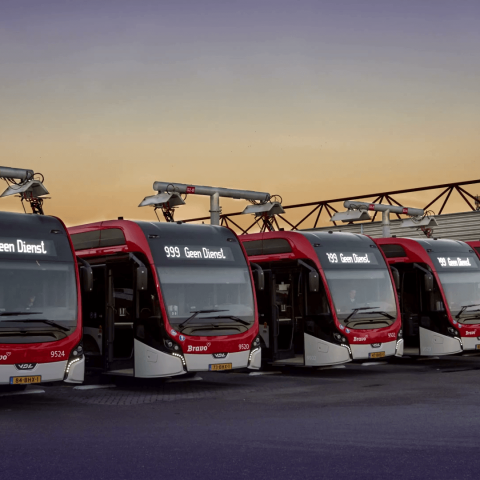
Project Anubis. This is the name of Vdl Bus & Coach‘s initiative to give a second life to the batteries of its electric buses, born from its collaboration with the German energy company Rwe.
i This is A project revolving around the sustainable and circular use of materials, which will be used in a storage plant in Moerdijk, with a total storage capacity of 7.5 megawatts.
«Initially in the Anubis project we use the batteries of 43 Vdl electric buses operated by Transdev in Eindhoven since 2016», explains Paul van Vuuren, Ceo of Vdl Bus & Coach. Who, therefore, adds, «These vehicles are currently equipped with new, larger battery packs, but the modules used still have sufficient capacity to be used in stationary applications». Bart Kraayvanger, Manager ZE and Facility Support Transdev Netherlands, adds: «In 2016 together with Vdl we took the first big steps toward zero-emission bus transportation in the Netherlands, in Eindhoven. Now we are again involved in these progressive and large-scale developments in the reuse of bus bus batteries».
Roger Miesen, Ceo of RWE, continues: «With the Anubis project, Rwe and Vdl are demonstrating that the technical challenges involved in building and operating facilities like this can be overcome. With this project, we are also actively contributing to the reduction of CO2 emissions because, after an initial phase in Vdl’s buses, the batteries will have an extended life at Rwe. After that, they will undergo high-quality recycling».