First demo test in Italy for Karsan Autonomous e-Atak, in Bolzano
Karsan‘s e-Atak self-driving bus has been the protagonist of a road test, or rather track test, on Monday 10th March at Safety Park in Vadena, Bolzano, in an event organised with public transport operator Sasa and aimed at testing the potential of driverless technology. Sasa is known for the pioneering role held in the fuel […]
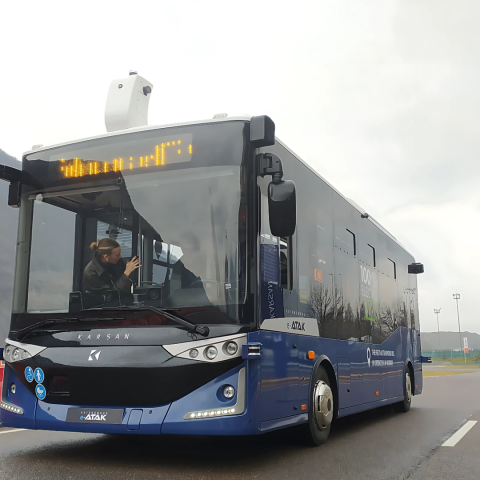
Karsan‘s e-Atak self-driving bus has been the protagonist of a road test, or rather track test, on Monday 10th March at Safety Park in Vadena, Bolzano, in an event organised with public transport operator Sasa and aimed at testing the potential of driverless technology. Sasa is known for the pioneering role held in the fuel cell bus sector.
This is the first-ever test in Italy for a full electric and autonomous bus: the Turkish manufacturer’s battery-powered and autonomous midibus is a product, provided by the technological partner Adastec, already circulating in Scandinavia (Norway and Finland) and in the United States (in Michigan), launched in 2021.
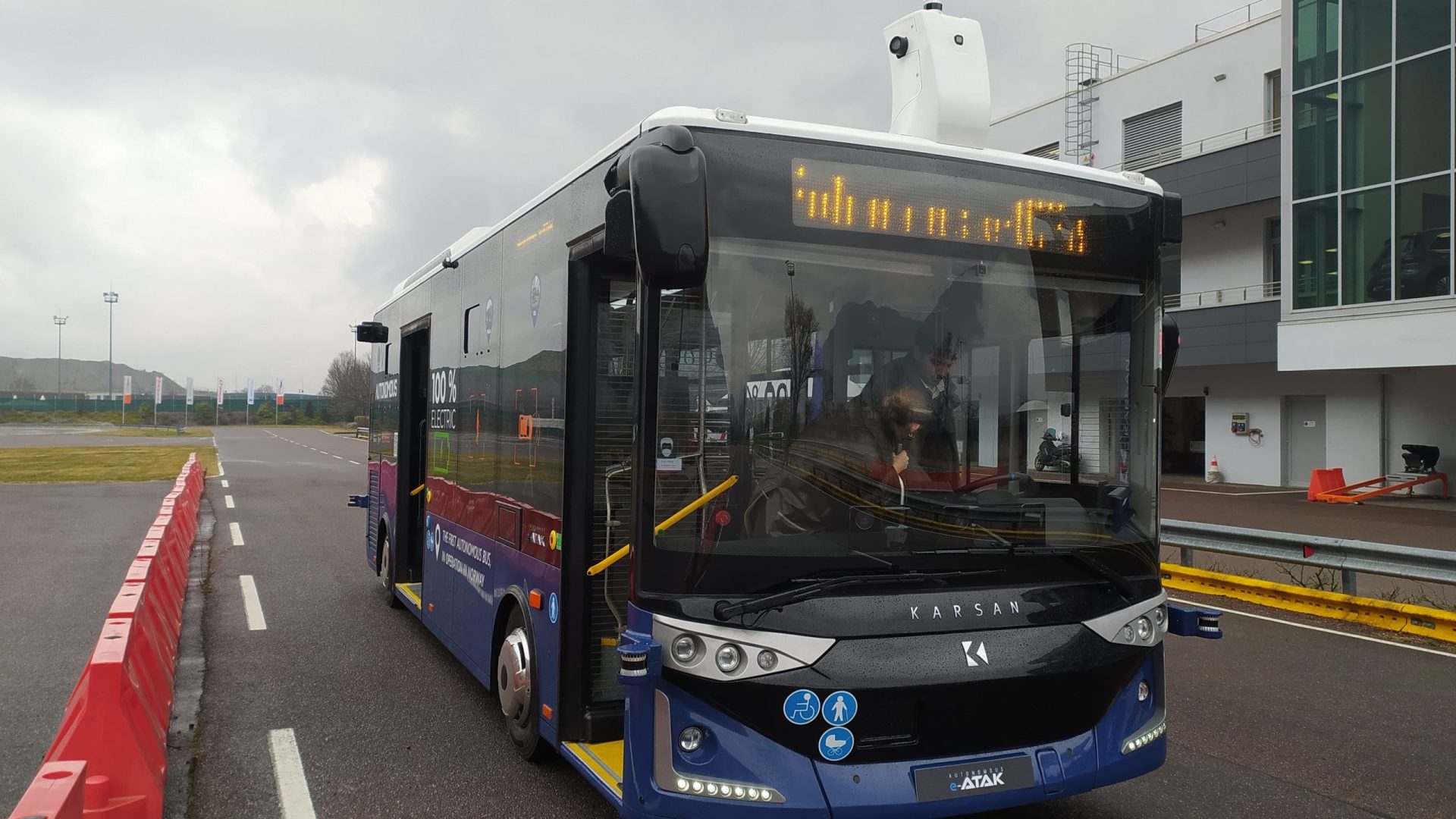
Sasa tests Karsan autonomous bus in Bolzano
We had the chance to attend the event, joining a few laps around the track. Institutions such as Daniel Alfreider, provincial councillor for mobility, and Sasa’s top management such as president Astrid Kofler and general manager Ruggero Rossi De Mio, as well as representatives of the Turkish parent company such as Semir Aydın, were also on board.
Alfreider said: “Public transport is evolving: not only sustainable driving systems, but also digitisation and autonomous driving will have a fundamental impact on the driving of the future. As a province, we want to familiarise with the new technologies at an early stage and test them locally, in order to actively shape the mobility of the future. There is still no standardised regulatory framework for the use of these vehicles in public spaces throughout Europe”.
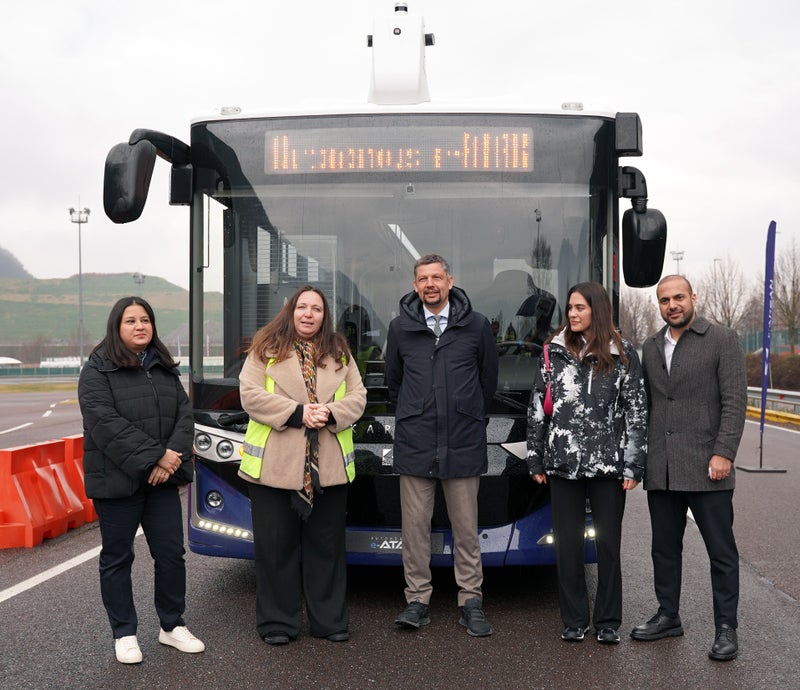
“Sasa wants to keep up with the times and has been actively testing new technologies in recent years. In the future, autonomous buses could play an important role in public transport. However, employees are and will remain central”, says Kofler‘s words, followed by the statements of Rossi De Mio: “As Sasa and the Province, we are always very interested in new technologies, both in terms of traction (hydrogen and electric) and in terms of service: autonomous driving is a fascinating frontier that offers important possibilities for the future of passenger transport. We like to be pioneers”.
Semir Aydın, sales manager for autonomous vehicles at Karsan added: “These buses work with LiDAR, a technology that uses a laser to map environments, as well as radar and cameras to recognise obstacles, traffic signals and pedestrians in real timeAutonomous vehicles can make traffic safer, more efficient and more sustainable by reducing human error and optimising traffic flows”