ATM Milano has inaugurated the extension of Metrotram Line 7
The new section of Metrotranvia 7 in Milan, operated by ATM Milano, connecting the Adriano district to the M1 underground station in Precotto and the M5 underground station in Bicocca, was officially opened in mid October 2025 in the presence of the Mayor of Milan, Giuseppe Sala, the Councillor for Mobility, Arianna Censi, the Councillor for Public Works, Marco Granelli, the CEO of ATM, Alberto Zorzan, and […]

The new section of Metrotranvia 7 in Milan, operated by ATM Milano, connecting the Adriano district to the M1 underground station in Precotto and the M5 underground station in Bicocca, was officially opened in mid October 2025 in the presence of the Mayor of Milan, Giuseppe Sala, the Councillor for Mobility, Arianna Censi, the Councillor for Public Works, Marco Granelli, the CEO of ATM, Alberto Zorzan, and the President of MM, Elio Franzini.
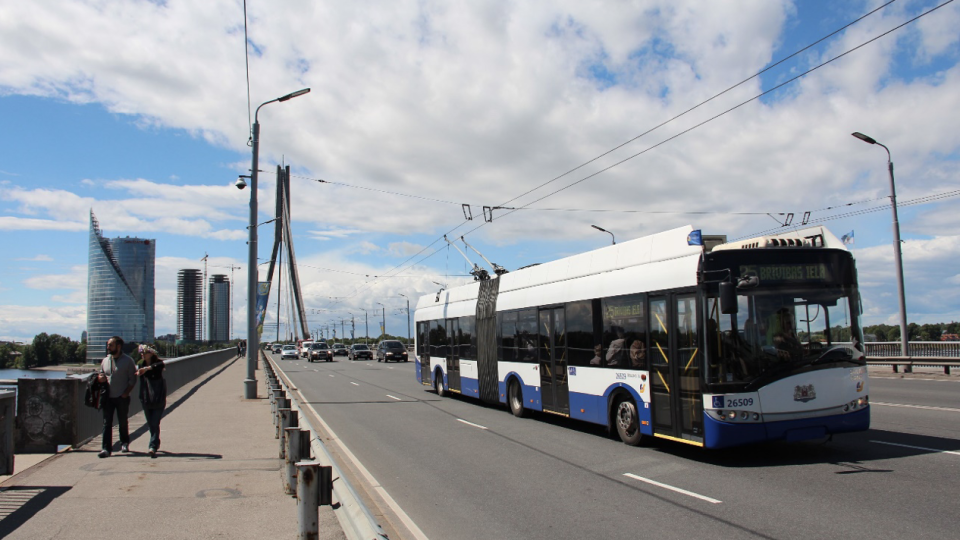
This new section, approximately 1.5 km long, connects to the line already in operation and includes three new stops, Tremelloni – Gassman, Tremelloni – Tognazzi, Adriano Lussu, in addition to the Adriano – Vipiteno terminus. The temporary terminus consists of a single-track return loop locatedin the area designated for the future extension towards Cascina Gobba. A third stopping track has been planned between the Adriano – Lussu and Adriano – Vipiteno stops.
The new section of Metrotranvia 7 connecting the Adriano district to the M1 and M5 underground stations in Precotto and Bicocca, respectively, with the Greco Pirelli railway station and Bicocca University, and the S and R lines.
The tram runs on a grassy track that is undergoing urban redevelopment. The stops are equippedwith shelters modelled on those used on the existing light rail system, with clear indication of the stop name and public information monitors. There is an immediate interchange with line 56, whose terminus is next to the Adriano – Lussu stop.

The Tramlinks for Milan’s Line 7
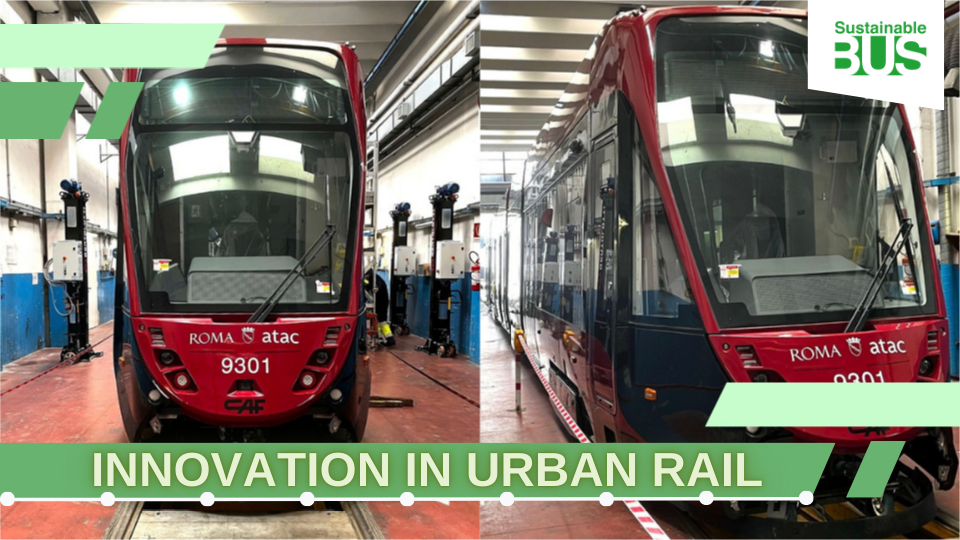
The line will be served by Stadler’s new Tramlinks, of which more 20 units have been delivered to Milan. Already widespread in Europe, the Tramlink is a bidirectional tram capable of carrying up to 200 people.
The service will run from 5.30 am to, 2:30 am with trams running every 7-8 minutes during peak hours and approximately every 10-15 minutes during off-peak hours. MM Spa oversaw the design of the project, acted as the contracting authority, carried out the role of works management and safety safety coordination, and oversaw testing.

The cost of the inaugurated work is 17.8 million, approximately 55% of which came from funds provided by the Municipality of Milan and the rest from the Government, plus 8 million euros that wew necessary for the removal of asbestos from the land.
Work is underway on three other sections, between Cascina Gobba and the Adriano district, between Via Fulvio Testi and the Niguarda Hospital Emergency Room, and between the Bovisa district and the Bovisa FN station, which are expected to be operational between early 2027 and spring 2027.
The first section, from Cascina Gobba to the Adriano disctric, extends for approximately 1.4 kilometres and the project also includes the construction of a new urban road, the “Adriano-Martesana road”, which will relieve traffic from the historic centre of Crescenzago, and a dedicated cycle path.
The connection to the Cascina Gobba underground station will be provided by a road bridge and a railway bridge over the Martesana canal between Via Idro and Via San Mamete, each 35 metres long and weighing 135 tonnes.

In addition to the bridges, the project includes the completion of the tramway, which will run entirely on its own right-of-way from Via Adriano, at the intersection with Via Vipiteno, to Via S. Mamete and from there to Via Padova, Via Rizzoli and the Cascina Gobba M2 station, allowingresidents of the Adriano district to reach the M2 in just a few minutes, thanks to approximately 1.400 metres of new tram line. The total estimated cost of the lot (Gobba-Adriano) is €37.6 million, financed in part by the Patto per Milano (Pact for Milan) and in part by PNRR funds.
The second section, from Viale Fulvio Testi to Niguarda Hospital, is 1.7 kilometres long. From the intersection with Via Santa Monica, it crosses Viale Suzzani, continues along the green corridor between the Cittadella degli Archivi in Via Gregorovius and the houses in Via Racconigi, then crosses Via Graziano Imperatore between the Niguarda and Prato Centenaro districts, runs along Via Maiorana in Parco Nord and reaches the Niguarda Emergency Room. Most of the tracks will be surrounded by greenery, flanked by the cycle path that connects Via Testi with Via Majorana, crosses the cycle path on Viale Enrico Fermi and reaches Via Pellegrino Rossi in Affori.
This section of the light rail will connect with tram line 4 in Via Graziano Imperatore and the new light rail currently under construction that will take passengers to Desio-Seregno. The tracks, already visible, are laid on a concrete slab, and the sections near residential areas will be equippedwith anti-vibration matting. The work is expected to be completed by the end of 2026, making itpossible to start service in the first quarter of 2027. This lot (Fulvio Testi Niguarda) has also been included in the PNRR funding and included in the three-year public works programme of the Municipality of Milan.
The third section is between Piazza Alfieri-Via Bovisasca, Via Durando and Piazzale Bausan. It will allow tram 2 to reach Bovisa FS, a strategic hub with a cross-city link and railways. Thissection in Via Durando will see the arrival of the section currently being designed from Via Majorana. Via Durando will also see the creation of a new square for citizens and students of the Polytechnic University, with tracks surrounded by greenery and innovative technologies to reduce noise. Currently, in the area adjacent to Bovisa station, the pillars supporting the station access slab- a fundamental infrastructure for tram passage – are being redeveloped. The work is expected to be completed in early 2027.
For the sections under construction, the total estimated cost is £88.5 million (£43.7 million for the Gobba-Adriano section, £25.8 million for the Fulvio Testi-Niguarda section and £19 million for the Bovisa section), divided between funds from the Municipality of Milan, the state and the PNRR (National Recovery and Resilience Plan). Three other sections of the light rail system are currentlyin the design phase: the section between Niguarda Hospital, Affori M3 and Via Durando, and the section between Bovisa Fs station and Certosa Fs station, which also passes through Villapizzone FS.
Once completed, Metro Tram 7, also known as “Interquartiere Nord”, will be approximately 14 kilometres long, mainly on protected tracks, and will connect all the districs in the northern area of Milan, from the M2 station at Cascina Gobba in the east to the FS Certosa station in the west, touching other important public transport interchange points – the M1, M5, M3 and three regionalrailway lines (R and S lines) Greco-Pirelli FS and Bovisa FS, where there is also a cross-city link. Itwill reach important attractions such as the Bicocca University, the Milan Polytechnic in Bovisa, the two large hospitals of Niguarda and San Raffaele, and the Arcimboldi Theatre. Furthermore, in the future, citizens will be able to travel from Certosa station to MIND (Galeazzi Hospital and State University) and Fiera Milano-Rho in just one or two train stops.
by Stefano Alfano