The return of the tram to Liège
A new era of mobility has begun in Liège: the first line (T1) of the new 11.7 kilometre tram network, operated by TEC Liège – Verviers, and connecting Sclessin to Coronmeuse and Expo Liège started the service. The line runs mostly in a reserved lane with a grass track, includes 23 stops and benefits from, […]
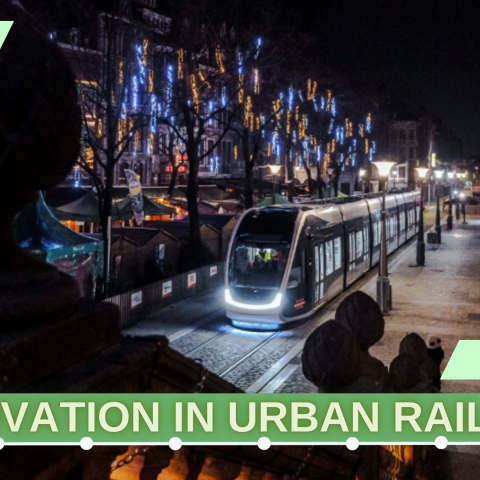
A new era of mobility has begun in Liège: the first line (T1) of the new 11.7 kilometre tram network, operated by TEC Liège – Verviers, and connecting Sclessin to Coronmeuse and Expo Liège started the service.
The line runs mostly in a reserved lane with a grass track, includes 23 stops and benefits from, among other things, traffic lights, is in service from 5 a.m. to 1 p.m., and is scheduled to run every 5 minutes during rush hour and every 7-15 minutes during soft periods. The planned commercial speed is around 20 km/h.
The new T1 line and the new design of the car network allow easy interchanges with at least 10 car lines, with the four Busway lines, (B1-B4) all of which can be considered extensions of the tramway, and with the railway station: 8 tram stops are the main interchange poles, another 5 stops are the secondary poles. The frequencies of the car lines and the service timetable are similar to the T1 line service. The bus network also includes 47 lines connecting the suburbs and outlying districts, and 31 interurban lines. 6 types of lines are available to citizens. On some of the lines the frequency has been increased, and interchange poles have been redesigned.
Twenty seven-module Urbos low-floor trams, 45.4 metres long and 2.65 metres wide, built by CAF, are used for the service. They offer space for 310 passengers, 62 of whom are seated, and are equipped with a battery in order to operate on some routes without an overhead line. The operating schedule foresees the use of up to 18 trams per day. More trams will be purchased at a later date for future extensions. The return of trams to Liège will already bring undisputed benefits to urban mobility in the immediate future.
by Stefano Alfano