More trolleybuses in Lyon with the new TB12 line
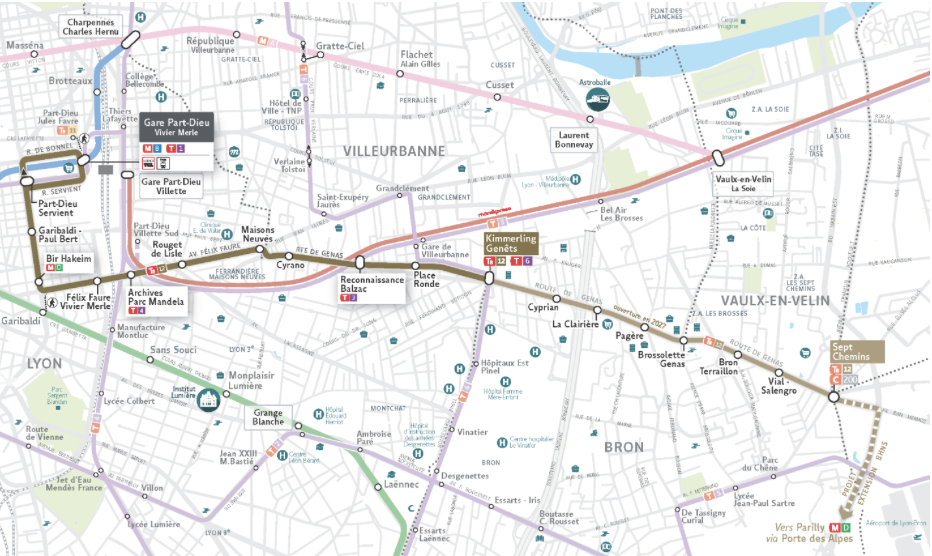
Lyon continues to expand its trolleybus network: the first section of the new TB12 trolleybus line has been opened to the public. The initial stretch runs for 5 km with 12 stops, connecting Part-Dieu V. Merle station to Kimmerling Genets. The project received a total of €2.84 million in state funding under a national program […]
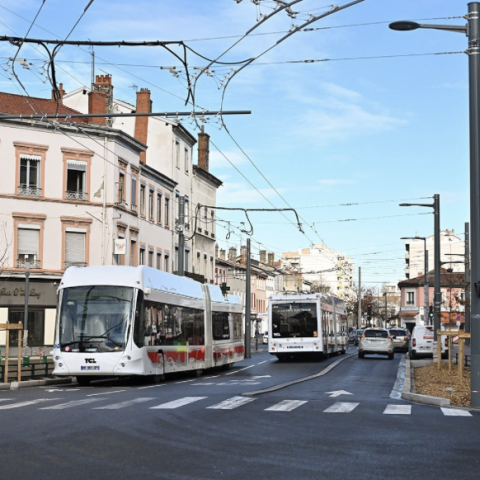
Lyon continues to expand its trolleybus network: the first section of the new TB12 trolleybus line has been opened to the public. The initial stretch runs for 5 km with 12 stops, connecting Part-Dieu V. Merle station to Kimmerling Genets.
The project received a total of €2.84 million in state funding under a national program supporting dedicated public transport corridors and multimodal interchange hubs. The goal is to combine tram-like performance — high regularity, commercial speed, and capacity— with the operational flexibility of a modern trolleybus system.
The new line is a clear example of an integrated Bus Rapid Transit (BRT) system within the urban fabric. Beyond transport, the project carries strong urban and landscape ambitions, significantly upgrading public spaces, enhancing pedestrian and cycling infrastructure, and contributing to a more sustainable urban environment.
TB12 is therefore a key addition to the TCL network, complementing the extension of tram line T6 (in service since February 14) and future projects T9 and T10.
The TramBus concept
Branded as “TramBus”, the line features dedicated lanes, tram-style stations, and traffic signal priority systems ensuring consistent service. This configuration enables high commercial speeds and reliable travel times, independent of road traffic conditions, offering a level of service aligned with metropolitan mobility needs. Within the TCL network hierarchy, the TramBus is considered equivalent to tram lines.
The service operates from 4:30 a.m. to 1:00 a.m., with a frequency of 7 minutes during peak hours and 10 minutes during off-peak periods.
The first section is strongly connected to Lyon’s main transport hubs, particularly at Part-Dieu, providing seamless transfers to metro lines B and D, tram lines T1, T3, T4, T6, the Rhônexpress, and major bus routes.
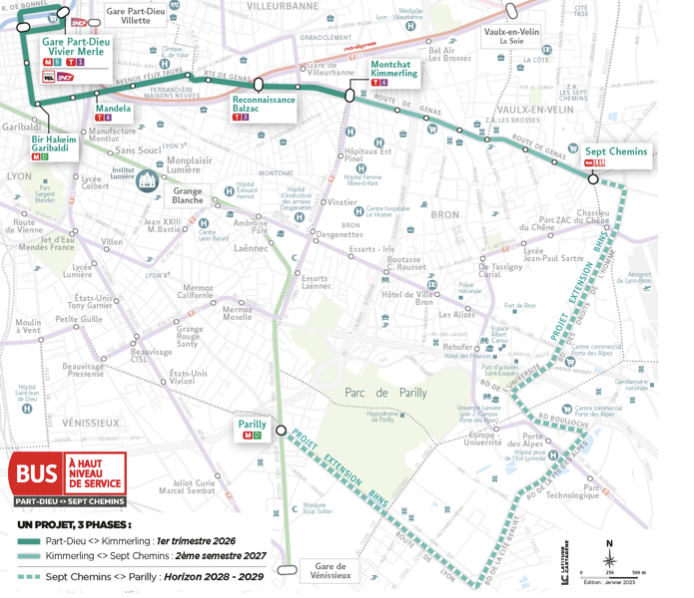
Future extensions will bring the line to Sept-Chemins and later connect Lyon’s 3rd arrondissement directly with Villeurbanne, Vaulx-en-Velin, and Bron via Route de Genas, serving residential areas, employment hubs, and public facilities. The future terminus at Sept-Chemins will become a major interchange hub, equipped with accessible platforms, bicycle parking, and connections to key bus lines. This phase will strengthen the TramBus as a backbone of mobility in eastern Lyon.
A third phase is planned to extend the line to Parilly, adding approximately 9 km at an estimated cost of €70–90 million. This extension would connect an employment basin of over 22,000 workers directly to Part-Dieu station in 35–40 minutes.
It will also enhance service to strategic areas such as Porte des Alpes, the Saint-Priest technology park, and urban redevelopment districts, supporting sustainable mobility across the eastern metropolitan area.
The complementarity between tram and TramBus systems is expected to increase the attractiveness of the TCL network, encourage modal shift, and provide an effective alternative to private car use.
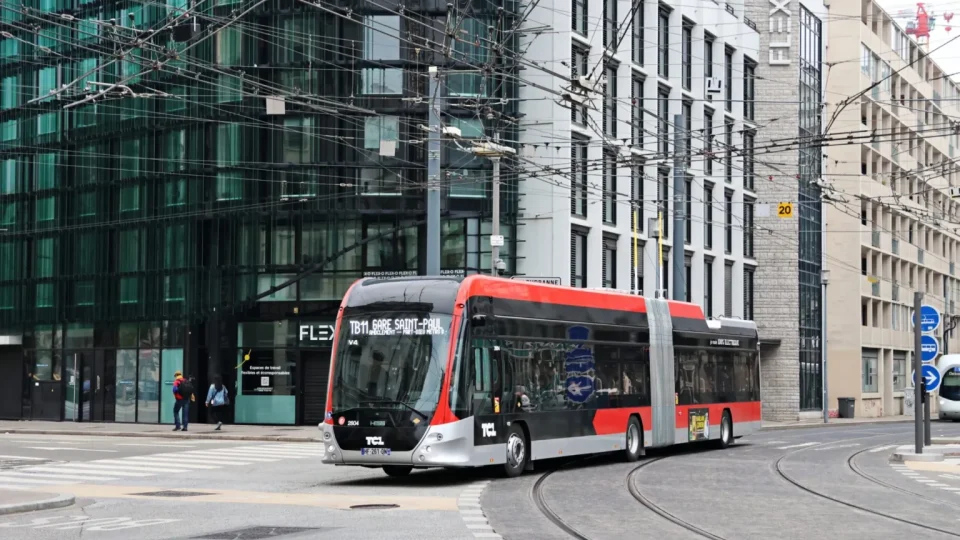
The line is operated with new articulated trolleybuses, the Hess Lightram 19, designed for high-capacity demand (up to 23,700 passengers per day expected by 2030).
The interiors are carefully designed to maximize passenger flow, visibility, and comfort, with dedicated spaces for people with reduced mobility, strollers, and luggage. The vehicles are equipped with “In Motion Charging” technology, allowing them to recharge while running under overhead wires and operate autonomously on sections without catenary. Their design aligns with the latest Lyon tram livery.
Stations are designed to high standards, featuring ticket machines and tall identification totems similar to those used on tram lines, ensuring strong visibility.
They are part of a broader environmental strategy, including tree planting, rainwater management, and the use of light-colored materials to reduce heat accumulation. Materials such as metal, wood, and glass ensure both durability and harmonious integration into the urban landscape.
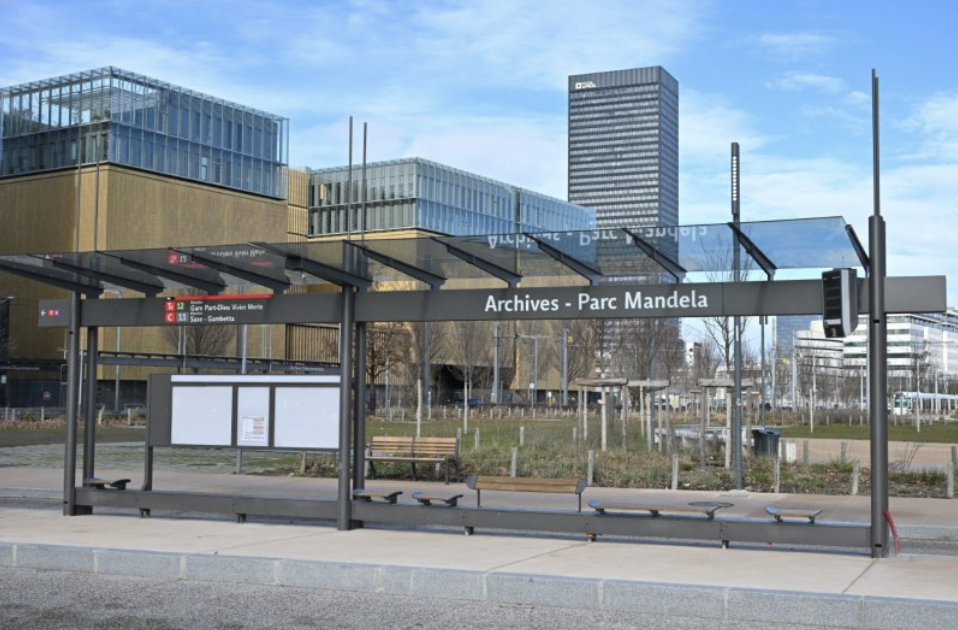
The TB12 project also includes a comprehensive redesign of public space along the route. Streets have been reconfigured to prioritize sustainable mobility, with dedicated lanes for the TramBus, wider sidewalks, safer pedestrian crossings, and continuous, clearly marked cycling paths.
More than 500 trees have been planted, alongside green areas and permeable surfaces that improve rainwater infiltration. These interventions help mitigate urban heat islands, enhance summer comfort, and improve overall quality of life.
The entire line, including vehicles and stations, is fully accessible to people with reduced mobility. Pedestrian routes ensure seamless access from public spaces to platforms, and all vehicles feature low-floor design.
By Stefano Alfano