The bus industry’s smartphone moment
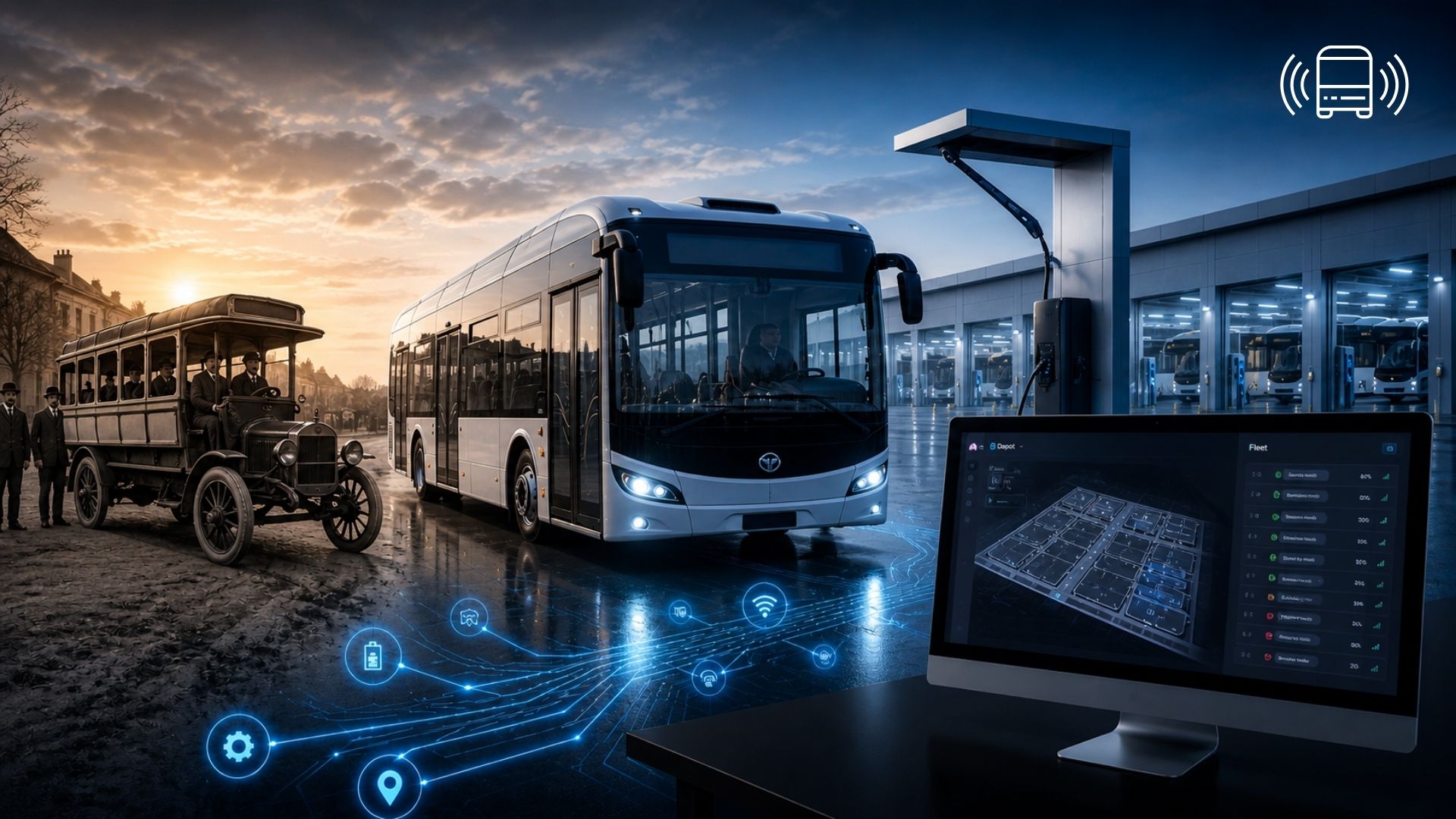
On 18 March 1895, at 6:25 in the morning, the world’s first motor bus line opened between Siegen, Netphen and Deuz. The vehicle was a Benz Landauer. It had eight seats, a one-cylinder engine of five horsepower, and fifteen kilometres of bad road ahead of it. On the steepest hill, the passengers had to get out and push. The engine broke often, and a mechanic travelled from Mannheim with spare parts each time. That is how Europe invented the bus. It began on a quiet provincial road where the demands were smallest, and reached the cities later, once the machine had earned the right to be there. A century of European leadership grew from that one habit: take the step that works today, learn from it, and let it pay for the next one. Europe needs that again.
Sponsored by Autonomous Systems
The next city bus is a smartbus. European manufacturers are best placed to define it.
A hill outside Siegen
On 18 March 1895, at 6:25 in the morning, the world’s first motor bus line opened between Siegen, Netphen and Deuz. The vehicle was a Benz Landauer. It had eight seats, a one-cylinder engine of five horsepower, and fifteen kilometres of bad road ahead of it. On the steepest hill, the passengers had to get out and push. The engine broke often, and a mechanic travelled from Mannheim with spare parts each time.
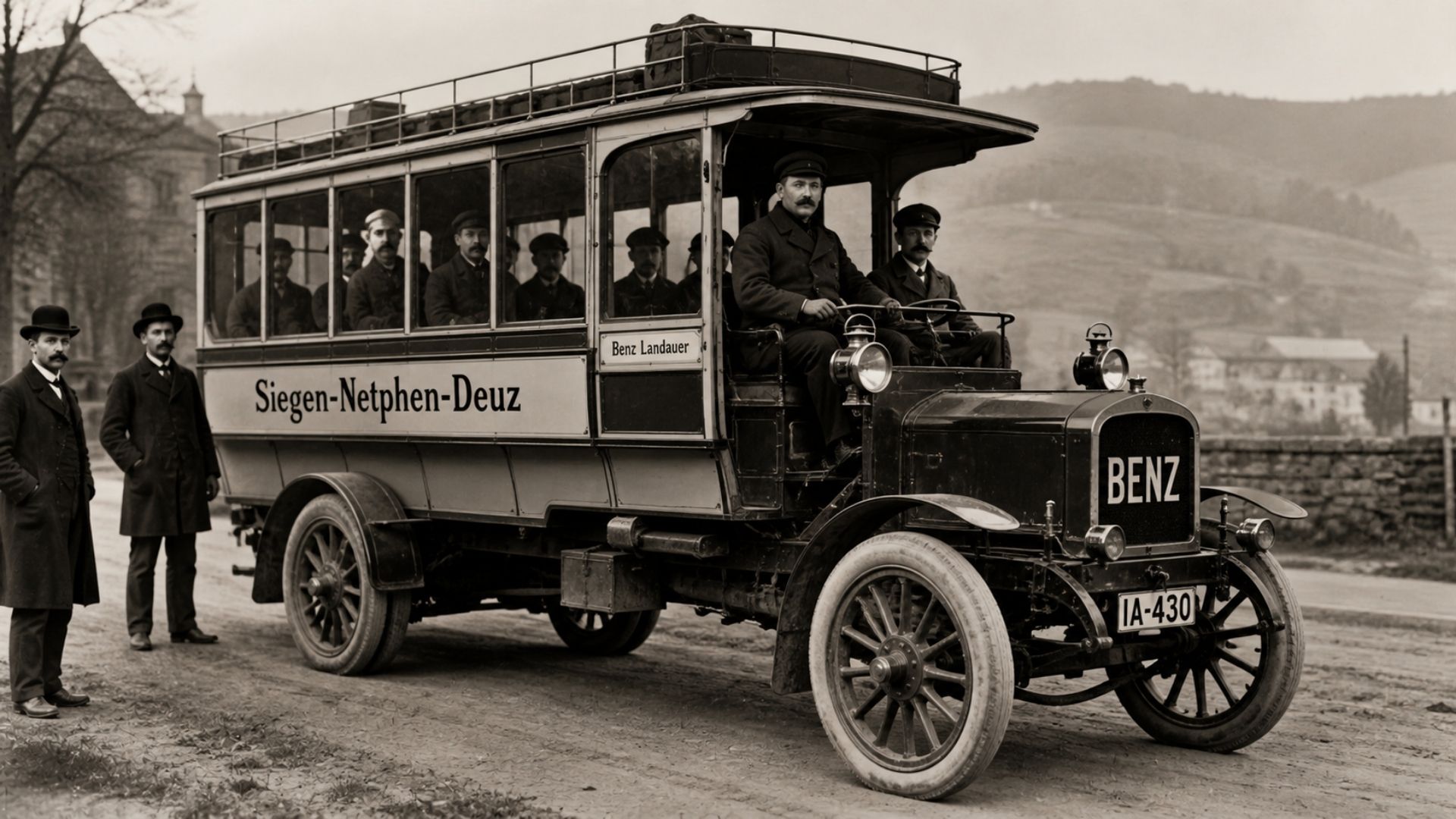
That is how Europe invented the bus. It began on a quiet provincial road where the demands were smallest, and reached the cities later, once the machine had earned the right to be there. A century of European leadership grew from that one habit: take the step that works today, learn from it, and let it pay for the next one. Europe needs that again.
Europe built the market. Now look at who is supplying it.
Start with the good news. In the first half of 2026, Europe registered 8,141 battery-electric buses. That is 49% more than the same period a year earlier. In six months, Europe reached almost 69% of the full 2025 total. Battery-electric vehicles are now 61.2% of the European city bus market. In 2015, the figure for the whole year was 101 units.
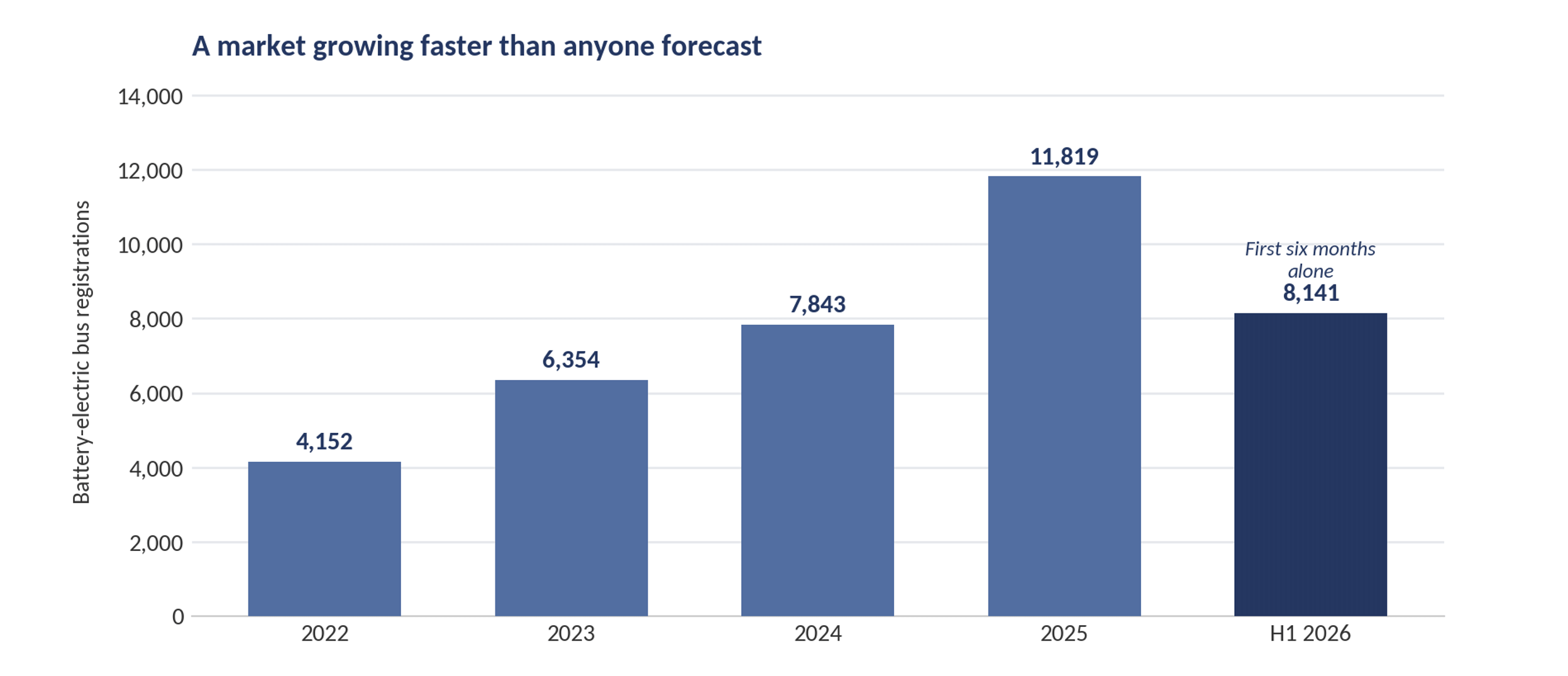
This growth was built deliberately. European cities set the targets. European public money paid for the risk. European operators handled the disruption of changing a complete powertrain. The market exists because Europe built it.
Now look at the same market a second way.
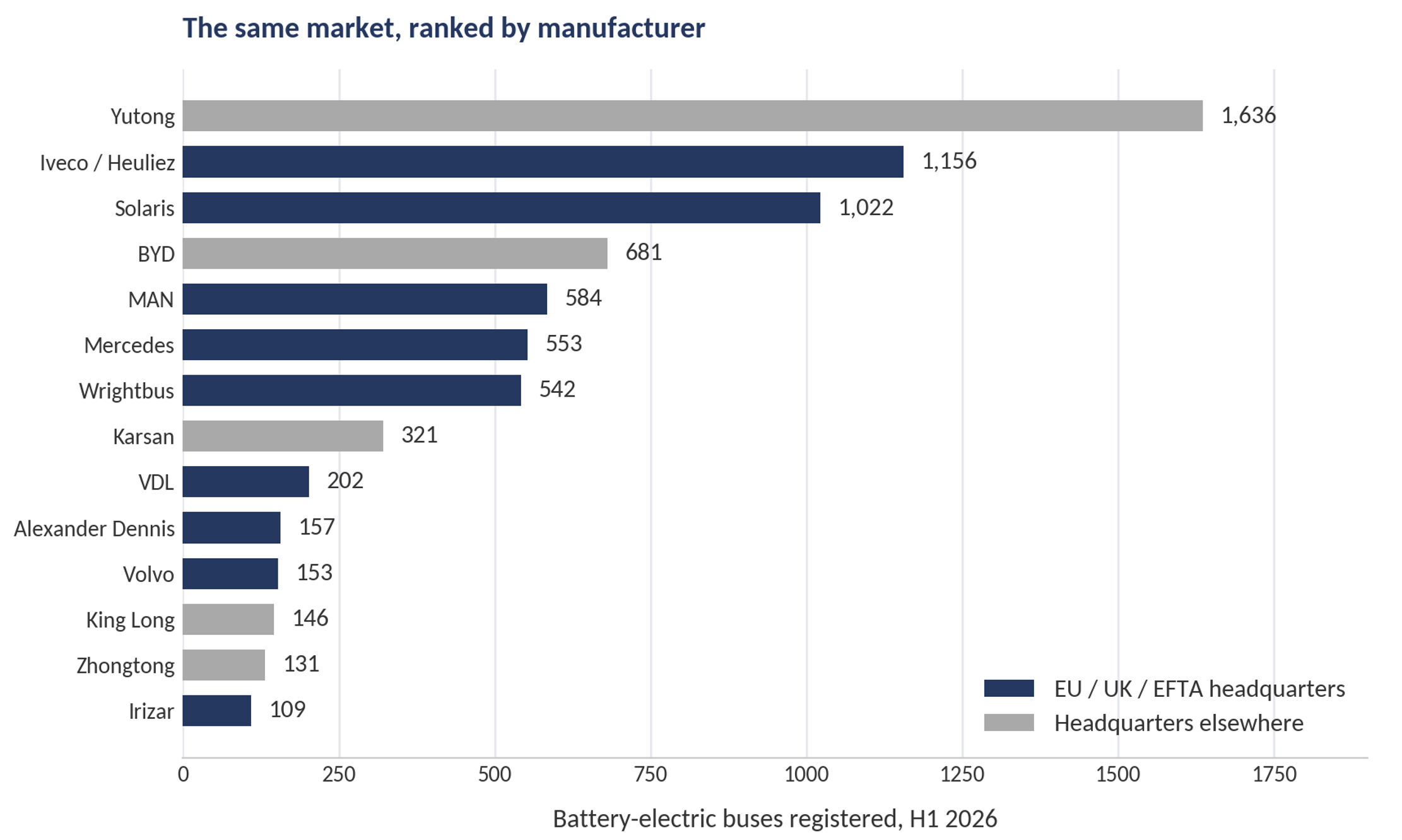
Several European manufacturers are performing well. Iveco holds second place. Solaris registered more electric buses in the first six months of 2026 than in the whole of 2025, and leads the European hydrogen segment by a wide margin.
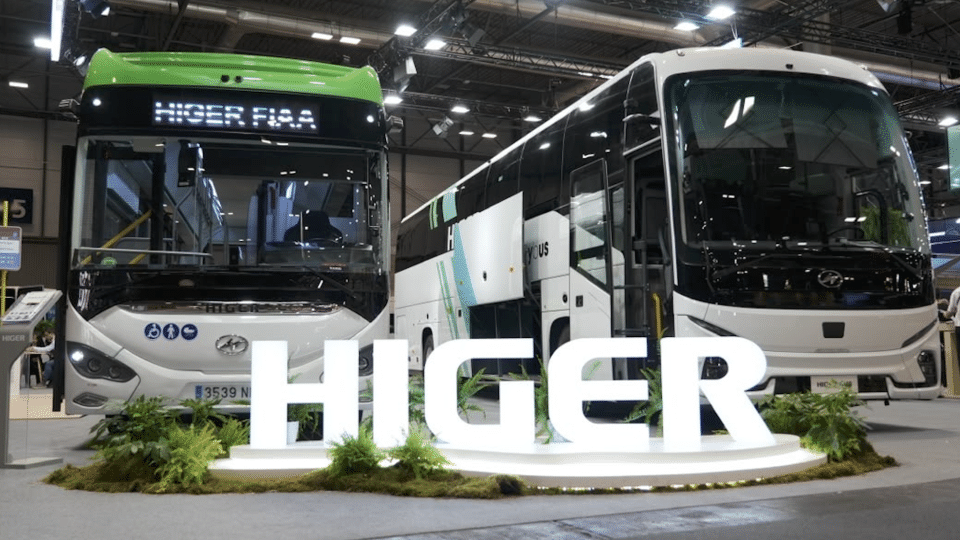
At the same time, Yutong is the largest supplier of electric buses to Europe, for the second year running. Its share moved from 14.0% in 2024, to 15.5% in 2025, to roughly one bus in five in the first half of 2026. Yutong is running a cost-leadership strategy very well, in a market that rewarded exactly that.
The pressure on European manufacturers is real. In continental Europe, the share of EU manufacturers in electric city bus registrations fell from 80% in 2018 to 64% in 2025. In the same period, the share of Chinese manufacturers rose from 20% to 31%.
The market grew quickly. Europe’s share of it did not keep pace.
What happened in the phone industry
Around the year 2000, Nokia was the world’s largest phone maker. Europe also had the rulebook: GSM, the mobile standard written in Europe in the 1980s, which most of the world went on to adopt. Competing with Nokia on its own terms was close to hopeless. At its peak, Nokia held around 40% of the world’s mobile phone market. Everything a volume leader is supposed to need, Nokia had.
Then Apple redefined the category and the smartphone was born. The iPhone launched in 2007 and cost more than a Nokia. It was a different kind of product, a pocket computer that happened to make calls. Customers stopped buying a phone and started buying something else. Nokia’s volume and cost advantage gave it no protection. Six years later, Nokia sold its handset business to Microsoft for €5.44 billion, roughly 2% of what the company had been worth at its peak.
Nokia had the volume and the cost advantage. Neither helped when the category changed.
Now map that onto buses
In the electric bus category, the volume leaders are already clear. Yutong has led the European ranking two years running, delivered 49,518 buses worldwide in 2025, and holds roughly a third of the Chinese market. Scale of that kind is what decides a price war.
That is the Nokia position, and it is a strong one. Competing for it on the category’s own rules — unit price, volume, cost per kilometre — favours whoever is already biggest. Europe is currently playing by those rules, and Europe will not out-produce the world’s largest bus makers on a standard product.
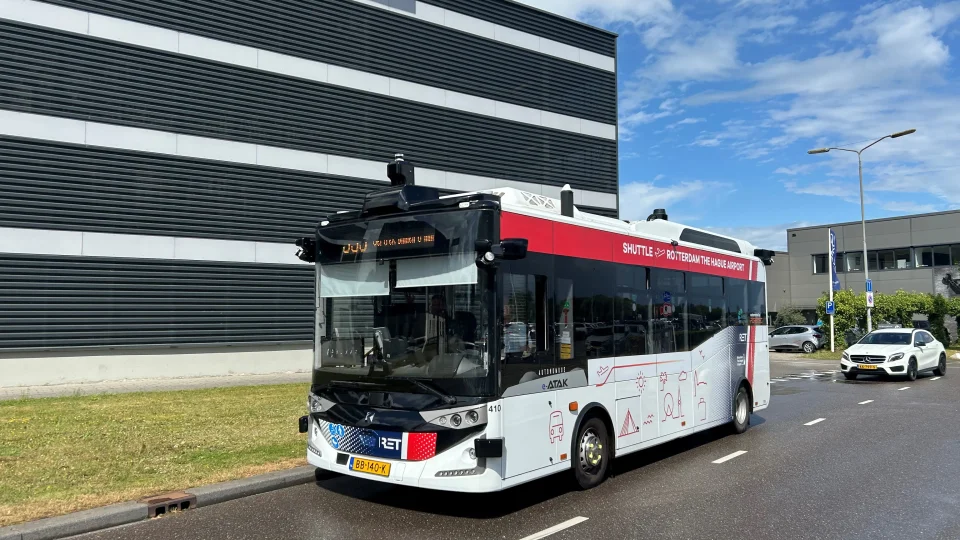
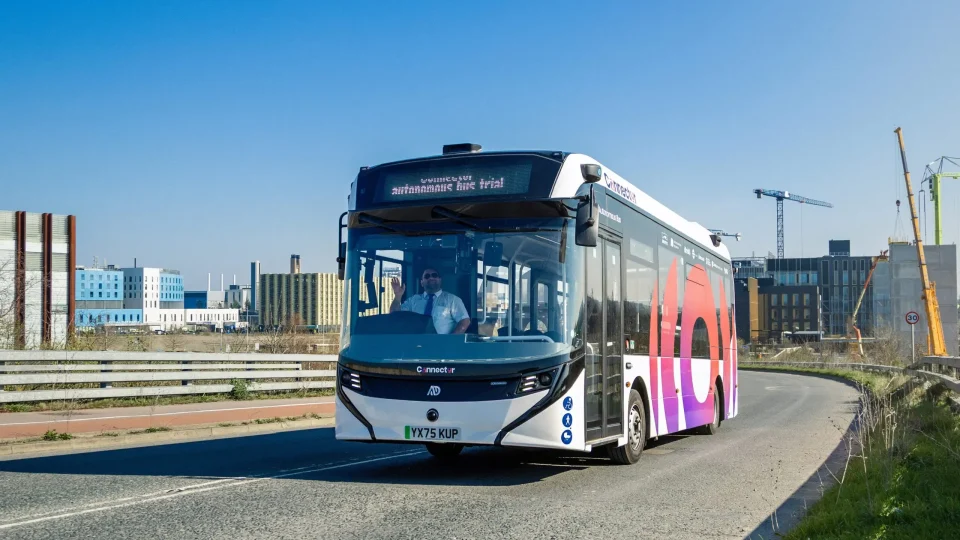
The other move is available. Europe can change what a city bus is. The new bus has a name: the smartbus. A bus that drives itself.
Why the smartbus is a different kind of contest
Electrification was a change of parts. A battery instead of a tank. A motor instead of an engine. A charger instead of a pump. Parts can be bought, fitted, and turned into commodities. Once everyone can buy the same parts, the winner is whoever assembles them cheapest, in the largest numbers. That is what happened.
A smartbus is a change of system. The vehicle is the easy part. What you are really selling is proof: hard evidence that a thirteen-tonne vehicle under software control will behave properly in a defined space, and a named party who answers when it does not. Proof of that kind has to be built, deployed, measured and defended over years.
None of that has to be invented. Europe already wrote the rulebook, and a smartbus travels through it as it earns ground.
Inside the depot, on private ground, a vehicle can reach the market under the Machinery Regulation, without public-road type-approval. On public roads it takes the vehicle route: type-approval under Regulation (EU) 2018/858 and the General Safety Regulation (EU) 2019/2144, with the driving system approved under Implementing Regulation (EU) 2022/1426. ISO 22737, the standard for low-speed automated driving, covers the technology itself.
Behind all of those rules sit four questions every operator should ask a depot autonomy supplier:
- Who is accountable when the vehicle does something unexpected?
- Where does the operating data live, and who can reach it?
- Who can stop the vehicle, from where, and how fast?
- Can all of that be shown to an auditor?
When the product is proof, regulatory seriousness becomes the product. It is far easier to answer these questions in a specification written before the tender than in a statement issued afterwards. A criterion protects an operator, and the supplier who can meet it, for much longer than a price does.
Is the smartbus real?
When people hear the word autonomy, they picture a driverless bus in traffic. That picture is exactly why this opportunity is still open.
Autonomous buses have been demonstrated in Europe for more than a decade. Anyone who has watched those demonstrations will ask a fair question: is the smartbus a real commercial opportunity, or one more pilot project? The answer depends entirely on where the bus drives.
Running a smartbus on a public street is genuinely hard. The difficulty is physics and liability. At speeds up to 50 km/h, with passengers standing, the vehicle has very few safe options when something goes wrong. Braking hard is often the wrong answer. So a safety operator stays on board, and responsibility goes back to that person. That is good engineering and very poor economics. You pay for a driver and for the technology at the same time.
A bus with a safety driver is not autonomous — it is simply a more expensive bus.
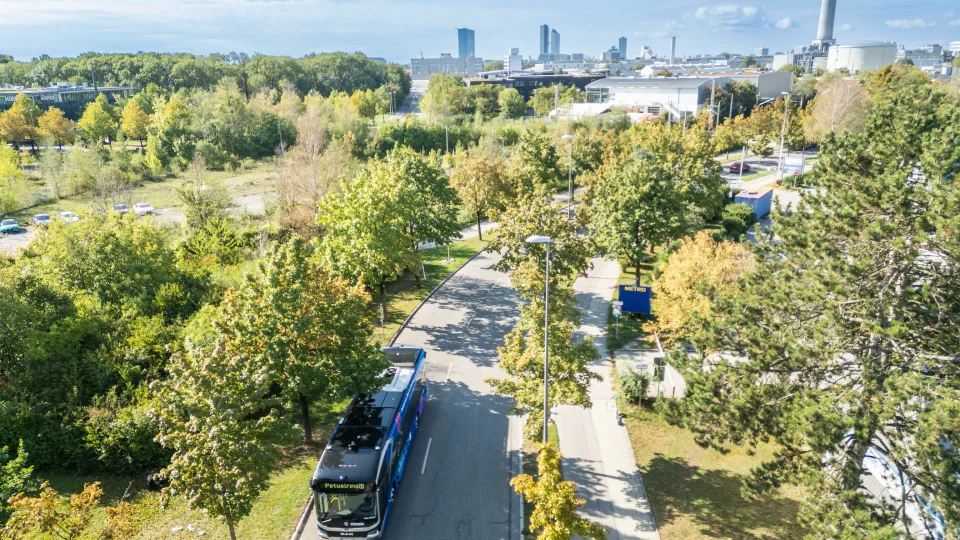
MAN’s MINGA project in Munich shows the same engineering reality. A consortium of 16 partners, led by the City of Munich, has automated a Lion’s City 12 E. The Munich operator MVG plans to start pilot operation this autumn, with a closed group of test users and a safety driver on board. MAN plans to bring a fully automated Level 4 series bus to market within the next decade. That is a capable company making a sound engineering judgement: on a public street, the evidence and the approvals take years to build.
The same technology, pointed at a depot, does not have to wait. This is depot-first autonomy: start where speed is low, the site is private and the business case already exists.
Inside the depot, the numbers already work
Change three things and the whole problem changes with them. Drop the speed to 10 km/h. Take the passengers out. Put a fence around the space.
Inside a depot, situations that are critical on a public road become manageable. The vehicle has time and margin. The operating area is defined, mapped and private. The route to deployment is short, because a private site is a different regulatory question from a public road. Everything that makes street autonomy a 2030 question makes depot autonomy a 2026 question.
The depot also has a business case that already exists.
In European depots where operational assessments have been carried out (find out more here → Smart Depot 2026 Report), manual shunting — parking, approaching chargers, positioning for the wash, staging for departure — runs from 10 to more than 35 minutes per vehicle per day, depending on layout, fleet size and shift organisation. At MZA Warsaw it measured 35 minutes, and the recovered driver time alone was valued at over €88,000 per vehicle across a twelve-year lifecycle.

In a 100-bus depot, even 25 minutes per vehicle is nearly 42 driver-hours every day. Across a year that is around 15,000 hours, or nine to eleven full-time drivers once holiday and sickness cover are counted. Those positions exist today, and they are spent moving buses inside a fence.
Set that against the driver shortage every European operator shares. More than 40% of Europe’s bus and coach drivers are over 55, and fewer than 3% are under 25. The retirements are already scheduled. In every version of the next decade, European public transport is short of drivers. The one lever left is what those drivers spend their time doing.
A smartbus is the same vehicle the operator already specified, fitted with an autonomous driving system that works inside the depot under remote supervision and switches off outside it. No new depot. No new infrastructure. The regulatory route is shorter inside the depot, and each step produces the evidence that justifies the next one.
This is evolution rather than revolution, which is the only speed public procurement can absorb. An operator can start with one bus to prove feasibility, ten to prove it scales, and a hundred as part of a fleet renewal.
Operators are already on that ladder. Depot assessments have been completed with MZA Warsaw, TMB Barcelona, Bernmobil and others, defining how autonomy would change depot and fleet operations and where it meets health and safety requirements. PKM Gliwice has gone further, into technical validation inside its own depot.
In Bern, Bernmobil’s Eigerplatz depot, a fully enclosed multi-storey site in the city centre where 12- and 18-metre buses reverse into tight bays every day, was assessed as Smartbus Ready. The assessment put payback at roughly 4.9 years on a 100-bus fleet, estimated more than 9,000 driver hours recovered a year, which is over five full-time positions, and noted that because the site is private property, autonomous manoeuvres inside it need no public-road homologation.
What this does to a European OEM’s business
The commercial argument here is about margin and competitive position. European bus manufacturers have paid for excitement before. Innovation that cannot be industrialised is a story with a bad ending.
The argument is narrower and stronger than excitement.
- It changes what you sell. A conventional city bus is compared in a tender on price and specification. A smartbus is a vehicle plus a system that must be integrated and certified before delivery, then supervised and updated for as long as the bus runs. Its safety case must stay valid for the full lifecycle of the vehicle. A smartbus offer must therefore show how the system will be supported throughout that lifecycle.
- It changes the margin. An ordinary bus is priced against the cheapest comparable bus in the tender. A smartbus is a different product, and it earns a different price. Differentiation is the only reliable way to hold margin in a market that buys on price.
- It changes how tenders are decided. Once an operator writes depot autonomy readiness into a specification — drive-by-wire capability, defined interfaces, proven safety evidence, EU data storage — price stops deciding the outcome on its own. Suppliers who can answer are in. Suppliers who cannot are out.
- It can start now. This separates the smartbus from every other future-of-mobility pitch. It works within today’s law and today’s technology. From the first day of operation, the driver time saved goes back into line service.
Two EU proposals may help European bus manufacturers. The Industrial Accelerator Act, presented in March 2026, would require publicly procured electric vehicles to be assembled in the EU, with at least 70% EU-origin content in components other than the battery. The Public Procurement Act, adopted by the Commission on 9 September 2026, would make the best price-quality ratio the default award standard and let public buyers give preference to European offers. Both are proposals and will change in negotiation. In September, Solaris, HESS and VDL published a joint white paper that calls for European content rules and quality-based awards, and raises the question of who controls vehicle data. Policy can improve the odds for a European product. The smartbus is that product.
So why will the volume leaders not do this first?
They are already doing it. Yutong has been demonstrating unmanned terminal operations for years. At its Zhengzhou site, autonomous buses position themselves for pantograph charging and then park themselves afterwards. In Jinan, a self-driving bus parks at a charger where a robotic arm plugs it in, in about forty seconds. China has a far larger domestic depot base to learn in, and it is learning quickly.
The decisive question in Europe is a different one. A European operator cannot buy depot autonomy on operating hours alone. It has to buy something it can defend in front of its own institutions:
- An approval route through European conformity assessment, backed by documented evidence.
- Operating data held where the operator can point to it, under European law.
- An accountable party inside the European legal system when the vehicle does something unexpected.
- Evidence in a form a European auditor and regulator will accept.
Proof gathered in a Zhengzhou depot does not transfer to a European one. That is why the opening for European manufacturers is a regulatory and accountability advantage rather than a technological one. A safety case built inside the European regime, with an operator able to prove control of its own fleet, cannot be shipped in from outside.
Europe’s next champions
Europe opened the first motor bus line on a bad road outside Siegen, with a vehicle that could not climb the hill. Europe defined the modern low-floor bus and wrote vehicle emission standards that other markets went on to copy. The engineering has always been here.
Europe should define the next transformation. The bus Europe sells in 2035 should be a different bus: one that moves itself, records what it did, and can be held to account for it.

That different bus is the smartbus. And it starts where the first one did. A small place, a low speed, one step at a time.
The future does not ride an ordinary bus.
Sources and notes
• European Bus Manufacturers white paper (HESS, Solaris, VDL), September 2026
• Market data: DVV Media Group, European Bus Data (Q2 2026 report and 2025 Annual Report), as reported by Sustainable Bus. Buses above 8t GVW, excluding trolleybuses; EU27 plus UK, Iceland, Norway and Switzerland.
• GSM and Nokia: CEPT / ETSI standardisation history; INSEAD, Ringtone (2018); Statista market share series; Microsoft acquisition of Nokia Devices & Services, 2013 (€5.44bn).
• MINGA / MAN: MAN Truck & Bus press release, 23 April 2026; electrive, April 2026.
• Depot automation in China: Yutong WITGO unmanned terminal demonstrations, Zhengzhou (Sustainable Bus, 2020); visitor account of Yutong automated depot, Zhengzhou (The Driven, August 2025); Jinan autonomous bus and robotic charging pilot (Xinhua, November 2025).
• Regulatory framework: Regulation (EU) 2018/858; Regulation (EU) 2019/2144; Commission Implementing Regulation (EU) 2022/1426; Regulation (EU) 2023/1230 on machinery; ISO 22737.
• Depot operations, driver time and driver shortage: The State of Smart Depots 2026, Autonomous Systems; MZA Warsaw operational assessment; IRU 2023 report.
• Industrial Accelerator Act: European Commission proposal of 4 March 2026. Legislative proposal only; subject to change during negotiation.