King County Metro receives $33.5 million federal funding for zero-emission buses
King County Metro has secured $33.5 million in federal funding to support the acquisition of zero-emission buses, propelling its commitment to becoming one of the pioneering large transit agencies in North America with a fully zero-emission fleet by 2035 (in advance with the previously mentioned 2040 target) The funding will enable Metro to procure 30 […]
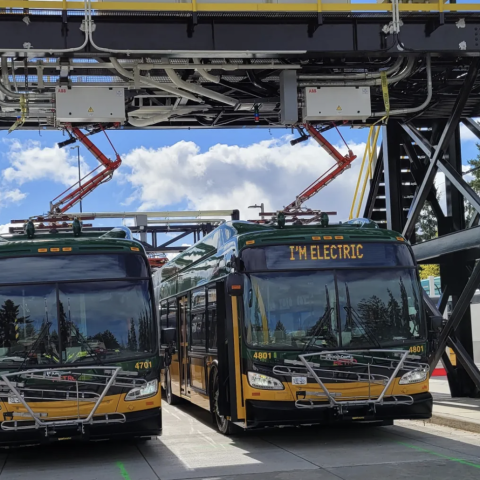
King County Metro has secured $33.5 million in federal funding to support the acquisition of zero-emission buses, propelling its commitment to becoming one of the pioneering large transit agencies in North America with a fully zero-emission fleet by 2035 (in advance with the previously mentioned 2040 target)
The funding will enable Metro to procure 30 battery-electric buses, with a focus on converting 27 bus routes that serve low-income communities. Additionally, it will contribute to the expansion of Metro’s apprenticeship program, fostering transit careers in underserved areas.
King County Metro operates in King County, Washington, including the city of Seattle.
FTA funding for King County Metro
The Federal Transit Administration (FTA) of the U.S. Department of Transportation has announced 130 awards, totaling nearly $1.7 billion, as part of President Biden’s Bipartisan Infrastructure Law, allocated for transit projects across 46 states and territories. King County Metro’s grant stands among the top 10 awards received by transit systems.
U.S. Transportation Secretary Pete Buttigieg stated: “Every day, over 60,000 buses in communities of all sizes take millions of Americans to work, school, and everywhere else they need to go. Today’s announcement means more clean buses, less pollution, more jobs in manufacturing and maintenance, and better commutes for families across the country.”
King County Executive Dow Constantine: “King County Metro already takes hundreds of thousands of cars, and their emissions, off the road every day, and this federal funding moves us closer toward our commitment to convert to an all-electric, zero-emission bus fleet by 2035. This funding supports our work to advance equity and social justice by prioritizing service areas for these new electric buses in neighborhoods disproportionately impacted by pollution generated by fossil fuels and invests in our future workforce by eliminating barriers to opportunity in transit sector green jobs and apprenticeships programs. We are grateful to the members of our congressional delegation who helped secure this funding that will allow us to move toward a green future.”