Germany, first MAN e-buses handed over to Wupsi in Leverkusen. It’ll deploy 56 zero emission buses within this year
German operator Wupsi, operating in Leverkusen area (between Cologne and Dusseldorf) is pushing ahead with its plan to fully transition to zero-emission buses by 2034. As part of this shift, the company ordered 56 electric buses at the end of 2023 — 46 battery-electric buses from MAN and 10 hydrogen fuel cell buses from CaetanoBus. […]
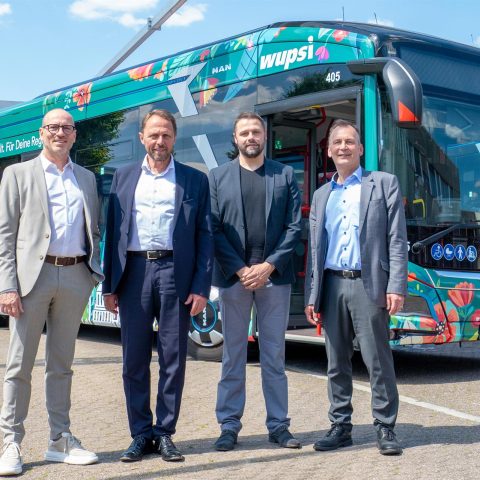
German operator Wupsi, operating in Leverkusen area (between Cologne and Dusseldorf) is pushing ahead with its plan to fully transition to zero-emission buses by 2034. As part of this shift, the company ordered 56 electric buses at the end of 2023 — 46 battery-electric buses from MAN and 10 hydrogen fuel cell buses from CaetanoBus.
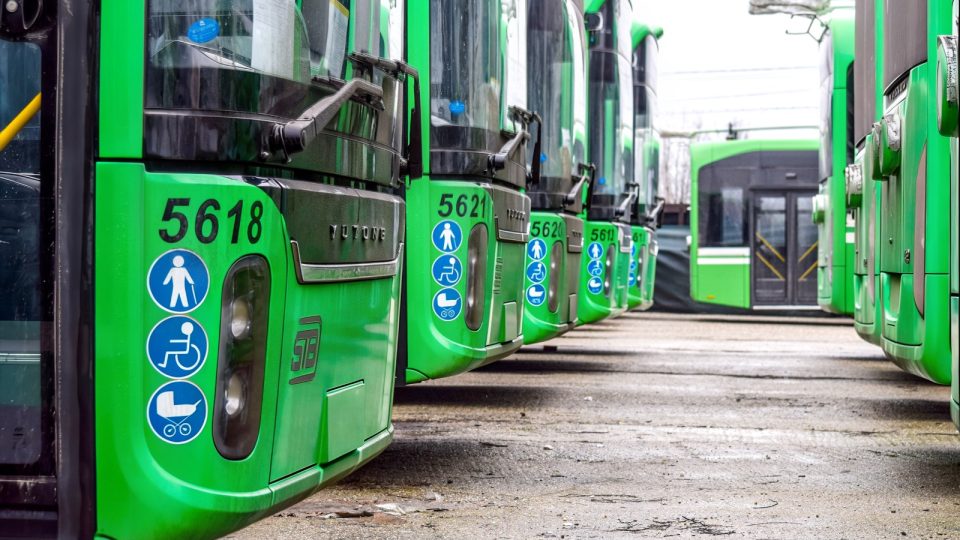
The first MAN e-buses are now arriving, with 27 solo buses and 19 articulated buses scheduled for delivery between April and August 2025. They’ll be deployed from Wupsi depots in Leverkusen and Bergisch Gladbach, as the carrier highlights in a press note.
Wupsi electric buses in Leverkusen
The Caetano H2.City Gold buses — offering up to 450 km range — are expected by mid-2025, though a specific timeline is still pending. These will serve longer routes, including express line X24 between Wermelskirchen and Leverkusen-Mitte.
The €16.8 million vehicle investment is co-funded by the Federal Ministry for Transport, while over €45 million from North Rhine-Westphalia (via go.Rheinland) supports charging and hydrogen refueling infrastructure.
Depot upgrades include high-capacity charging (up to 180 kW per point), smart energy management (from 2026), and a hydrogen station in Leverkusen. Charging points are mounted on overhead gantries to save space.
Wupsi already operates 10 electric buses since 2022, which have logged around 1.5 million km. Their positive performance supports the company’s strategy to combine battery and hydrogen technologies for flexible, sustainable transit across the region.
Wupsi Managing Director Marc Kretkowski highlights the advantages of electric buses: “Electric motors convert around 80% of the energy into motion and achieve an efficiency of 64%, taking into account losses during charging and the provision of electricity to chargers. By comparison, a diesel engine only achieves a value of 20%.”
Holger Fritsch, Head of Public Transport Investment Promotion at go.Rheinland: “Companies like wupsi GmbH have to create a completely new network infrastructure to distribute the electricity at the depots. The development of the infrastructure is being supported by the state of NRW with a funding rate of 90%, which is contributing 7 million euros to the total costs of creating the network and charging infrastructure in this expansion stage. The state of NRW and go.Rheinland have been committed to the environmentally friendly expansion of mobility for years and here on site we can see what successful implementation can look like.”