ASSURED and ebus charging standardisation. Interoperability Reference published
The EU funded project ASSURED has released a new report (addressed to charging infrastructure suppliers and ebus manufacturers) enabling electric bus interoperability testing. The document aims to bring the standardisation of ebus charging one step closer, as it includes the most common automated fast charging solutions in the market, filling the gaps between already available draft […]
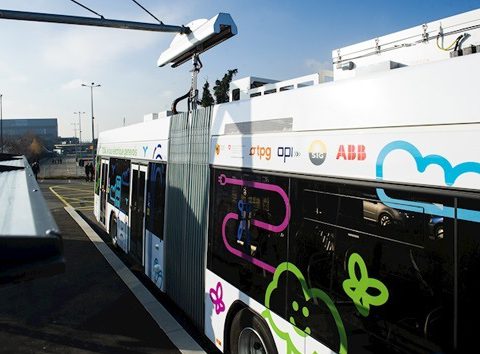
The EU funded project ASSURED has released a new report (addressed to charging infrastructure suppliers and ebus manufacturers) enabling electric bus interoperability testing. The document aims to bring the standardisation of ebus charging one step closer, as it includes the most common automated fast charging solutions in the market, filling the gaps between already available draft standards.
CLICK HERE TO DOWNLOAD
ASSURED 1.0 INTEROPERABILITY REFERENCE
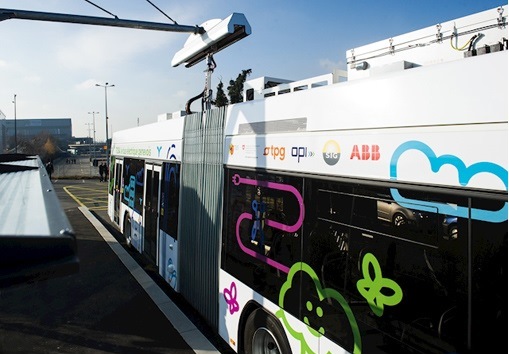
ASSURED for standardisation of charging infrastructures
ASSURED is a project co-funded by the European Commission (EC) to promote the electrification of urban transport vehicles by using advanced fast charging solutions. Coordinated by the Vrije Universiteit Brussel (VUB), the project consortium counts 39 members from 12 countries that include practitioners from across the entire value chain. Starting in October 2017, ASSURED will run until September 2021. The project has a budget of €23.64 million, €18.65 million of which is provided by the EU.
In a framework that is seeing a real boom in the electric bus market, the shift from demonstrations and pilots to real large-scale fleet deployment has started. A key factor to ensure the success of electric bus fleet upscaling is the interoperability of the vehicle and the charging unit, as this will simplify the tendering and implementation of the charging infrastructure. To achieve effective interoperability, standardisation of the charging infrastructure and high-quality conformance testing are essential.
A report to enable interoperability and conformance testing
To support the efforts to reach full standardisation of ebus charging infrastructure, the ASSURED project has released a report called “ASSURED 1.0 Interoperability Reference” that will enable interoperability and conformance testing. The ASSURED 1.0 Interoperability Reference has been developed specifically for the ASSURED project and is targeted at charging infrastructure suppliers and ebus manufacturers. The report includes the most common automated fast charging solutions in the market, and aims to fill the gaps between already available draft standards.
ASSURED to support electric bus deployment
A major achievement is that the ASSURED 1.0 Interoperability Reference will be subject to a standard test protocol to prove interoperability with different brands of electric buses and chargers.
“The ASSURED 1.0 Interoperability Reference has originally been prepared for the ASSURED project’s needs, but it can also be utilised in implementations by municipalities, public transport authorities, original equipment manufacturers or public transport operators alike, to ensure that interoperability can be tested until standardisation as set by the European Commission is fully finalised.”, says Marko Paakkinen, Senior Scientist at VTT Technical Research Centre of Finland.
A bridge document. Waiting for European standard
The upcoming tests will start by the end of this year and results will be ready by June 2020. This is expected to increase acceptance by the industry as such a decisive verification tool will finally make interoperability measurable, ASSURED promoters points out. The report is a continuation of the European Committee for Standardisation and the European Committee for Electrotechnical Standardisation (CEN-CENELEC) recommendation for ebus standardisation, previously coordinated by the UITP, International Association of Public Transport. Until the EC’s standard for electric buses and charging infrastructure is officially published, the ASSURED report can serve as a bridging document.