BYD targets diesel-beating TCO within 3 years for C12 DUO e-coach. Frank Thorpe speaking on what’s next for BYD in the UK
BYD is targeting a total cost of ownership (TCO) below that of a comparable diesel coach within three years of operation for its new C12 DUO electric model, based on an annual mileage of 50,000 to 55,000 miles. The target was outlined by Frank Thorpe, Managing Director of BYD UK Commercial Vehicles, in an interview […]
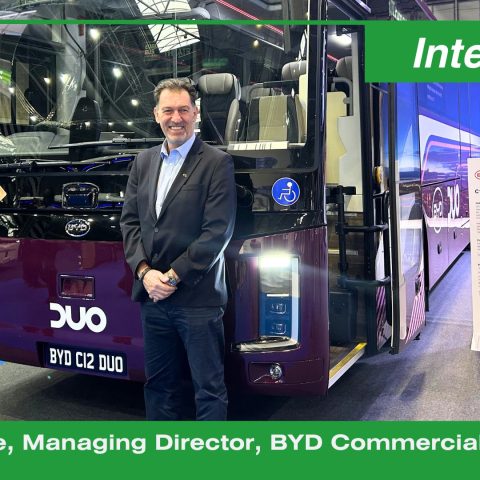
BYD is targeting a total cost of ownership (TCO) below that of a comparable diesel coach within three years of operation for its new C12 DUO electric model, based on an annual mileage of 50,000 to 55,000 miles. The target was outlined by Frank Thorpe, Managing Director of BYD UK Commercial Vehicles, in an interview with Sustainable Bus at Euro Bus Expo 2026 in Birmingham.
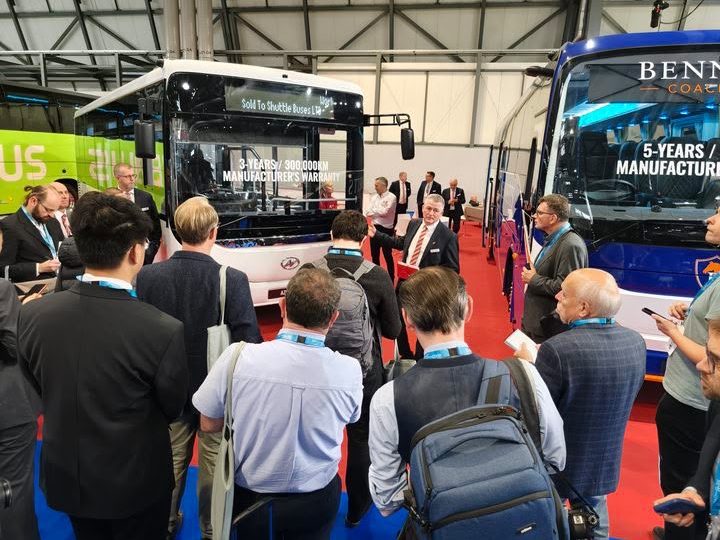
Following the world premiere of the C12 DUO, Thorpe detailed the manufacturer’s approach to electrifying the UK coach market, identifying school transport, contract services and defined-range private hire as the first target applications. According to Thorpe, BYD has already secured 12 orders for the model, with deliveries scheduled for April 2027.
The conversation, held during Euro Bus Expo 2026, also addressed the debate over competition between Chinese and British bus manufacturers, BYD’s vertically integrated production model and the absence of short-term plans for UK manufacturing. Thorpe further discussed the expansion of BYD’s UK product portfolio, the effects of franchising on investment decisions and the company’s work on financing solutions for operators.
Frank Thorpe: BYD invests in the UK
There are growing calls within the UK bus industry for the government to protect domestic manufacturing from foreign competition.
BYD is proud to invest in the UK. We are really engaged with the UK market. We love being here and being part of it. But to make the kind of investment we’re making, of course, we need to have some sort of stability and some sort of certainty that we will have a fair level of competition.
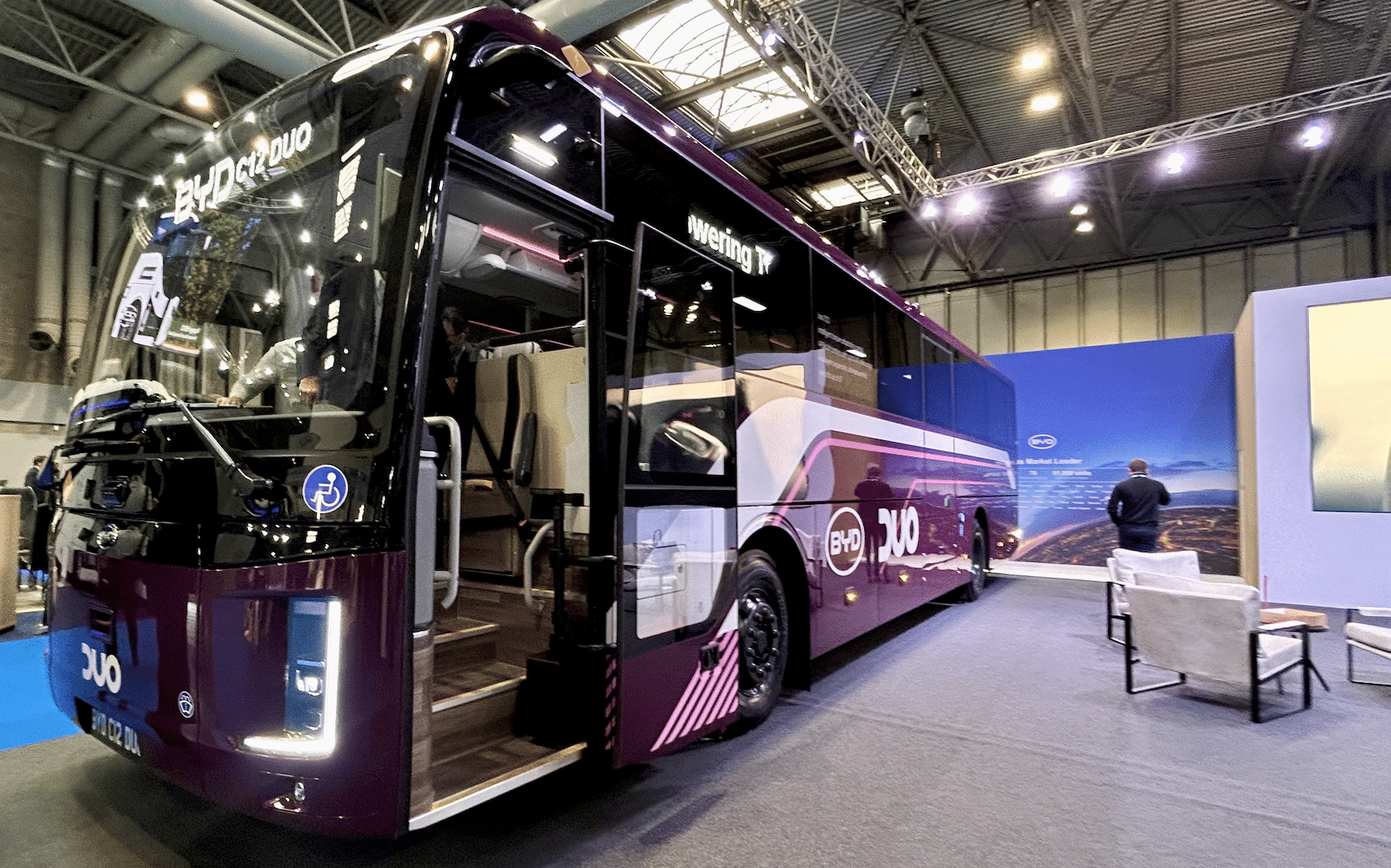
If you look at what BYD has committed to the UK, for me it’s incredible. This vehicle we just launched, the BYD C12 DUO, required tens and tens of millions of pounds to develop, in seven months, to meet a need that the UK industry has, at a TCO and a price point that mean UK operators can provide a service to the public at a level that’s competitive and compelling. BYD has to have a business case to make such an investment.
It’s interesting because the “level playing field” you mention is exactly what domestic manufacturers say is missing today.
We receive no production cost subsidies. If you look at the numbers, wages, overheads, and material costs, we aren’t all that different. Our competitive edge lies in manufacturing efficiency and vertical integration. We hold British and European OEMs in the highest regard, and we want to compete strictly on the merits of our product.
In Europe, BYD has long been committed to manufacturing in Hungary, making it the only Chinese bus manufacturer with a production facility on the continent. Are you considering any degree of manufacturing localisation in the UK as well? Under what conditions might that become an option?
We are evaluating multiple scenarios and there are no closed doors. However, there are currently no short-term plans to manufacture the C12 DUO in the UK, and I want to explain the reasoning rather than just give the answer, because it isn’t a judgement on British manufacturing. Our model is vertical integration. The Blade Battery is developed by our own battery division, and we design the whole vehicle around it: thermal management, packaging, energy use, everything is engineered as one system.
That integration is where the efficiency our operators benefit from actually comes from. It’s not something you can lift out and rebuild somewhere else without losing part of what makes the vehicle perform the way it does.
I believe that 55% of the UK coach segment, around 500 units per year with a 12-metre, single-axle, 53-to-55-seat profile, is the natural target for electrification, as this is precisely the profile where TCO already works today. How quickly this happens will depend on market conditions, but the direction is clear. Our vehicle is very much focused on a very distinct part of the sector: home-to-school transport or defined contract work, whether it be campus, education, government contracts. It’s a significant part of the market. And then defined-range private hire. The next steps will be a three-axle, high-floor, longer-range e-coach. It’s coming.
Frank Thorpe, Managing Director, BYD Commercial Vehicle UK
We do manufacture in Europe, in Hungary, and we’ve done so for a long time. We’re the only Chinese bus manufacturer with a production facility on the continent. That plant exists for a specific reason: to serve the different requirements of Europe’s twenty-seven markets as directly as possible.
For the UK, we take a different route. We build vehicles in China specifically for this market, to UK specification and UK standards, and we’ve been doing it for over a decade. The team there knows exactly what the UK requires and what our standard is. What matters to a UK operator is whether the vehicle is right for the job and whether it’s reliable in service — and on that, our record here speaks for itself.
Between collaborations and vertical integration
BYD previously worked in the UK with local manufacturers such as Alexander Dennis. You’re also working with local bodybuilders in other European markets. Is this a model you could consider again in the UK?
At the moment, my answer is no, and I’ll tell you why. Because of what we are now achieving in terms of the standard, efficiency and reliability of our integrated vehicle: one of the big reasons for our quality is that we have control of everything.
Let me give you an example. The HVAC system, the heating and cooling on an electric vehicle, is so critical to how that vehicle operates. If you just go to the bodybuilder or the supplier, it won’t deliver the efficiency you need. It’ll use too much energy, so you won’t have the range, or it’ll cost a lot of money and potentially be unsafe because it’s not properly integrated.
Our collaboration with Alexander Dennis has been highly successful, and I am proud of it. Today, our approach is focused on vertical integration, because that is how we deliver the efficiency that operators demand. This is not a judgement on the capability of local bodybuilders. We remain open to working with the British sector on other vehicles that would come in the future, as well as components and services.
BYD is now establishing a new structure in Amsterdam to oversee its European commercial vehicle operations. Is a similar organisational development taking place in the UK?
The UK is so strategic for BYD that we have a specific and very stable structure here. I’ve been running BYD UK Commercial Vehicles for over 10 years, and that gives people comfort and assurance. They feel confident, reassured that there’s stability.
Now, of course, our car business has become very large, significant and important within the UK market. That’s a separate structure.
We receive no production cost subsidies. If you look at the numbers, wages, overheads, and material costs, we aren’t all that different. Our competitive edge lies in manufacturing efficiency and vertical integration. We hold British and European OEMs in the highest regard, and we want to compete strictly on the merits of our product.
Frank Thorpe, Managing Director, BYD Commercial Vehicle UK
BYD aims to gain stronger presence in UK provinces
During the press conference at Euro Bus Expo, you mentioned that BYD has achieved a strong position in large cities and that the next focus will be on bringing the same technology to provincial markets. How do you intend to do that?
Two ways. One is to ensure we have the product range. The provinces have different product requirements, whether that be low-height double-deck vehicles, narrower vehicles, single doors, more passenger capacity or different specifications. So we must make sure we have the product range available.
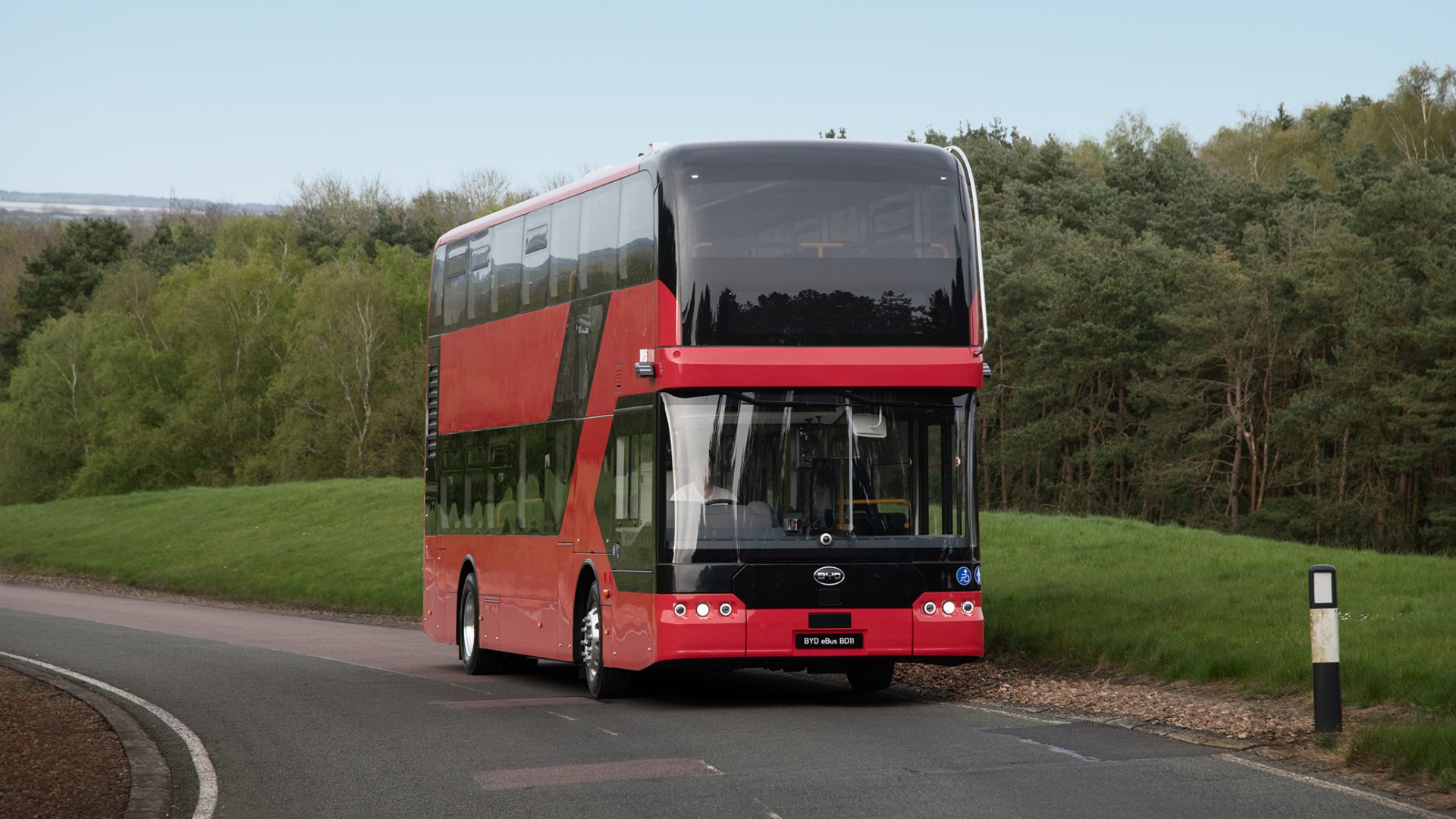
We have currently nine distinct products in the UK. With the C12 DUO e-coach as an addition, and an 8.9-metre midi as an addition in the middle of next year, we will get to 11. Eleven different vehicles in the product range for bus and coach in the UK.
The second thing is the TCO. How much does it cost to run? To give you an example, I’d pick our latest launch: the C12 DUO e-coach. Well, the coach sector in the UK market is about a thousand new vehicles a year.
About one fifth of the overall bus and coach market.
I believe that 55% of the coach segment, around 500 units per year with a 12-metre, single-axle, 53-to-55-seat profile, is the natural target for electrification, as this is precisely the profile where TCO already works today. How quickly this happens will depend on market conditions, but the direction is clear.
On the other hand, the C12 DUO is clearly not designed for every coach application. For example, its luggage compartment is relatively small. Which types of operations are you targeting?
Yes, indeed, this is very much focused on a very distinct part of the sector: home-to-school transport or defined contract work, whether it be campus, education, government contracts. It’s a significant part of the market. And then defined-range private hire.
That’s our first solution. The next steps will be a three-axle, high-floor, longer-range e-coach. It’s coming.
Frank Thorpe, our e-coach beats diesel on TCO
When you say the C12 DUO will have a better TCO than a diesel coach, can you give us some figures? After how many years and at what annual mileage would that advantage emerge?
Our target is that we beat the diesel TCO within three years of operations.
Based on an average operating profile of how many miles?
50,000 to 55,000 miles per annum. And the components we considered in this calculation are the capital cost, the direct fuel costs and then the ongoing maintenance.
And then, you know, you have to look at beyond the warranty period and all the rest of it. But we see that in the first three years, we beat the diesel TCO.
There are currently no short-term plans to manufacture the C12 DUO in the UK, and I want to explain the reasoning rather than just give the answer, because it isn’t a judgement on British manufacturing. Our model is vertical integration. The Blade Battery is developed by our own battery division, and we design the whole vehicle around it: thermal management, packaging, energy use, everything is engineered as one system.
Frank Thorpe, Managing Director, BYD Commercial Vehicle UK
Turning back to the public transport market, UK bus registrations have been declining this year. Should we interpret this as a return to more normal market volumes, or as a sign of structural changes, including changes in subsidy schemes?
I suppose, in the UK, the big thing is we have franchising, which is delaying lots of investment decisions. And whether that creates a backlog that will be released in 2027, 2028 and beyond, or creates a void of investment because of uncertainty, I don’t know. It’s a concern.
There seems to be a shift from central government funding towards financing managed by local authorities and regional councils…
Yes, in fact. We’re keen as well to help, together with certain partners.
So BYD is also working on financing solutions for operators?
We’re working on some projects at the moment that we think are particularly innovative and will demonstrate to the market that BYD should not be excluded from the UK market.
One final question about the C12 DUO. The vehicle displayed here is a prototype. What is the roadmap for homologation and the first deliveries?
We’ve already taken 12 orders. Twelve units will be delivered in April next year, with homologation taking place between now and then.